AI in Healthcare
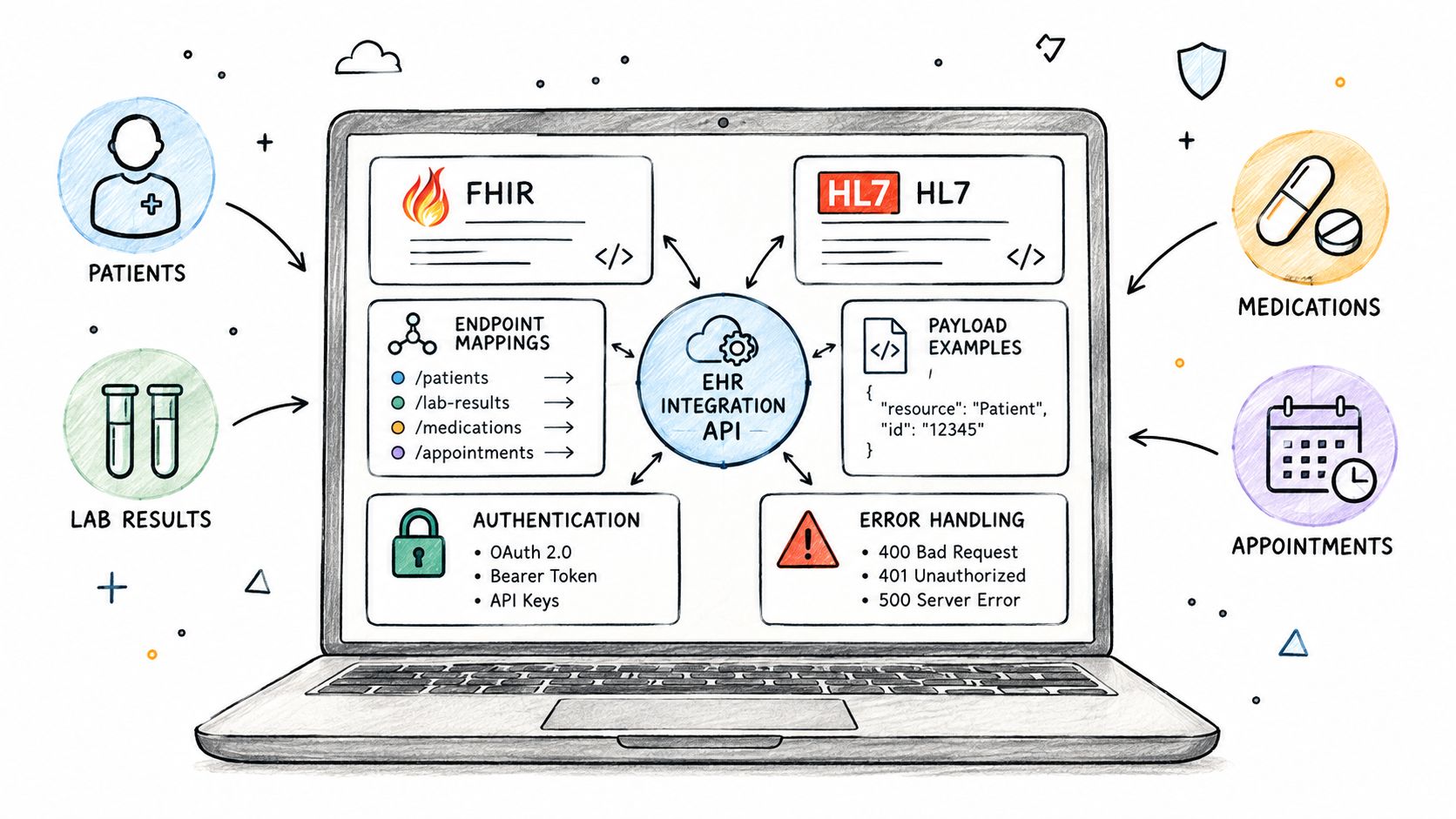
EHR Integration API: A Practical Reference Guide
A practical EHR integration API reference covering FHIR, HL7, endpoint mapping, auth, error handling, and best practices for healthcare teams.
October 06, 2026Read more
Compare the 7 biggest emr companies by platform strengths, weaknesses, market reach, and integration potential for digital health partnerships.
Size is only the start, and the usual advice misses that point. The biggest EMR companies are not interchangeable, because Epic and Oracle Health sit at the center of large hospital environments, while others matter more in ambulatory, specialty, community, or smaller-practice workflows. If you're evaluating APIs, FHIR, SMART on FHIR, HIE connectivity, and deployment effort, you also need a healthtech engineering partner like Ekipa AI to translate platform reality into buildable requirements, especially when compliance and workflow fit matter as much as feature lists. For teams working in clinical AI and digital health, Healthcare AI Services and AI requirements analysis become practical starting points, not marketing language. For security planning around healthcare systems, see MSSP HIPAA penetration testing with ThreatExploit AI.
Epic sits in a category of its own for enterprise hospitals. Market reporting places Epic among the largest EMR and EHR vendors, and Definitive Healthcare reports 43.9% inpatient hospital market share for Epic in the U.S., ahead of Oracle Health at 18.9% and MEDITECH at 10.7% (Definitive Healthcare). That concentration matters, because the buyer isn't choosing a single product, it's choosing a platform around which data migration, interface strategy, and workflow governance will be organized.
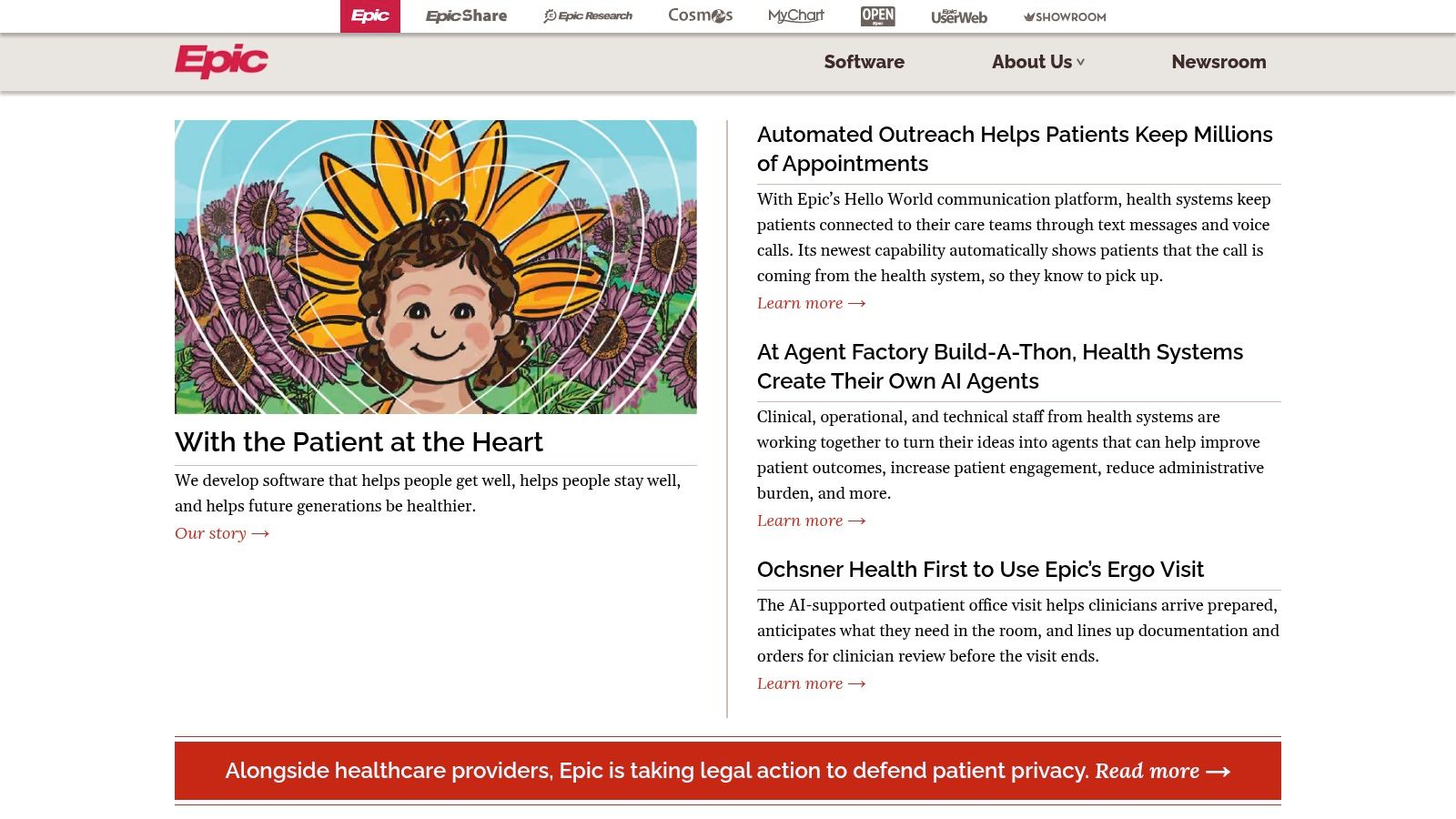
Epic's practical value is breadth. It spans inpatient, outpatient, revenue cycle, patient engagement through MyChart, and large-scale HIE via Care Everywhere, which makes it a strong fit for integrated delivery networks and academic centers. It also exposes public developer APIs and sandbox resources, so teams building on top of Epic usually think in terms of standards, permissions, and governance, not just connectivity.
Practical rule: if your product needs deep hospital integration, Epic is often the shortest path to enterprise relevance, but not the shortest path to implementation.
That same breadth creates friction. API enablement and some integration access can require extra licensing, and large deployments can bring substantial implementation overhead. Epic is also the kind of platform that can pull a partner into long-term dependency if the product relies too heavily on proprietary workflows rather than portable standards.
Best fit for partners: enterprise clinical software, population health tooling, hospital workflow AI, and products that can justify the integration effort.
Least fit for partners: small-practice point solutions that need a quick launch with low configuration overhead.
The official site is Epic, and for healthcare builders, the important question isn't whether Epic is big. It's whether your product can absorb the engineering and governance requirements that come with its scale. For teams building around clinical workflows, Healthcare AI Services can help frame that decision before the first integration request goes out.
Oracle Health is the other hospital-scale name that most buyers have to model seriously. It remains closely tied to Millennium, which is still the clinical and operational backbone for many U.S. hospitals, and the vendor is pushing a cloud-first direction while keeping enterprise functionality intact. In market terms, it's one of the few platforms that can still be treated as a core system of record for major health systems.
The partnership implication is straightforward. Oracle Health can be attractive when a buyer wants device integration, enterprise connectivity, and a path toward modernized data exchange, but it's rarely a lightweight integration target. The platform's public developer resources, FHIR R4 support, and SMART on FHIR capabilities are useful for product teams, yet the key test is how much operational change the hospital can tolerate during rollout.
Oracle Health's strength is that it lives where high-volume hospital operations already happen. Its interoperability tooling, including Seamless Exchange and QHIN participation, makes it relevant for organizations that care about exchange beyond a single site. That said, modernization is still in motion, so experiences can vary by site and upgrade stage.
Oracle Health is a good fit when the buyer wants enterprise continuity more than a clean-sheet rebuild.
That matters for vendors too. A partner selling scheduling, care coordination, imaging workflow, or device-adjacent software may find Oracle Health strategically relevant, but only if the product can handle enterprise security reviews, variable site readiness, and a slower implementation cadence. For integration-heavy teams, this is the sort of environment where AI requirements analysis pays off early, because most of the cost usually sits in workflow alignment, not endpoint calls.
The platform site is Oracle Health, and its relevance rises when the buyer is a hospital system, not a small clinic network. Epic is the larger market story, but Oracle Health remains one of the most important enterprise targets for digital health partnerships.
MEDITECH is the clearest reminder that not every leading EMR vendor serves the same buyer. Its Expanse platform is web-based, mobile-forward, and commonly adopted by community and regional hospitals, which makes it much more relevant to smaller acute environments than to sprawling academic systems. The product position is practical, not flashy, and that's often exactly what regional buyers want.
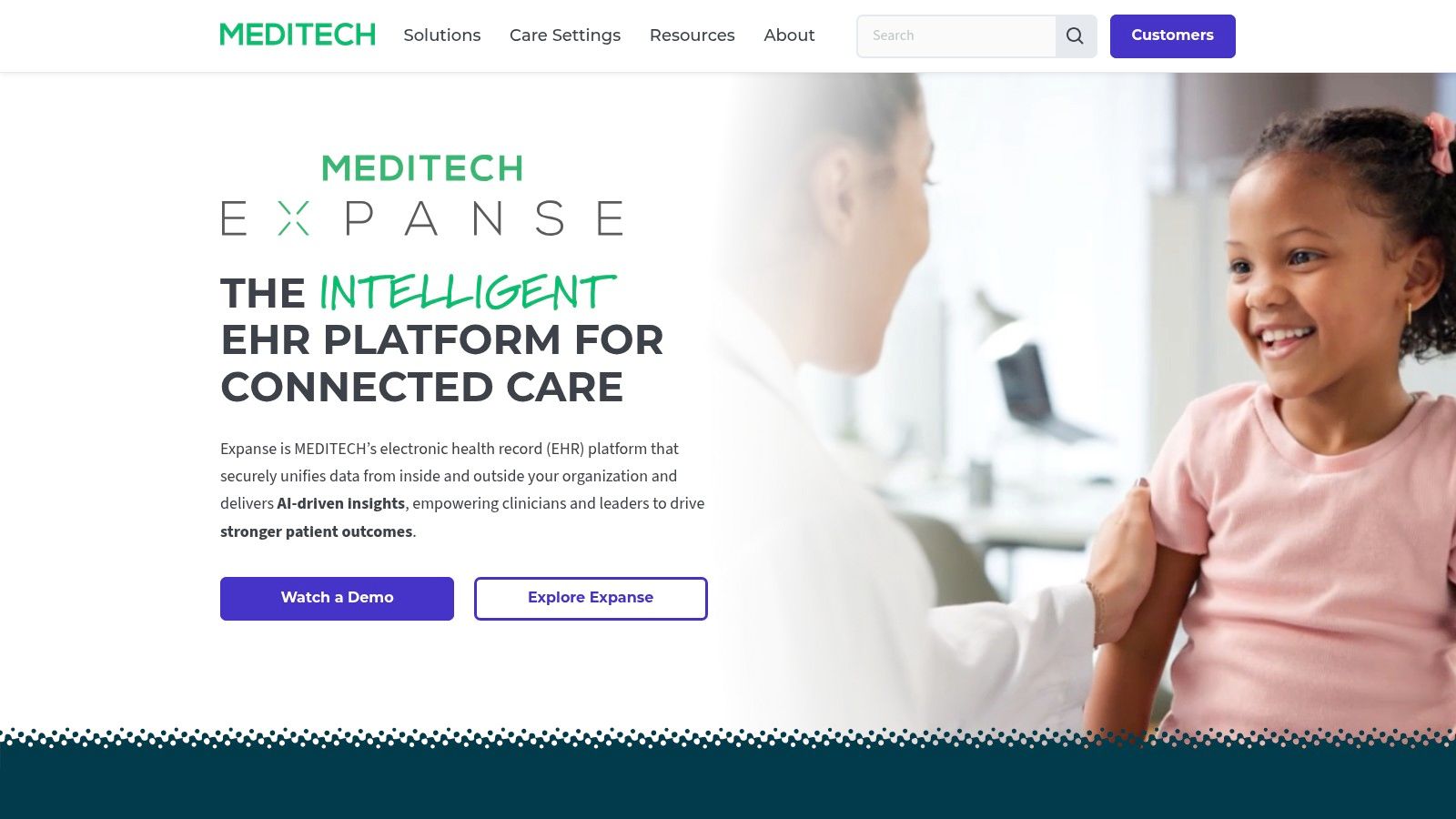
MEDITECH's integration story is shaped by that deployment model. A web-based stack reduces endpoint management pain, and the platform's acute-plus-ambulatory design means organizations don't have to assemble separate workflows for every setting of care. For partners, that can simplify onboarding if the use case is mostly community hospital workflow, national data exchange, or broadly distributed regional systems.
The upside is cost-conscious scale. Community hospitals usually want reliable interoperability, predictable deployment, and less infrastructure burden. MEDITECH fits that operating model better than a more sprawling enterprise suite. It's also recognized in KLAS for performance in smaller acute segments, which reinforces why many regional buyers keep it in consideration.
The downside is specialization depth. Tertiary-care specialties and complex multisite buildouts may require more custom work, and the app ecosystem is smaller than what you see around larger platforms. That doesn't make MEDITECH weak, it makes it more specific.
For partnership planning, MEDITECH is often a better target for pragmatic clinical workflow tools than for heavily customized hospital-wide transformation programs.
The practical takeaway is simple. If your company sells into community or regional hospitals, MEDITECH can be a smart integration target because the buyer profile is narrower and the workflow expectations are clearer. The official product site is MEDITECH, and the fit is strongest where simplicity, mobility, and cost discipline matter.
athenahealth belongs in the ambulatory category, not alongside hospital-centered platforms on equal terms. Its athenaOne platform combines EHR, practice management, and revenue cycle management in a cloud-native service. That focus makes it a stronger partnership candidate for outpatient groups than for inpatient health systems, especially when the product must improve daily clinic operations rather than support complex hospital-wide workflows.
For digital health companies, the distinction affects both use-case fit and implementation planning. Ambulatory workflows often center on scheduling, documentation, claims, patient communication, and follow-up. A product that supports those activities may find a clearer value proposition here than on a platform built around inpatient breadth. Partners should still confirm available integration interfaces, data permissions, and workflow controls before treating the cloud model as a short implementation path.
The commercial model also shapes partnership fit. Percentage-of-collections pricing connects athenahealth's economics to billing outcomes and can reduce fixed IT costs for practices that prefer an outsourced operating model. The tradeoff is less predictable pricing. Quote-based contracts and individualized terms require buyers and partners to model the financial effect of added workflow or revenue-cycle tooling before committing.
athenaOne is most relevant to multispecialty groups and health-system-owned ambulatory networks that want to limit local infrastructure work. Its cloud delivery can support frequent product updates, but integration effort still depends on the access and approvals available for the specific workflow. Products touching scheduling, claims, patient communications, or revenue cycle therefore have a plausible fit, provided they can demonstrate operational value without adding staff burden.
The platform's practical advantage is concentration. Visits, claims, and patient engagement sit closer to the center of the product than they would in a broad hospital architecture. That can shorten partnership discussions, while also narrowing the addressable use cases.
The platform site is athenahealth. For digital health builders, it is a strong ambulatory target when the product fits practice operations and the team can validate integration access early. If the solution must operate inside the clinic workflow, a clinic AI assistant for in-workflow integration provides a concrete reference for scoping that layer before committing engineering time.
eClinicalWorks matters less as a headline enterprise name than as a practical ambulatory platform with broad reach across primary care and selected specialty settings. It is designed around outpatient workflows, and its scope extends beyond core charting into telehealth, patient engagement, analytics, and AI-oriented documentation work. That combination makes it relevant for independent practices and larger ambulatory groups that need one system to cover several front-office and clinical tasks.
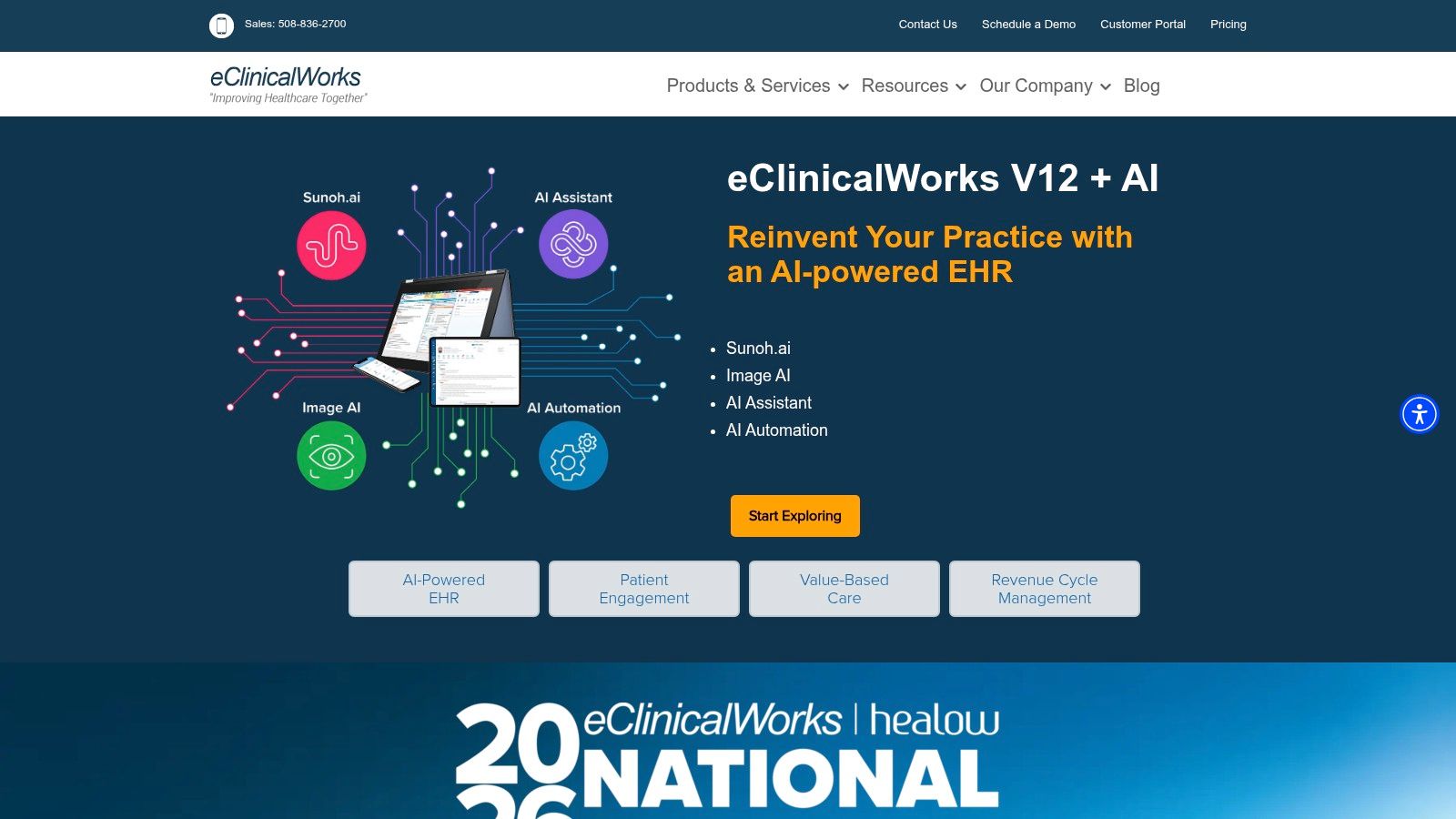
The more useful question is not whether eClinicalWorks is large, but what kind of partnership it supports. It is a better fit for vendors that want access to everyday ambulatory volume than for teams chasing a hospital-first enterprise footprint. Its alignment with ONC Cures Update and Real-World Testing also signals a platform where data exchange expectations and certification posture matter, which affects how easily external tools can be introduced.
For digital health teams, eClinicalWorks is attractive when the product needs to reduce documentation burden or smooth patient-facing workflows without targeting only the most complex enterprise buyers. A platform with a patient portal, telehealth functions, and ongoing AI and ambient documentation direction gives integration partners several entry points, but each still needs a clear operational payoff.
Operational insight: products that improve front-desk efficiency or reduce documentation work have a clearer case on ambulatory platforms like eClinicalWorks.
The main tradeoffs are commercial and operational. Quote-based pricing means procurement work is part of integration planning, and support quality can vary with deployment size and complexity. That makes implementation governance as important as feature fit, especially for vendors that depend on consistent workflow behavior across sites.
The site is eClinicalWorks, and it remains a strong option for vendors that want ambulatory reach without narrowing themselves to one specialty. If you are building around workflow automation, our AI-powered data extraction engine is a concrete example of what should be native versus integrated.
NextGen Healthcare has long been associated with specialty ambulatory care, and that positioning still matters. Its enterprise and office products let buyers match deployment style to group size, while its specialty content and interoperability tooling make it relevant for organizations that don't fit a generic primary care template. For partnership strategy, that specialty bias is often the whole point.
The integration angle is stronger than many casual observers realize. Mirth-based interoperability tooling gives NextGen more practical connectivity options than a simple feature list suggests, which matters for health systems and specialty groups that need HIE participation, lab exchange, or other cross-system communication. That makes it a serious option for companies building within specialty-heavy ambulatory ecosystems.
NextGen is especially attractive for multi-specialty practices, FQHCs, and CHCs that want a mature ambulatory platform with recognizable ecosystem patterns. It's not trying to be a hospital-first enterprise suite, and that's useful, because the buyer is usually trying to solve specialty workflow friction rather than enterprise-wide standardization.
The downside is implementation variability. Outcomes can depend heavily on configuration quality and optimization, so a vendor entering the ecosystem needs to respect local build decisions rather than assuming one clean template will work everywhere.
If your product depends on clean ambulatory integration, the site-level configuration becomes part of the product surface, whether you like it or not.
The platform site is NextGen Healthcare, and it's a strong candidate for vendors that serve specialty groups, especially when interoperability and practice management matter together. A good healthtech engineering partner can help you scope how much of the workflow should be handled through the EHR itself versus through your own application layer. For internal product design, internal tooling often matters as much as the external API.
Veradigm is best understood as an ambulatory ecosystem company, not a hospital giant. Its EHR offering and Practice Fusion give it two very different access points, one aimed at small practices and one aimed at broader ambulatory connectivity. That duality makes it especially relevant for products that need a low-friction entry point with smaller groups but still want a larger data and partner network behind them.
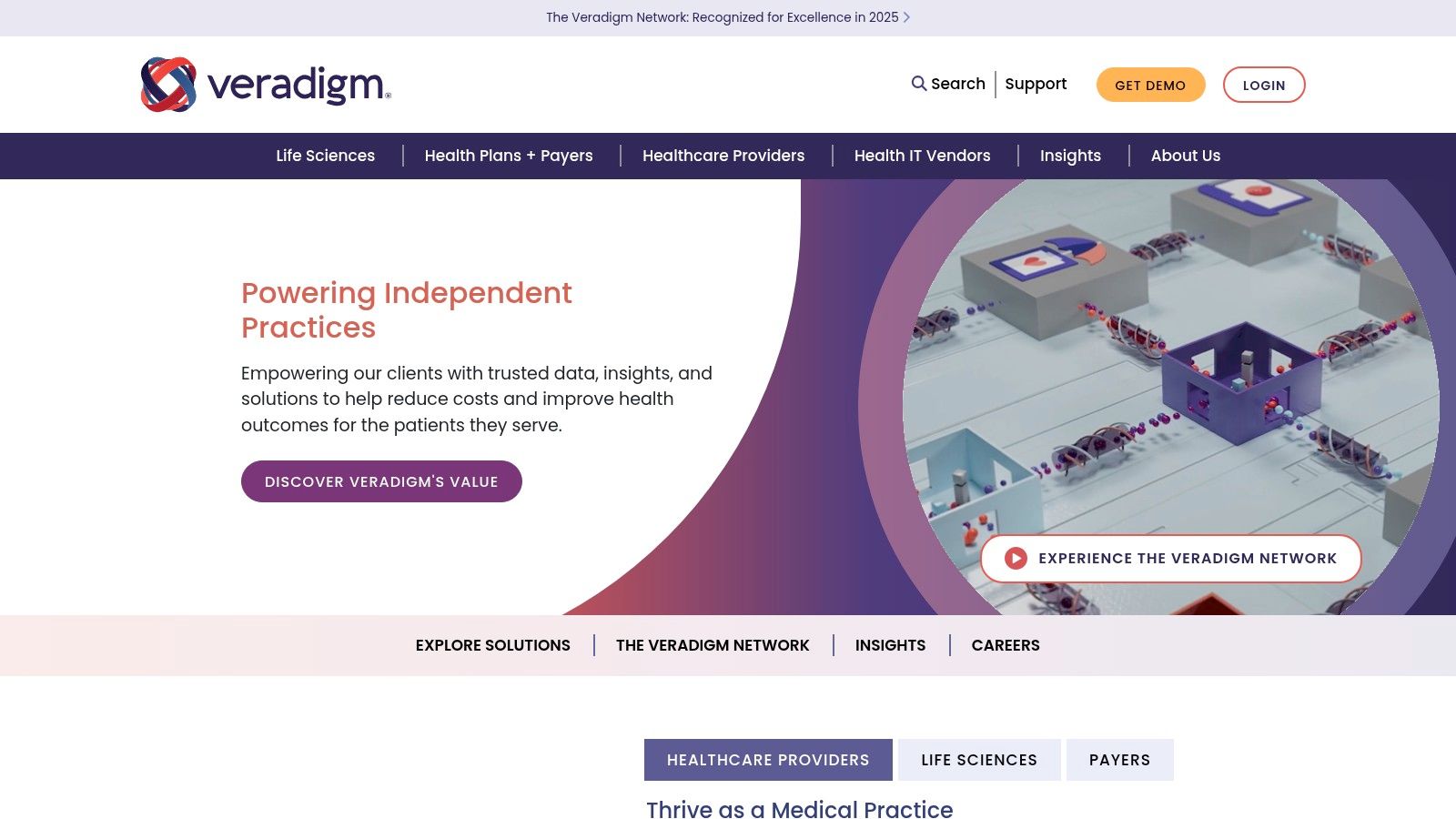
Practice Fusion is the fast-on-ramp option. It's browser-based, quick to deploy, and geared toward small practices that want lab, imaging, e-prescribing, referral exchange, and basic practice management without a heavy implementation lift. Veradigm's broader ecosystem then becomes more interesting for partners that care about connectivity and data assets rather than only the charting experience.
The most important strategic distinction is that Veradigm is ambulatory-first. Its hospital assets were divested in 2022, so you should not treat it like an enterprise inpatient competitor. That makes it useful for outpatient use cases, but not for vendors trying to sell deep hospital transformation software.
Practice Fusion's published pricing and simple deployment make it attractive to small practices that need speed over customization. Veradigm EHR, by contrast, is more about network effects and partner ecosystem value. For builders, that creates a natural segmentation strategy.
The site is Veradigm, and it's a useful target if your product needs ambulatory scale without hospital complexity. For teams that need cleaner launches and less integration drag, our expert team can help define the build path before a vendor evaluation turns into rework.
| Vendor | Implementation complexity | Resource requirements | Expected outcomes | Ideal use cases | Key advantages |
|---|---|---|---|---|---|
| Epic Systems | High, large-scale, multi-year deployments | Very high, extensive IT, licensing, integration teams | Enterprise-wide clinical/financial integration; strong interoperability and analytics | Large IDNs, academic medical centers, organizations needing deep integration | Broad module suite, Care Everywhere HIE, Cosmos data, robust APIs |
| Oracle Health (Cerner) | High but variable, modernization/rollout in progress | High, hospital-grade IT, device/connectivity integration | Enterprise clinical/financial capability with cloud/AI roadmap; experience may vary during transition | Large hospitals and health systems requiring device integration and population health | Large installed base, CareAware device integration, active API/sandbox roadmap |
| MEDITECH | Moderate, web-based simplifies deployment but specialty builds may be needed | Moderate, suitable for community hospitals with smaller IT teams | Cost-effective acute and ambulatory operations with modern UX and AI navigation | Community and regional hospitals, smaller IDNs | Web/mobile-forward, AI-assisted navigation, favorable economics for smaller sites |
| athenahealth (athenaOne) | Low to moderate, cloud-native, faster implementation | Lower internal IT burden; commercial RCM reliance; percentage-of-collections pricing | Efficient ambulatory workflows and strong revenue cycle performance | Multispecialty practices and health-system ambulatory networks | Cloud delivery, strong RCM automation, network rules and payer connectivity |
| eClinicalWorks (eCW) | Moderate, ambulatory-focused with telehealth/AI additions | Moderate, quote-based pricing; variable support depending on deployment | Broad ambulatory functionality with AI/ambient documentation to reduce burden | Primary care, FQHCs/CHCs, multispecialty ambulatory groups | Comprehensive ambulatory features, large user community, AI roadmap |
| NextGen Healthcare | Moderate, multiple deployment options; outcome depends on implementation | Moderate, varies with size and specialty content needs | Strong specialty coverage and PM/RCM when well implemented | Ambulatory specialty practices, FQHC/CHC, multi-provider groups | Deep specialty content, Mirth-based interoperability, familiar ambulatory ecosystem |
| Veradigm (including Practice Fusion) | Low (Practice Fusion) to moderate (Veradigm EHR) | Low for Practice Fusion; moderate for Veradigm EHR and PM/RCM | Fast on-ramp for small practices; broader connectivity and data for larger groups | Small practices (Practice Fusion) and larger ambulatory organizations (Veradigm) | Transparent entry-level pricing (Practice Fusion), provider data network and partner ecosystem |
The strongest takeaway from the biggest EMR companies is that size doesn't tell you which vendor fits a digital health partnership. Epic and Oracle Health are the biggest hospital-scale targets, MEDITECH fits community and regional acute care, and athenahealth, eClinicalWorks, NextGen, and Veradigm are more relevant when ambulatory reach, specialty coverage, or practice economics matter more than inpatient breadth. If you blur those categories, you'll overestimate compatibility and underestimate implementation effort.
For product teams, the decision is not “which EMR is largest?” It's “which EMR matches the workflow, interoperability model, and deployment tolerance of the buyer I'm serving?” That's why API access, FHIR support, HIE participation, and implementation support should be weighed alongside vendor reputation. In practice, the partnership fit often depends less on the vendor's logo and more on how much change the customer can absorb.
That also means the post-sale work is often the hardest part. Data migration, interface rationalization, clinical workflow redesign, and governance around standards-based exchange usually decide whether a project succeeds. A vendor that looks straightforward in a feature matrix can still be costly in the field if the buyer has to rebuild the workflow around it.
If you're mapping an integration strategy around one of these platforms, Medical Virtual Assistants may be one related operational layer, but the core decision still starts with platform fit. Ekipa AI can help teams turn that fit into an execution plan, especially when the work spans EHR integrations, clinical software, and compliance-aware AI delivery.
If you're planning a digital health integration, Ekipa AI can help you turn vendor selection into a buildable roadmap. We work on healthcare software, EHR integration, AI adoption, and compliance-aware implementation so your team can move from platform research to deployment with fewer surprises.
A practical EHR integration API reference covering FHIR, HL7, endpoint mapping, auth, error handling, and best practices for healthcare teams.

Practical guide to ehr software development covering architecture, FHIR interoperability, HIPAA, security, testing, and team choices for healthtech leaders.
Master branch deep links for healthcare apps. Learn SDK setup, routing, deferred deep linking, and mobile/desktop behavior
Connect with our team to explore how AI expertise can transform your business.