
AI Integration
Oracle Health Integration: A Practical Guide
Oracle Health integration guide: FHIR R4 APIs, HL7 v2 interfaces, SMART app types, sandbox testing and customer activation for HealthTech teams.
October 24, 2026Read more
How EHR integration works: FHIR, HL7 v2 and SMART standards, Epic and Oracle Health programs, migration, prior authorization APIs and the rules that apply.

EHR integration is how a health app, platform or AI tool exchanges data with the electronic health record: reading patient data, writing results back, launching inside the clinician's workflow and keeping records in sync. Interoperability is the wider goal of getting data to move safely between organizations and systems. This guide explains the main standards, the integration options for the largest EHR vendors, the rules that shape the work and which of our articles to read next.
Most US integration work now centers on HL7 FHIR APIs, with HL7 v2 messaging still carrying a large share of hospital traffic. Since January 1, 2026, the ONC certification program uses USCDI version 3 as its baseline data set, according to the HTI-1 final rule.
| Your goal | Read |
|---|---|
| Integrate with Epic | Epic EHR integration guide |
| Understand what Epic's FHIR APIs can and cannot do | Epic FHIR API |
| Integrate with Oracle Health (Cerner) | Oracle Health integration |
| Choose or replace an interface engine | Mirth Connect alternatives |
| Move HL7 v2 feeds to FHIR | HL7 v2 to FHIR migration roadmap |
| Plan an EHR or data migration | Healthcare data migration planning |
| Build prior authorization APIs for CMS-0057-F | Prior authorization automation |
| Compare integration platforms | EHR integration software buyer's guide |
| Add AI to EHR workflows | AI integration with EHR systems |
| Understand the EHR landscape | Types of EHR systems |
FHIR exposes clinical data as resources, such as Patient, Observation and Encounter, through REST APIs. HL7 v2 sends event messages, such as admissions and lab results, usually through an interface engine. Most products need both: FHIR for app access and queries, and HL7 v2 for real-time hospital feeds that have not moved to FHIR. SMART on FHIR adds a standard way to launch an app from the EHR and authorize it with OAuth 2.0 scopes, so the app receives only the data it needs.
Each vendor has its own developer program, registration process and list of supported resources and operations. In practice, read access is widely available, write access is narrower, and each customer usually has to approve or activate an app before it runs in their environment. Vendor details also change: Oracle Health, for example, no longer supports its DSTU2 FHIR APIs and directs developers to R4, according to its Millennium Platform documentation. Confirm capabilities against the vendor's current documentation and the customer's configuration before committing to a launch date.
Start with the workflow, not the protocol: write down what data the product needs, in which direction and how quickly. Map each need to a FHIR resource, an HL7 v2 message or a vendor API, and note who owns each decision: your team, the EHR vendor or the customer. Test identity matching, terminology mapping and error handling as carefully as connectivity, because a successful API call does not prove the data was interpreted correctly. Finally, plan for operations after go-live, including monitoring, version changes and who responds when an interface fails.
If you are building EHR integrations, see our healthcare engineering services.
EHR integration combines standards (FHIR, HL7 v2 and SMART), vendor programs and regulation. Start with the four core articles above, use the goal table to go deeper on Epic, Oracle Health, interface engines, migration or prior authorization, and plan for customer activation and ongoing operations from the start.
If you want help planning or building an EHR integration, book a consultation with Ekipa's HealthTech engineers.
Connecting an application to an electronic health record so it can read and write patient data, launch in the clinician's workflow and keep records in sync.
Usually both. FHIR suits app access and queries, while HL7 v2 still carries many real-time hospital event feeds.
A standard for launching apps from the EHR and authorizing them with OAuth 2.0 scopes, so each app gets only the data it needs.
In most cases, yes. Vendor registration is not enough; each customer typically activates the app and decides which users can access it.
The information blocking rules, ONC certification requirements such as USCDI, CMS-0057-F for payer APIs, TEFCA for national exchange and HIPAA for privacy and security.
Oracle Health integration guide: FHIR R4 APIs, HL7 v2 interfaces, SMART app types, sandbox testing and customer activation for HealthTech teams.
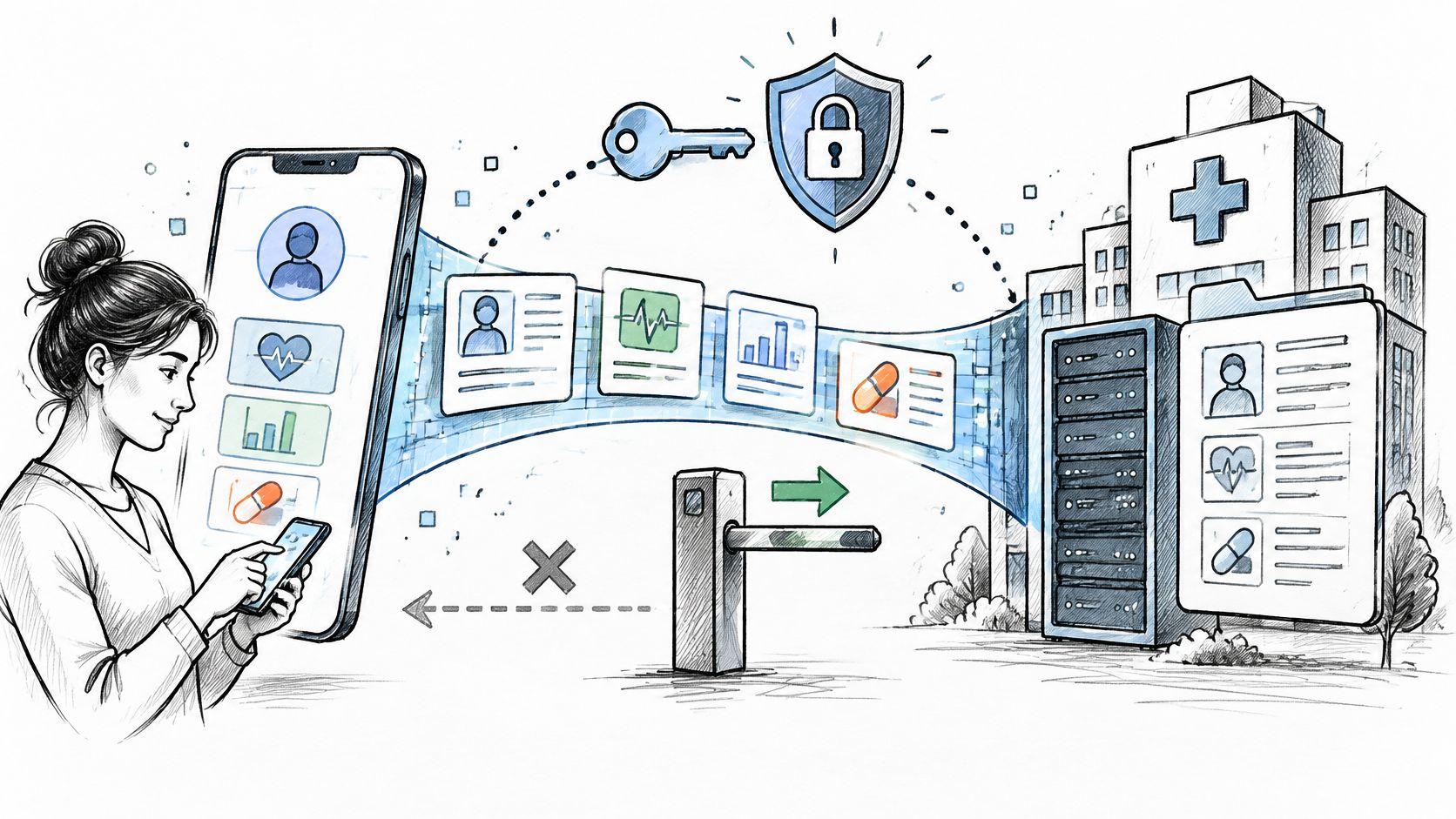
Epic FHIR API capabilities and limits for healthtech teams. Covers FHIR R4 resources, SMART on FHIR auth, sandbox testing, write access, and HL7 v2 gaps.
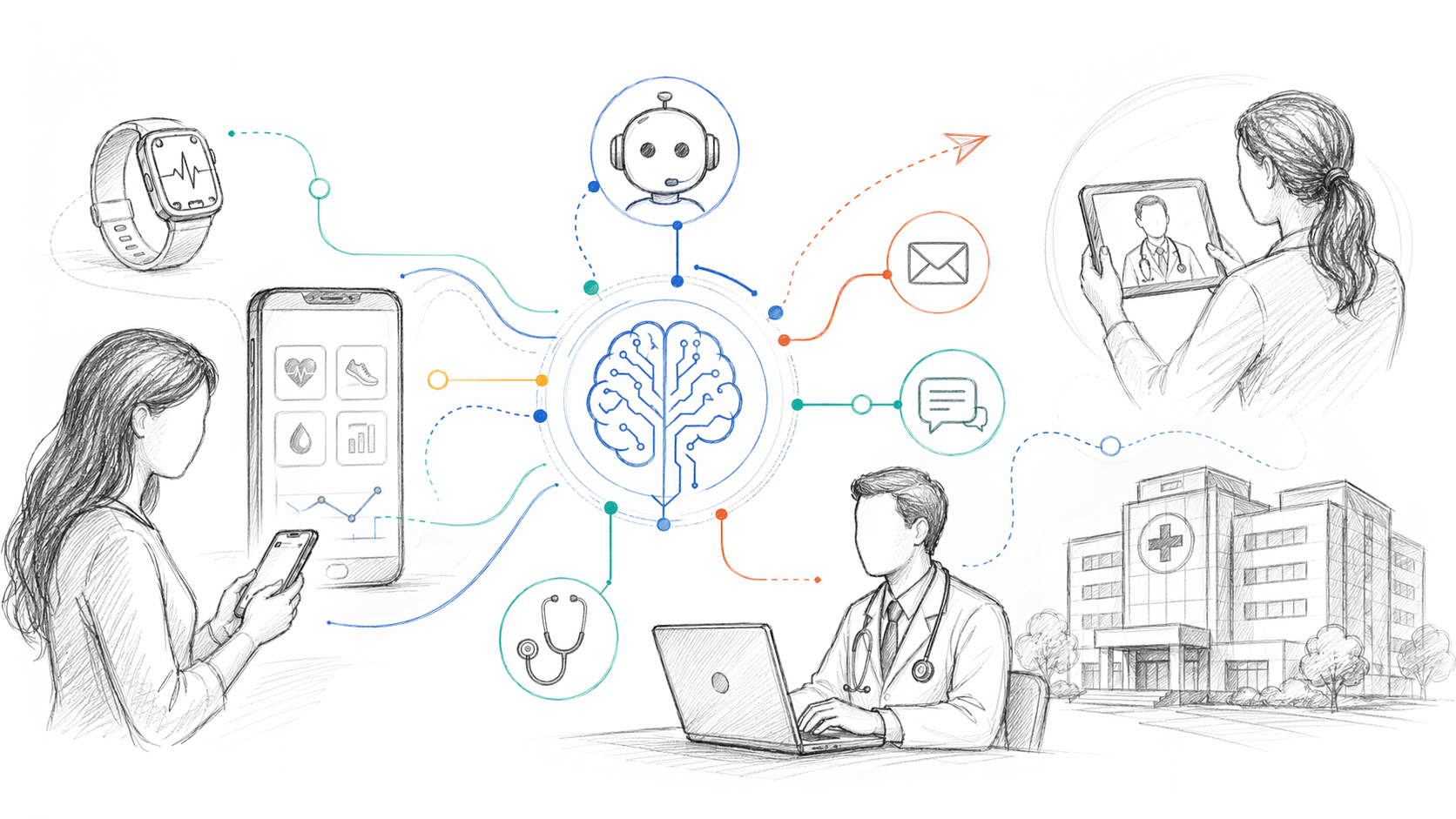
Our guide to AI for patient engagement: conversational assistants, intake, messaging, personalization, platforms and measurement.
Connect with our team to explore how AI expertise can transform your business.