AI in Healthcare
HIPAA-Compliant AI: How to Use LLMs With PHI Safely
How to build HIPAA-compliant AI: when LLM providers need a BAA, data minimization, de-identification, audit controls and a reference architecture.
October 16, 2026Read more
Discover what a care coordination platform is, its key benefits, and how to select, implement, and measure ROI. A complete guide for healthcare leaders.

A patient leaves your hospital on Friday with discharge instructions, medication changes, a specialist follow-up, and home health arranged in theory. By Monday, the primary care physician hasn't seen the specialist note. The home health agency is waiting on a fax. The patient's family is confused about meds. A nurse navigator is calling into a void of disconnected systems. Two weeks later, the patient is back in the ED.
That's not a technology gap. It's an operating model failure.
Hospital executives often treat a care coordination platform like another application to buy, integrate, and train on. That's the wrong frame. A care coordination platform is infrastructure for managing transitions, referrals, outreach, and follow-up across settings that don't naturally work as one system. If your organization is serious about value-based care, post-acute performance, and reducing avoidable leakage, this belongs on the strategic roadmap.
The fragmentation problem shows up in ordinary moments. A discharge planner thinks the referral was sent. A specialist office never receives complete documentation. A patient can't reach anyone who can explain the next step. Each team did part of the work, but nobody owned the full journey.
That's why the category is gaining traction. The global post-acute transition care coordination platform market was valued at USD 1.0 billion in 2026 and is projected to reach USD 2.7 billion by 2036, representing a CAGR of 10.4%, according to Morningstar's coverage of the market projection. That projection matters because it signals a shift from optional workflow software to operational necessity.

Hospitals don't lose money and quality scores because clinicians don't care. They lose because the handoffs are brittle. Data sits in the EHR, but action lives in calls, inboxes, spreadsheets, and memory. That's where patients fall through the cracks.
Three failures repeat across systems:
Practical rule: If your discharge process still depends on manual status checks, unsecured workarounds, or “someone usually follows up,” you don't have a reliable coordination model.
The answer isn't more staff alone. It's a better operational layer. Organizations using Healthcare AI Services can turn fragmented workflows into coordinated ones by connecting systems, automating follow-up, and giving care teams a shared working view of the patient journey.
A care coordination platform runs the work that happens after the clinical decision is made. It assigns next steps, routes tasks to the right team, tracks whether follow-up happened, and surfaces gaps before they turn into readmissions, referral leakage, or patient drop-off.
For an executive team, that distinction matters because the EHR records care, while the coordination platform drives execution across departments, sites, and external partners. If your organization wants fewer missed handoffs and better throughput, you need a system built to manage action, accountability, and timing.

A useful platform sits inside the clinical workflow and connects to the systems your teams already use. Clinicians should be able to launch it from the patient chart, see the current status of referrals, transitions, and outreach, and avoid documenting the same event twice. If the product requires staff to swivel between screens and maintain parallel records, it will fail in live operations.
The platform also needs to function as an execution layer across the enterprise. That means bidirectional integration with the EHR, support for standards such as FHIR and HL7, and workflow logic that spans case management, discharge planning, ambulatory follow-up, community partners, and payer-driven requirements. Leaders should evaluate it as an operating model decision, not a feature purchase.
Executives should reject narrow tools that solve one step and leave the rest of the process fragmented. A care coordination platform should cover the full chain of work around transitions and follow-up, including task management, status visibility, escalation, and patient outreach.
It should not stop at any one of these layers:
Choose a platform that reduces manual coordination work. If it adds duplicate entry, creates another inbox, or introduces a competing version of the truth, adoption will stall and ROI will disappear.
The build-versus-buy decision should be handled with discipline. Some health systems use a HealthTech engineering partner to extend existing infrastructure or close integration gaps, but the standard should stay the same. The platform has to fit your ecosystem, support frontline workflow, and give leadership a clear line from operational performance to financial return.
Most vendor demos look polished. That's not the same as being operationally useful. If you're evaluating a care coordination platform, stop rewarding pretty dashboards and start testing whether the product can run the messy middle of care transitions.
The platform must aggregate more than encounter notes. High-value platforms combine EHR data with claims and social determinants of health, then apply risk logic to prioritize outreach and route work, as outlined in Kangaroo Health's overview of care coordination platforms.
That means your team should be able to answer questions like:
A fragmented patient record produces fragmented care. A 360-degree patient record gives coordinators enough context to act early instead of reacting after deterioration.
A modern platform should trigger tasks from events. If a patient is discharged, the platform should create the next-step workflow automatically. If a remote monitoring value falls outside threshold, it should alert the right nurse. If a referral is incomplete, it should surface the missing items before staff waste time chasing status.
For organizations modernizing process design, ai assisted software development becomes practical. The value isn't generic AI branding. The value is turning repetitive coordination work into rules-based execution with human oversight.
Use this as your minimum standard:
If a vendor can't show how a care coordinator manages a high-risk discharge from first handoff to completed follow-up, the product isn't ready for enterprise use.
Executives approve platforms for one reason. They expect measurable results. The case for a care coordination platform is strong when it improves outcomes and removes waste at the same time.

Clinical performance is the obvious headline. Care coordination has been shown to reduce ED returns by 24% within 7 days and 13% within 30 days, while some programs have documented hospital readmission reductions of up to 76%, according to Harmony Care's roundup of care coordination outcomes. You shouldn't read those figures as guaranteed outcomes for every deployment. You should read them as proof that coordinated execution can materially change utilization.
The ROI doesn't come from “better communication” as an abstract concept. It comes from concrete operating improvements:
A lot of organizations buy too low in the stack. They purchase messaging, referral tracking, or remote monitoring as separate point solutions. Then they wonder why staff still need spreadsheets to run the work.
That's why you should study operational real-world use cases instead of feature checklists. The win is rarely a single tool. The win is a coordinated model where intake, triage, scheduling, monitoring, and follow-up all work from the same operational logic.
One option in this category is Ekipa AI, which supports care orchestration by unifying fragmented data and triggering workflow actions across existing health system tools. That kind of orchestration model aligns with AI Automation as a Service when hospitals want to automate manual coordination steps without replacing core clinical systems.
Buy the platform that makes care teams faster and more accountable. Don't buy the one with the best demo script.
A hospital approves a care coordination platform, the demo looks strong, and six months later nurses still use spreadsheets, referral teams still make phone calls to chase status, and leaders still cannot see where patients drop out of follow-up. That outcome usually starts in implementation, not procurement.
Treat this as an operating model change. The software matters, but execution matters more. A care coordination platform changes who owns the next step, how fast handoffs happen, which exceptions trigger escalation, and how outside partners stay in the loop. If you do not redesign those decisions before go-live, the platform will sit on top of broken process and make the failure easier to document.
Map the actual workflow, not the policy manual. Follow one discharge, one referral, or one chronic care follow-up from start to finish. Watch where staff leave the EHR, where information gets re-entered, where callbacks pile up, and where no one clearly owns the next action.
Then make three explicit decisions. What should be automated. What should be visible and tracked. What should remain clinical judgment. Executives who skip this step usually buy too much workflow rigidity in the wrong places and too little accountability in the places that drive readmissions, leakage, and staff waste.
If the platform does not exchange data cleanly with your EHR and adjacent systems, staff will work around it. Adoption drops fast when care managers have to document twice, referral coordinators have to check status in separate portals, or discharge teams cannot trust that tasks and appointments are current.
Set the architecture before configuration begins. Be clear about which system records the clinical note, which system drives outreach and task management, and which system owns alerts, scheduling signals, and partner updates. Standards such as FHIR and HL7 matter, but your main question is simpler: can this platform support your daily workflow without adding clicks or creating conflicting records?
Use a disciplined implementation plan:
A phased rollout beats a big-bang launch in most health systems. Start with one service line or one use case where coordination failure has a clear financial and clinical cost. That gives you clean feedback on routing rules, data quality, staffing assumptions, and user behavior before you expand.
Do not wait for enterprise deployment to judge success. Review exception rates, time-to-follow-up, closed-loop referral completion, staff touches per case, and task aging within the first weeks. Those early signals tell you whether the platform is reducing manual work or just shifting it around.
If your workflows are unusually complex, your team may need structured support to align process redesign, integration work, and frontline adoption. In those cases, an implementation support model for healthcare workflow deployment can help keep the project tied to operational outcomes instead of technical milestones alone.
Vendor selection goes wrong when leaders buy for current pain only. You're not selecting a feature bundle. You're choosing a long-term operating layer that has to survive clinical complexity, EHR realities, and changing reimbursement pressure.
The biggest blind spot is the one many vendors barely address: the last mile. A critical evaluation angle is how the platform coordinates care for patients who aren't digitally reachable or who face barriers such as housing insecurity, as highlighted in Matrix Medical Network's discussion of underserved populations and care coordination. If the product assumes every patient will respond to portal alerts, it will fail your highest-need populations.
| Evaluation Area | Key Question to Ask |
|---|---|
| Interoperability | Can you show bidirectional integration with our EHR and downstream systems in a live workflow, not a slide? |
| Workflow fit | Which parts of our existing discharge, referral, and follow-up process can be configured without custom code? |
| Last-mile execution | How do you support patients who don't use portals, miss calls, or face social barriers that disrupt follow-through? |
| Care team usability | What does a nurse, care manager, and physician each see during daily work? |
| Analytics | Can we segment results by patient population, site, and workflow type? |
| Compliance | How are audit logs, permissions, and communication records handled? |
| Vendor support | Who owns implementation, optimization, and post-launch workflow changes? |
| Scalability | What breaks first when we expand across service lines, facilities, or external partners? |
Ask for a live walk-through of one real use case. Not a generic product tour. Pick a hospital discharge to home health, a specialist referral, or a high-risk chronic patient follow-up.
Then ask what happens when things go wrong.
If your team is evaluating conversational tools or AI copilots alongside the platform, this HIPAA compliant ChatGPT guide for healthcare is a useful reference for understanding the compliance questions you should raise early.
A thoughtful procurement process usually benefits from a Custom AI Strategy report, especially when the platform decision intersects with automation, analytics, and patient engagement strategy.
If you don't define success before go-live, the vendor will define it for you later. Usually with vanity metrics.

Buyers should demand proof of ROI beyond generic claims by asking for specifics on which patient segments benefit most and what exact metrics improve in pilots, including readmissions, specialist wait times, and disparities reduction, as noted in Healthcare IT Today's discussion of digital health in rural and underserved settings.
Use a balanced scorecard:
Don't accept “improved coordination” as a result. Require baseline data, a defined patient cohort, and a reporting cadence. Ask for segmentation by service line, location, and risk group.
Good pilots answer a narrow question well. They don't try to prove everything at once.
An AI strategy consulting engagement can help define those measures upfront so the platform is evaluated on business outcomes, not demo-day promises.
Usually no. An EHR documents care. A care coordination platform runs the work required to move patients through that care across departments, sites, and external partners. If your EHR module already supports referral management, tasking, outreach, escalation, and accountability in daily operations, keep it. If teams still rely on spreadsheets, inboxes, and manual follow-up, buy a platform built for execution.
Buy the core platform in almost every case. Configure it around your workflows, reporting needs, and governance model.
Build only if your organization has highly specialized pathways, a complex partner network, or a business model that depends on custom coordination logic. The common failure is spending heavily on custom development before proving that the workflow improves throughput, follow-up reliability, or margin.
Weak operational ownership.
Hospitals rarely fail because the software cannot connect. They fail because nobody standardizes the workflow, sets escalation rules, or enforces adoption by role. A care coordination platform will expose every unresolved handoff problem in your system. Treat that as a management issue, not a technical surprise.
Treat the platform like core clinical infrastructure from day one. Review role-based access, audit logs, consent and data-sharing controls, communication settings, and the governance model for any AI-supported workflows. If a vendor cannot explain how access is controlled and decisions are traceable, remove them from consideration.
You should see operational improvement early if the rollout is disciplined. Staff adoption, task visibility, referral closure, and outreach completion tend to improve before finance reports catch up.
Financial return takes longer. That is normal. What matters in the first phase is whether the platform creates process control and reduces coordination failures in the target use case.
Operations and clinical leadership should own it jointly, with IT as a delivery partner. Assign one accountable product owner with authority to make workflow, reporting, and change-management decisions after go-live. Hospitals that treat the platform as a purchased tool stall quickly. Hospitals that treat it as an operating capability get value from it.
If your team needs a sharper view of readiness, governance, and platform fit, connect with our expert team.
If your hospital is evaluating a care coordination platform, make the decision based on workflow discipline, integration reality, and measurable pilot outcomes. That is how executives avoid long implementations with weak adoption. Ekipa AI supports healthcare organizations with AI and workflow strategy across operations, from platform planning through execution.
How to build HIPAA-compliant AI: when LLM providers need a BAA, data minimization, de-identification, audit controls and a reference architecture.

Practical data migration planning guide for healthcare teams. Scope, mapping, compliance, validation, cutover and rollback decisions explained end to end.
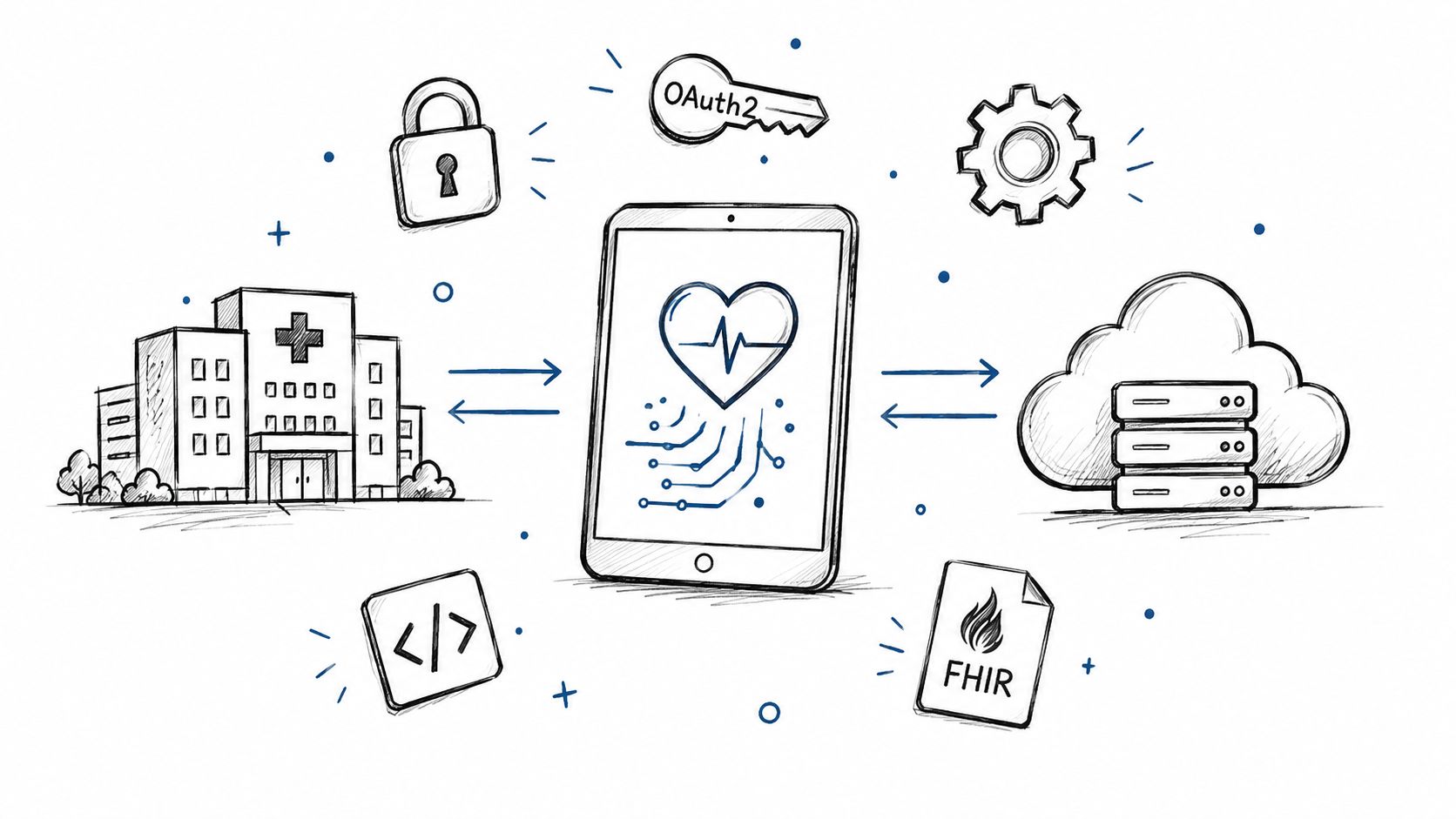
Smart on FHIR guide for healthtech engineers. Learn the OAuth 2.0 launch model, scope syntax, backend services, and US regulatory requirements.
Connect with our team to explore how AI expertise can transform your business.