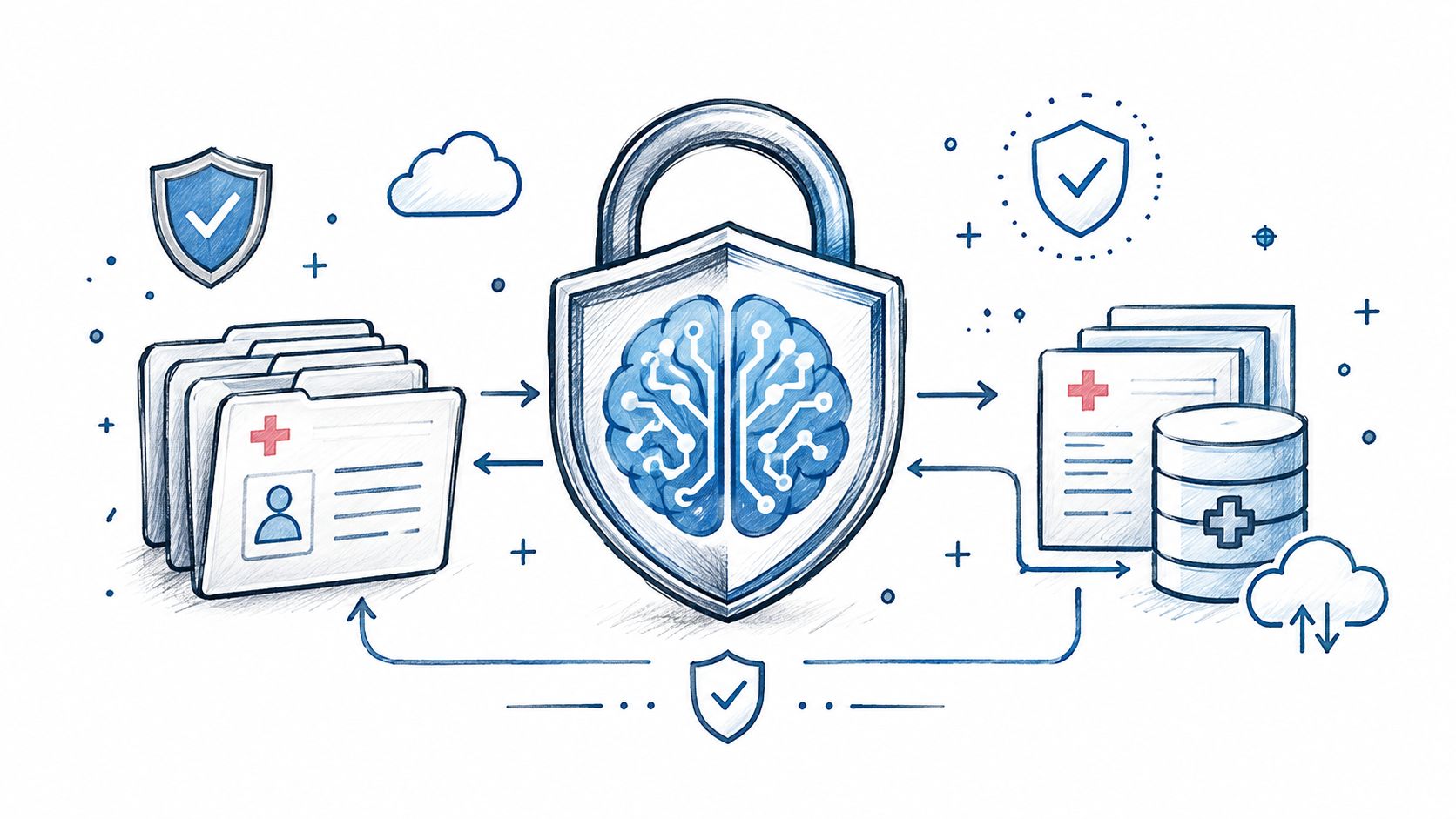
AI in Healthcare
HIPAA-Compliant AI: How to Use LLMs With PHI Safely
How to build HIPAA-compliant AI: when LLM providers need a BAA, data minimization, de-identification, audit controls and a reference architecture.
October 16, 2026Read more
Discover how clinical operations intelligence uses AI to solve hospital challenges. Our 2026 guide explains how to improve efficiency and patient care.

Clinical Operations Intelligence (COI) is much more than just a new tech buzzword; it’s the strategic command center for a modern hospital. Think of it as a proactive system that uses data and AI to see around corners, predict operational needs, and solve problems before they ever affect patients or staff.
Imagine a city without any traffic control—gridlock, unpredictable delays, and frustrated drivers everywhere. For many hospitals, this is a daily reality, constantly reacting to one operational fire after another. Clinical Operations Intelligence acts like that city's central traffic management system, using real-time data and predictive insights to anticipate bottlenecks, sync up resources, and keep everything moving smoothly.

This isn't another dashboard showing you what happened yesterday. It’s a dynamic, forward-looking system that pulls together information from countless sources—from EHRs and staffing schedules to bed management systems. Its purpose is to tackle the biggest headaches in healthcare operations today: staff burnout, soaring costs, and inefficient patient journeys. It’s about shifting from reactive fixes to predictive, intelligent management.
The healthcare industry is at a breaking point. Staffing shortages are a massive problem, with a projected global deficit of over 18 million health workers by 2030. At the same time, administrative tasks are burying clinicians, eating up as much as 30% of their time and pulling them away from what they do best—caring for patients. In an environment like this, running an efficient hospital isn't a luxury; it's a survival strategy.
This pressure is fueling a huge investment in tools like clinical operations intelligence. The global market for AI in hospital operations is set to jump from USD 7.51 billion in 2025 to an estimated USD 25.70 billion by 2030, which is a compound annual growth rate of 27.9%. It’s clear the industry is betting big on data-driven operations.
To really get what COI can do, it helps to see where it comes from. COI is a highly specialized version of a concept that has been transforming other industries for decades. For anyone looking to understand the roots of this approach, digging into Business Intelligence offers great context. BI is all about using data to make smarter decisions, a principle COI simply adapts for the unique, high-stakes world of healthcare.
In essence, Clinical Operations Intelligence takes the core principles of data-driven decision-making and refines them for the unique challenges of a clinical setting. It's about creating a hospital that can think, predict, and adapt in real time.
This proactive approach is what truly sets COI apart. Instead of just flagging problems after they've happened, it gives leaders the insights to prevent them in the first place, making it a cornerstone of modern Healthcare AI Services. It empowers a facility to:
So, how does a Clinical Operations Intelligence (COI) platform actually turn a mountain of raw data into life-saving actions? It’s not magic, and it’s not a single piece of software. Instead, think of it as a sophisticated digital factory where different technologies work together on an assembly line.
At each station, value is added until a finished product emerges: a smart, actionable insight that can genuinely improve patient care and hospital efficiency. The process starts with messy, disconnected data and ends with clear, automated decisions, all while keeping everything secure and compliant.
Let's walk through the four crucial stages that make this happen.
Everything starts with data aggregation. This is the foundational step of pulling together information from dozens of separate systems scattered across a hospital. Without this unified view, any analysis would be incomplete at best and dangerously misleading at worst.
We're talking about a wide range of sources:
This is often where standards like Fast Healthcare Interoperability Resources (FHIR) come in. Think of FHIR as a universal translator, allowing all these different systems to finally speak the same language. This step turns a chaotic jumble of data points into a single, comprehensive dataset ready for the next stage. It can also encompass data from SaMD solutions, which provide valuable clinical insights directly from software.
Once the data is all in one place, the analytics and AI engine gets to work. This is the "brain" of the COI platform. Here, machine learning models and statistical algorithms dig into the aggregated data to spot patterns, make predictions, and find opportunities that no human could see on their own.
This is where raw information becomes true intelligence. For example, the engine could analyze years of admission data, cross-reference it with local public health trends, and accurately predict an upcoming spike in flu patients. Or, it might pinpoint the specific, subtle factors that lead to higher readmission rates for a certain surgical procedure. Its power lies in connecting seemingly unrelated variables to forecast future events with remarkable accuracy.
Predictions are great, but they’re useless if they don't lead to action. The orchestration layer is the bridge between insight and execution. It takes the findings from the AI engine and turns them into automated workflows and clear, recommended actions for hospital staff.
Here’s how that might look in practice:
This is precisely where specialized services like AI Automation as a Service are indispensable. Building these complex, rule-based workflows isn't simple; it requires deep expertise to ensure the right actions are triggered at exactly the right time. This is how you turn a smart prediction into a real-world operational improvement.
Finally, every single step is watched over by the governance and compliance layer. Think of it as the system's security guard and ethical compass, rolled into one. In healthcare, protecting patient data is absolutely non-negotiable. This layer enforces strict adherence to regulations like HIPAA through powerful security protocols.
This involves data encryption, role-based access controls (ensuring a cardiologist can't see psychiatric notes, for example), and detailed audit trails that log every single action taken within the system. Without a robust governance framework, even the most brilliant AI is a liability waiting to happen.
It’s one thing to talk about clinical operations intelligence in theory, but its real value becomes clear when you see it solving the frustrating, everyday problems that hospitals face. These aren't futuristic ideas; they are practical applications delivering real, measurable results today. Seeing how COI tackles these familiar headaches is the best way to grasp its value for both patients and your bottom line.
Many of these examples are powered by real-time data streaming in from connected devices. In fact, many modern IoT healthcare solutions are what make this level of operational awareness possible, forming the digital nervous system of an intelligent hospital.
The process is surprisingly straightforward. Raw data is collected, AI models analyze it for patterns and predictions, and then the system recommends—or even automates—the best course of action.

This simple flow is the engine behind it all. Let’s look at how this plays out in a few common scenarios.
Every hospital manager knows the pain of trying to match staff levels to a completely unpredictable flow of patients. You’re either understaffed during a sudden rush or paying for costly overstaffing when things are quiet. This constant imbalance fuels overtime costs and is a major reason for nurse burnout.
A COI platform changes the game by:
The result? Fewer last-minute scrambles and a sharp drop in overtime. Even more importantly, it gives clinical teams a more stable and predictable work environment, which is a huge factor in improving morale and keeping your best people.
We’ve all seen the gridlock known as "bed blocking." A patient is stuck in the ED, waiting for a bed on an inpatient floor, but none are ready—even though other patients have been discharged. It’s a logistical nightmare that leads to long waits and frustrated patients and staff.
A COI system with smart bed management capabilities acts like a hospital's air traffic controller. It doesn't just see where patients are; it predicts where they need to be and ensures the path is clear.
This kind of intelligent system can anticipate discharge times based on clinical progress and past data. As soon as a doctor enters a discharge order, it automatically kicks off a workflow, alerting housekeeping to prioritize that specific room for cleaning. This alone can slash bed turnover time by 30-50%, getting patients out of the emergency department and into a room much faster.
The operating room (OR) is the financial and clinical heart of a hospital. Any inefficiency—a late start, a last-minute cancellation, or poor scheduling—sends costly ripples through the entire organization.
A COI solution digs into the data to optimize this critical resource. It analyzes surgical backlogs, individual surgeon schedules, equipment conflicts, and procedure durations.
By crunching all this information, the system can spot the most efficient way to sequence cases, group similar procedures to reduce turnover time, and confirm all necessary staff and equipment are ready to go. This doesn't just reduce idle time; it maximizes OR utilization, allowing a hospital to serve more patients and significantly increase surgical revenue.
So, you're ready to bring Clinical Operations Intelligence into your organization. That's a great move, but it's important to see it for what it is: a strategic initiative, not just a software purchase. To get it right, you need a clear, phased roadmap that builds momentum and shows value every step of the way.

Think of it like building a house. You don't just start hammering nails. You start with a blueprint, pour a solid foundation, frame a single room to test your design, and only then build out the rest of the structure.
Before you write a single line of code or look at any dashboards, you have to define your "why." What's the most significant operational headache you're trying to solve right now? Are you battling chronic emergency department bottlenecks, trying to reduce costly operating room turnover times, or struggling with persistent staffing gaps?
Don't try to boil the ocean. The key here is to pick one high-impact, well-defined problem. This sharp focus gives your project a clear North Star, making it far easier to demonstrate a tangible return on investment later. A thorough AI requirements analysis is perfect for this stage, helping you pinpoint the exact use case that promises the biggest and fastest win for your organization.
Once you know what problem you’re solving, the focus naturally shifts to the fuel for your COI engine: your data. A sophisticated intelligence platform is useless if it's running on bad information. This phase is all about taking a hard look at your existing data sources—from your EHR and scheduling software to lab systems and beyond.
You need to get honest answers to some tough questions:
A formal data readiness assessment, often delivered as part of a Custom AI Strategy report, will uncover the gaps and inconsistencies in your data pipeline. This lets you fix those foundational issues before you start building, saving you from major headaches and delays down the road.
Now it’s time for the dress rehearsal. Instead of a risky, "big bang" rollout across the entire health system, the smart approach is to launch a focused pilot program. Pick a single, controlled environment—one department, a specific clinic, or a single workflow—to deploy your new COI solution.
A pilot program gives you some major advantages. You can:
Following a structured AI Product Development Workflow is crucial here. It keeps the pilot on schedule and ensures the solution you build is not only technically solid but also genuinely useful for your team.
With a successful pilot under your belt, you’ve proven the concept and built internal momentum. Now you're ready to scale. This final phase is about carefully expanding the COI solution to other departments and workflows, applying the lessons you learned from the pilot to make each subsequent rollout smoother than the last.
But going live isn't the finish line. The best COI systems are never really "done." The optimization stage is a continuous cycle of monitoring performance, feeding the system new data, and refining the AI models to make them smarter. This iterative process ensures your COI platform doesn't just deliver value on day one—it becomes an increasingly powerful asset for your organization over the long term.
While this roadmap provides a clear path, it's wise to anticipate potential roadblocks. Many organizations run into similar challenges during implementation, but with some foresight, they are entirely avoidable.
The table below outlines some of the most common pitfalls organizations face when deploying Clinical Operations Intelligence and offers practical solutions to navigate them.
| Common Pitfall | Impact on Project | Proactive Solution |
|---|---|---|
| Lack of Clear Business Case | The project struggles to get funding and executive buy-in. ROI is difficult to prove. | Start with a focused use case targeting a significant pain point (e.g., reduce ED wait times by 15%). Define success metrics upfront. |
| Poor Data Quality or Accessibility | The COI platform produces unreliable insights, leading to a loss of trust among clinicians. | Conduct a thorough data readiness assessment (Phase 2). Invest in data cleansing, integration, and governance before development begins. |
| Ignoring Clinician Workflow | The new tool is seen as a burden, leading to low adoption rates and workarounds. | Involve frontline staff (nurses, doctors, schedulers) in the design and pilot phase. Ensure the tool integrates seamlessly into their daily tasks. |
| Treating it as a "One-and-Done" IT Project | The system becomes outdated, and its predictive accuracy degrades over time. | Establish a cross-functional team (IT, clinical, operations) to own the platform. Plan for ongoing optimization and model retraining (Phase 4). |
| "Analysis Paralysis" | The team gets stuck trying to build the "perfect" all-encompassing solution from the start. | Follow the phased approach. Start with a small, manageable pilot (Phase 3) to demonstrate value quickly and learn from real-world experience. |
By anticipating these issues, you can steer your COI implementation away from common setbacks and toward a successful, high-impact outcome that truly improves how your organization delivers care.
So, you’ve invested in a clinical operations intelligence (COI) platform. How do you actually prove it's working? The real measure of success isn't found in technical specs or abstract data points. It’s about delivering concrete results that leadership, clinicians, and even patients can see and feel.
The ultimate goal is to connect the dots between the insights you’re generating and measurable improvements in your hospital's financial health, daily efficiency, and quality of care. When you can do that, COI stops being just another IT project and becomes a core part of your operational strategy. Purpose-built Healthcare AI Services are designed from the ground up to tie every analysis directly to a business goal you can measure.
When leadership asks to see the return on investment, the most powerful answer often lies in the budget. In a world of tight margins and rising expenses, even small operational inefficiencies can add up to millions in wasted costs. COI gives you the tools to find these financial leaks with surgical precision.
Think about staffing, for example. Instead of just reacting to patient volume, you can use predictive analytics to forecast demand and build smarter schedules. This simple shift drastically cuts down on expensive overtime and the need for last-minute agency nurses. In fact, properly optimized staffing can reduce labor costs by 5-10% without ever compromising the quality of care.
A few other critical financial KPIs to watch are:
At its heart, clinical operations intelligence is an efficiency engine. It’s designed to find and fix the bottlenecks that cause friction for your staff and patients, making daily workflows smoother and more predictable. This is often where frontline teams feel the impact most directly.
Take the classic problem of long wait times in the Emergency Department (ED). A COI platform can analyze the entire patient journey in real-time—from the moment they walk in to when they're admitted or discharged—to pinpoint the exact source of a delay. By forecasting patient surges and automating the bed assignment process, hospitals have successfully cut ED wait times by as much as 25%.
A COI platform transforms hospital operations from a series of disjointed, reactive tasks into a synchronized, proactive system. It's like giving your operations team a real-time map and a GPS that reroutes them around traffic before they even hit it.
Key operational metrics to monitor include:
Ultimately, any financial or operational gain is only meaningful if it supports the core mission: delivering safe, high-quality care. COI helps achieve this by creating a calmer, more predictable clinical environment. When your staff isn't constantly putting out fires, they have more time and energy to focus on their patients.
A perfect example is the 30-day readmission rate. By using AI models to identify high-risk patients before they even leave the hospital, you can ensure they have the right follow-up care in place. This not only leads to better outcomes but also helps you avoid steep financial penalties. Drawing on a broad library of real-world use cases allows a hospital to deploy strategies that have already been proven to work.
Smoother handoffs and shorter wait times also naturally lead to higher patient satisfaction scores, which are a direct reflection of the quality of care you provide.
Getting a clinical operations intelligence initiative off the ground is much more than a technology rollout—it’s a fundamental shift in how your organization operates. The path forward is logical, but navigating it demands a unique kind of expertise that sits right at the intersection of clinical reality and advanced AI. Frankly, choosing who guides you on this path is the single most important decision you'll make.
The right partner is never just a software vendor. Think of them as a strategic ally who genuinely understands the high-stakes, pressure-filled world of healthcare. They need to bring a combination of deep industry experience and battle-tested AI development skills, ensuring the solution doesn't just work on a server but works for your clinicians on the floor.
When you start evaluating potential partners, you’re looking for a team that can stick with you for the entire journey. It all starts with foundational AI strategy consulting to pinpoint where you'll get the biggest wins, and it extends all the way through implementation and beyond. A genuine HealthTech engineering partner brings a collaborative spirit, not just a block of code.
Here's what really matters:
Choosing a partner is about finding an extension of your own team—one that is as committed to improving patient outcomes and operational efficiency as you are.
This kind of partnership is what turns a daunting technical project into a manageable, value-focused process. From creating a Custom AI Strategy report that maps out your specific journey to building the internal tooling your teams need, the right expertise makes all the difference.
The ability to anticipate patient needs, optimize your resources, and make care delivery more efficient isn't just a "nice to have" anymore—it's becoming essential for survival and growth. The good news is that with a suite of powerful AI tools for business and a proven approach to getting them running, the path is clearer than ever.
The journey doesn’t have to begin with a massive, risky investment. It starts with a strategic conversation. By working with our expert team, you can finally put your clinical data to work and build a more resilient and patient-focused healthcare organization.
As leaders start thinking about what clinical operations intelligence can do for them, a few key questions always come up. Let's tackle them head-on, so you can get a clear picture of how this technology creates real-world value for your hospital, your teams, and your patients.
It’s a great question because the difference is fundamental. Think of your standard dashboard as a rearview mirror. It’s great at showing you what’s already happened—yesterday's patient census, last week's bed turnover rate, or last month's average length of stay. It’s all historical data.
Clinical operations intelligence, on the other hand, is more like a GPS navigation system with real-time traffic alerts. It doesn't just show you the road you've been on; it analyzes live data to predict what’s ahead, suggests the best route, and can even automatically re-route you around a jam. COI turns data from a passive report into an active, forward-looking decision engine. As we explored in our AI adoption guide, making that leap from reactive to predictive is what defines modern healthcare operations.
There's no single price tag, as the cost really depends on your starting point and your goals. An implementation can be anything from a targeted pilot project in a single department to a full-scale, enterprise-wide deployment. The key is to think about the return on investment (ROI) from day one, not just the upfront expense.
A well-planned pilot, like one focused on smoothing out operating room schedules, can often pay for itself and fund the next phase of the rollout. A smart way to begin is with AI strategy consulting to map out your specific needs and create a phased, budget-conscious roadmap that delivers clear wins at every step.
For any platform handling patient information, security isn’t just a feature—it’s the foundation. A properly designed COI platform is built from the ground up to be secure and compliant with regulations like HIPAA. This involves several layers of protection working together.
You should always look for these critical security measures:
On top of this, the analytics are typically run on anonymized or de-identified data whenever possible. This allows the system to uncover powerful operational insights without ever putting patient privacy at risk.
The best way to start is by focusing on a problem, not the technology. Pinpoint your single biggest operational headache. Is it chronic overcrowding in the ER? Constant staffing gaps on the wards? Or maybe patient flow bottlenecks that cause discharge delays?
Once you have a clear target, the next move is to hold a discovery session with experts who understand both the clinical and technical sides. This will help you identify the highest-impact use case and build a compelling business case for a pilot project. Your goal is to find that "quickest win" that solves a painful, tangible problem and clearly demonstrates the value of this approach.
Ready to turn your operational challenges into opportunities for growth? At Ekipa AI, we help you uncover and execute AI transformation opportunities with a tailored strategy. Start building your more efficient, data-driven future today.
How to build HIPAA-compliant AI: when LLM providers need a BAA, data minimization, de-identification, audit controls and a reference architecture.
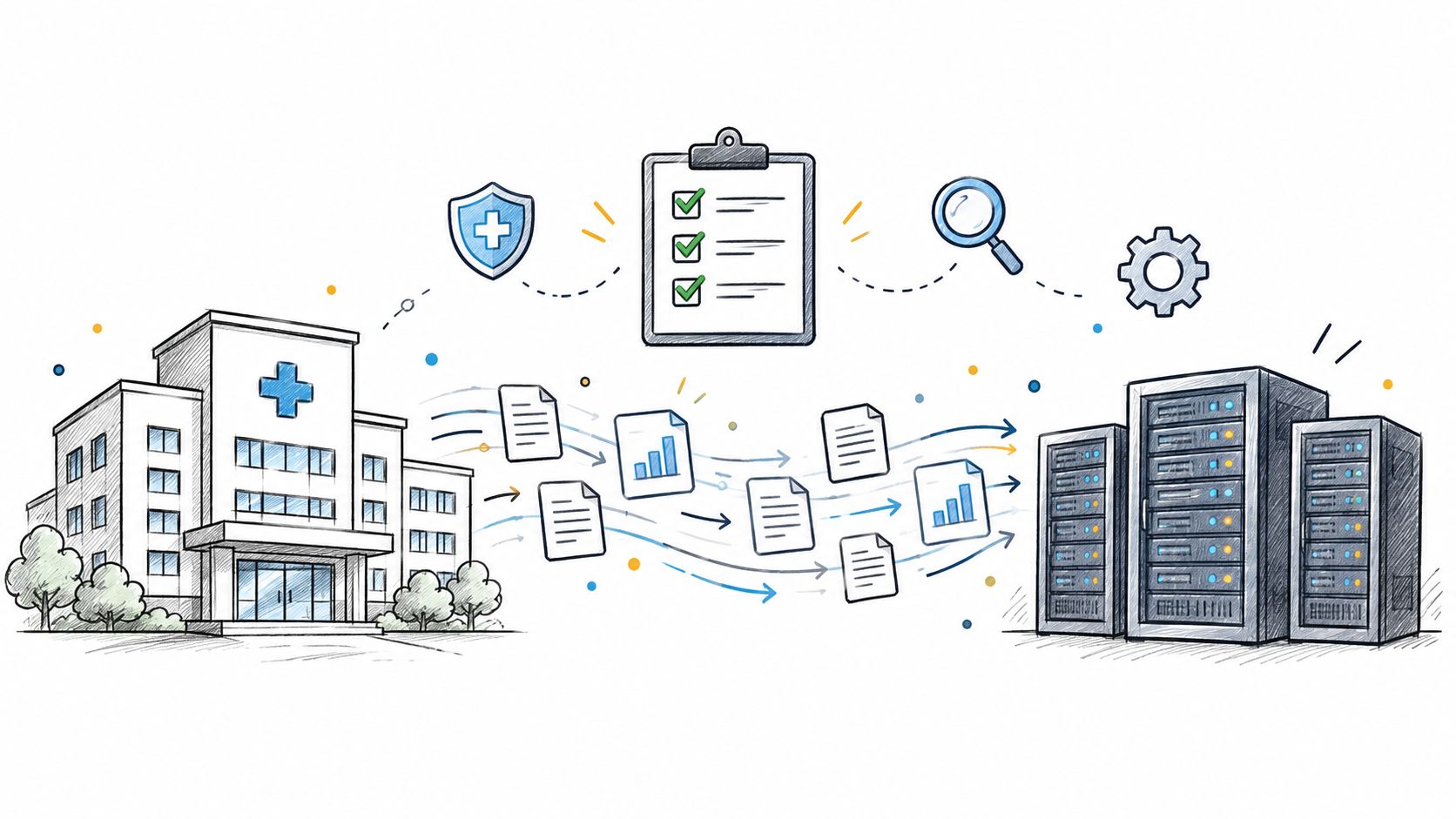
Practical data migration planning guide for healthcare teams. Scope, mapping, compliance, validation, cutover and rollback decisions explained end to end.
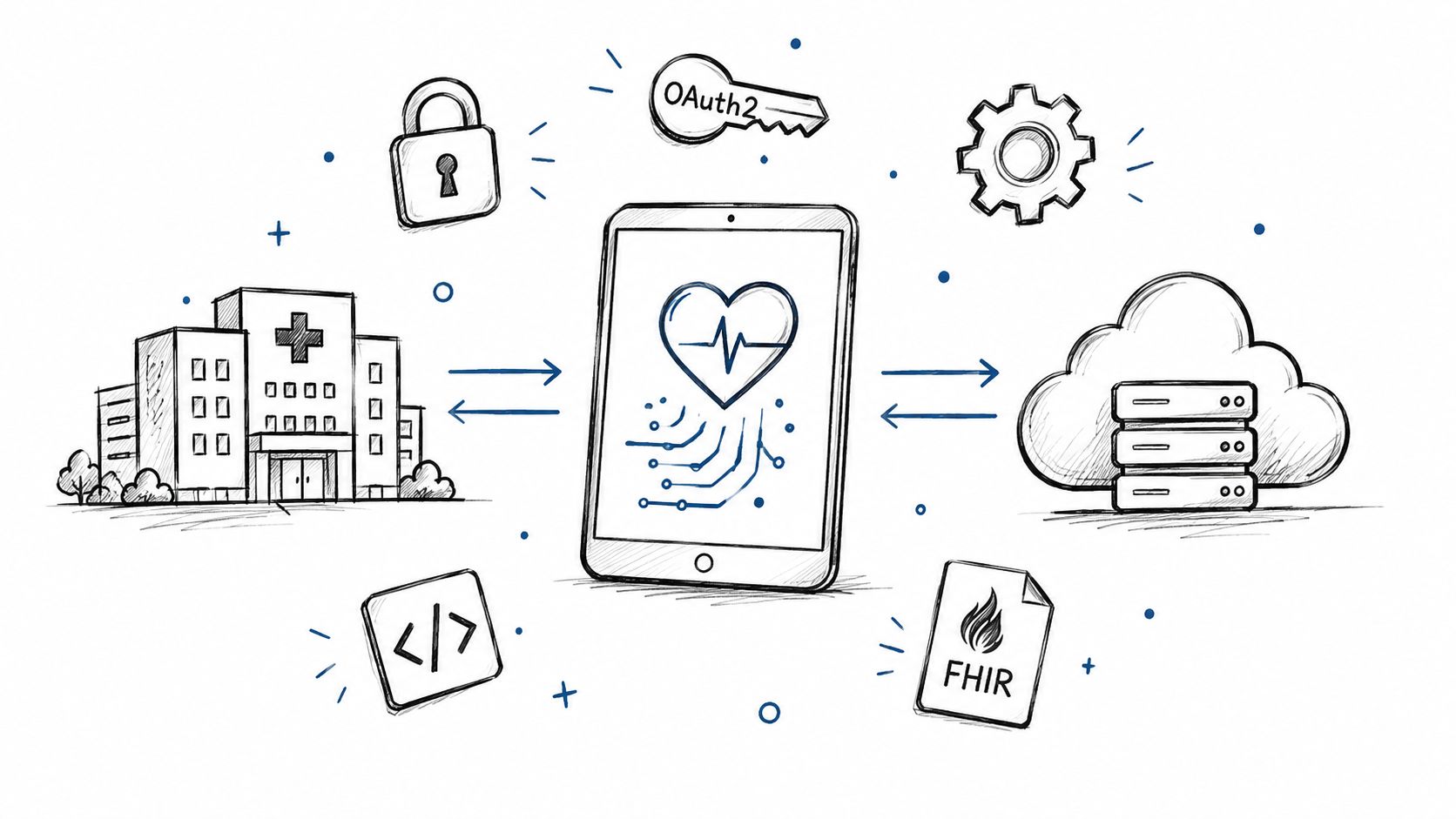
Smart on FHIR guide for healthtech engineers. Learn the OAuth 2.0 launch model, scope syntax, backend services, and US regulatory requirements.
Connect with our team to explore how AI expertise can transform your business.