
AI in Healthcare
HIPAA Compliance Audit: A Practical Guide for 2026
Plan, run, and remediate a HIPAA compliance audit in 2026 with this practical guide covering scope, evidence, gaps, and reporting for IT and execs.
September 29, 2026Read more
Explore connected care solutions, from FHIR-based architectures and RPM workflows to scaling strategies for healthtech leaders and clinical operators.
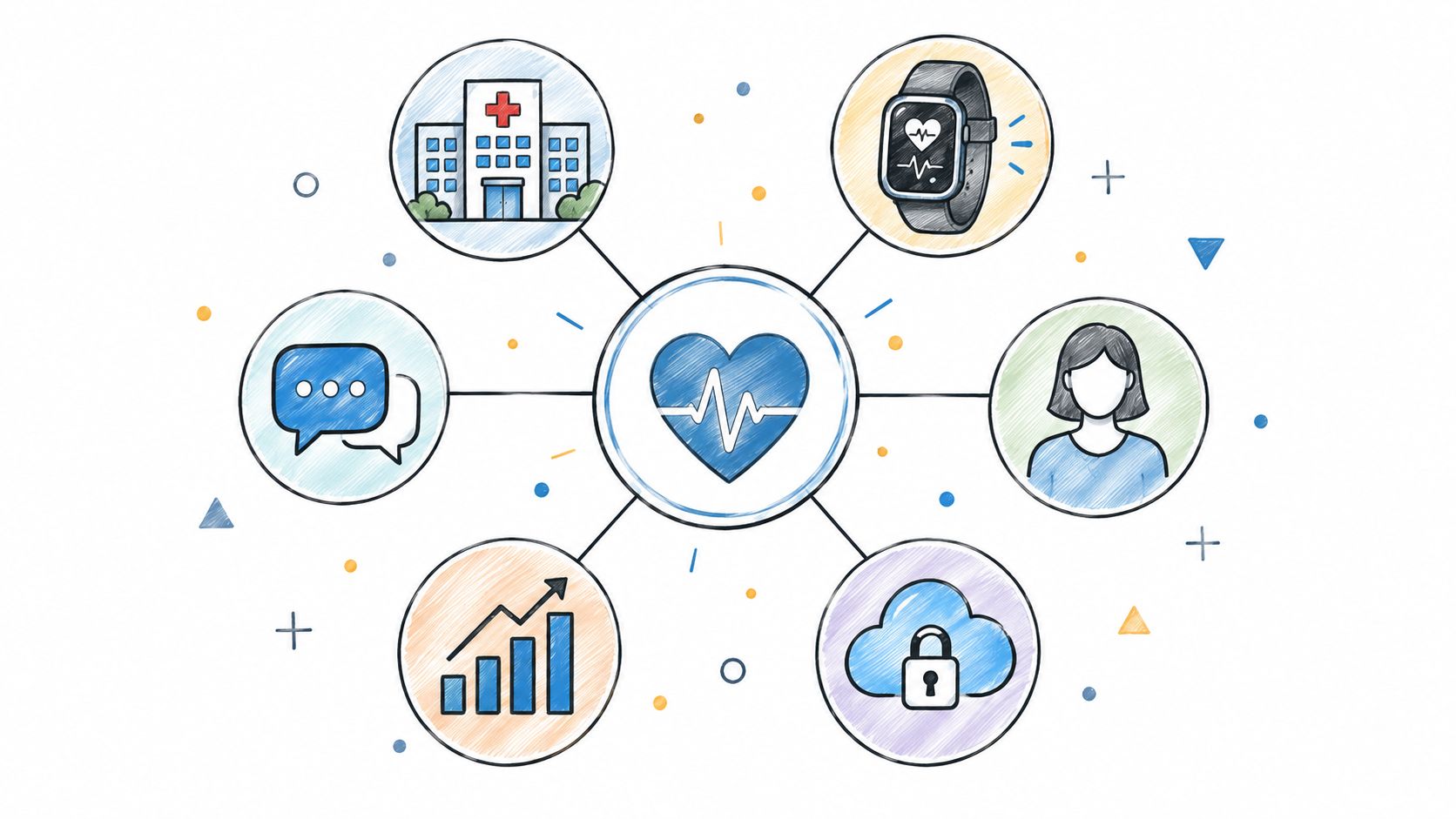
Many teams discuss connected care as though the problem is device coverage. That framing misses the actual failure point. A clinic can add wearables, sensors, and app-based check-ins and still end up with a messy workflow, unreadable data, and no clean path to reimbursement.
Connected care solutions are not a gadget stack. They're an operating model that only works when clinical users, finance stakeholders, interoperability rules, and authorization logic are aligned inside a single pipeline. In practice, that means the platform matters less than the way data moves, gets normalized, and turns into action.
Health systems are surrounded by apps, sensors, and Internet of Things devices, but adoption depends on whether clinicians can use the data inside daily care. In aging-at-home and chronic-care settings, the problem is rarely access to technology. The harder part is turning scattered inputs into something a nurse, care manager, or physician can act on without extra manual work. The Milken Institute notes that three in four adults over 50 want to age at home, while only half of adults 55+ use health-related or assistive technologies, even though the broader ecosystem includes 350,000 mobile health apps, nearly 3,000 AgeTech companies, and 18.8 billion IoT-connected devices globally Milken Institute report.
The hardware exists; the coordination does not. The same report says solutions are fragmented and hard to access or use together, which is where connected care breaks down when teams treat each app, device, or portal as a separate product instead of one service layer.
Practical rule: if a nurse has to leave the workflow to interpret data, copy it into another system, or chase the patient for context, the solution is already failing.
The strongest connected care deployments I have seen behave like a digital front door. They route the right data to the right team member, preserve identity and privacy across systems, and avoid forcing patients to become system integrators. Teams that treat this as a coordination problem usually start with workflow automation before they buy another device. Payment design matters too. Without sustainable reimbursement, even a technically sound rollout becomes a pilot with no operating path.
Vendors still sell connected care as if distribution alone will drive adoption. It does not. Health systems buy longevity, not novelty, and the operational test is whether the workflow holds up under real clinical pressure.
The business case for connected care is no longer theoretical. One independent market report estimated 30.7 million people used connected care solutions at the end of 2022, rising to 33.3 million by the end of 2023. Remote patient monitoring made up the largest share, with 28.3 million users in 2022 and 29.9 million in 2023. The same report projected 57.2 million connected care users by 2028 and estimated North American market revenue at US$33.3 billion in 2023, with a forecast rise to US$60.0 billion by 2028 market report.
Claims, not marketing decks, show the shift. A peer-reviewed claims analysis found 13,529,594 remote-monitoring services worth US$664,518,754 between 2019 and 2023, with primary care providing 48% of services claims analysis. The same analysis found 6,377,468 services in primary care and 92% of remote patient monitoring occurring in physician offices, compared with 4% at home and 4% in other care sites.
That pattern matters because connected care is already embedded in ambulatory operations, not confined to consumer tools. Medicare covers remote patient monitoring for chronic and acute conditions through separate procedure codes, and CMS requires physiologic data collection for at least 16 days in a 30-day period for RPM. The 16-day rule does not apply to treatment management codes 99457, 99458, 98980, and 98981 CMS guidance.
That reimbursement structure changes how CTOs should design the platform. RPM is a billable care pathway, so it has to fit scheduling, documentation, alerting, and follow-up without creating duplicate work. If the workflow forces clinicians to copy data into another system or reconcile alerts by hand, the program becomes a cost center even when the interface looks polished.
The strongest connected care programs reuse the same data stream across longitudinal trend tracking, care-team tasking, and payer documentation. That only works when the architecture keeps the data usable across those steps. Revenue, care delivery, and platform design now sit in the same operational decision.
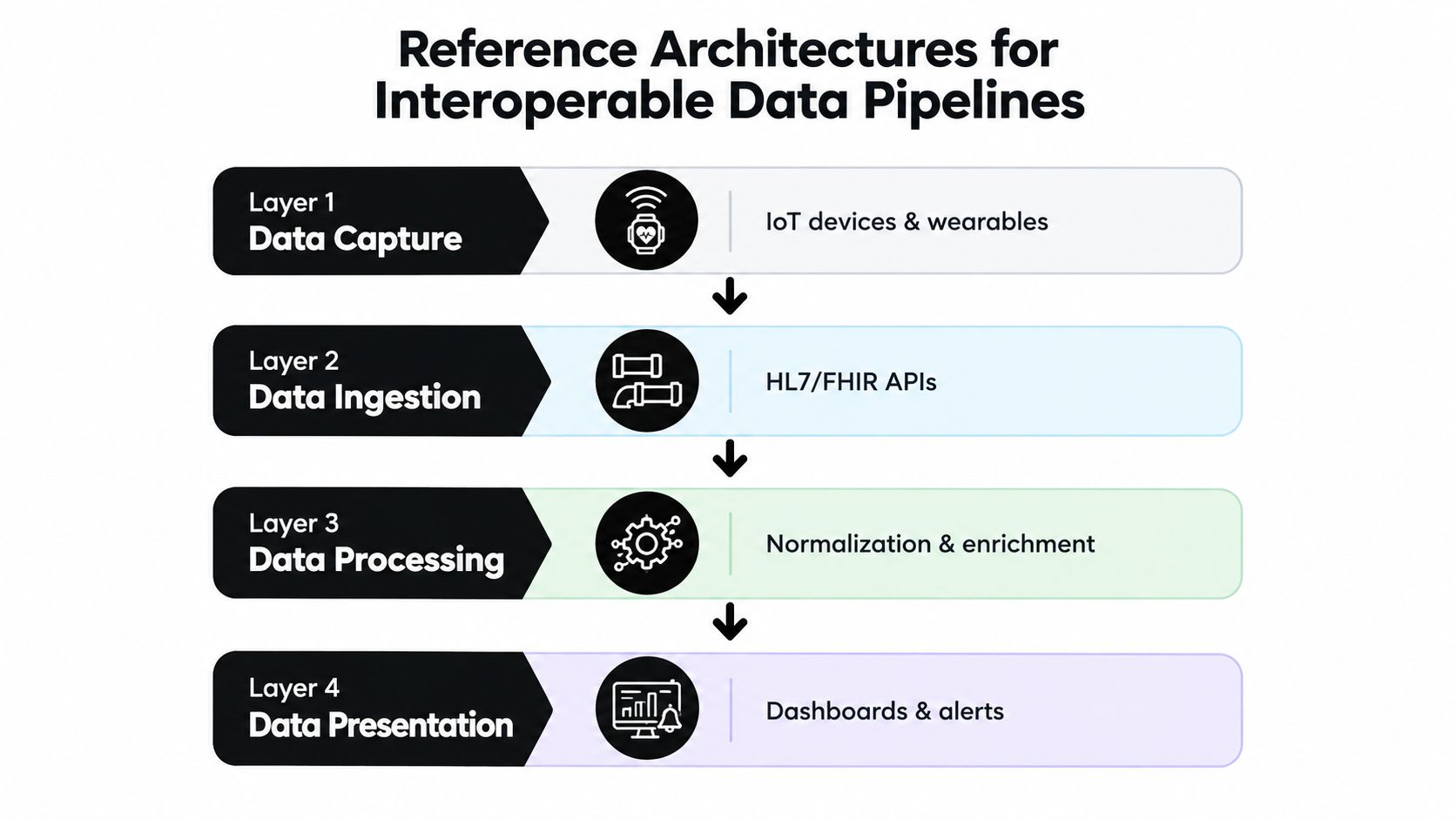
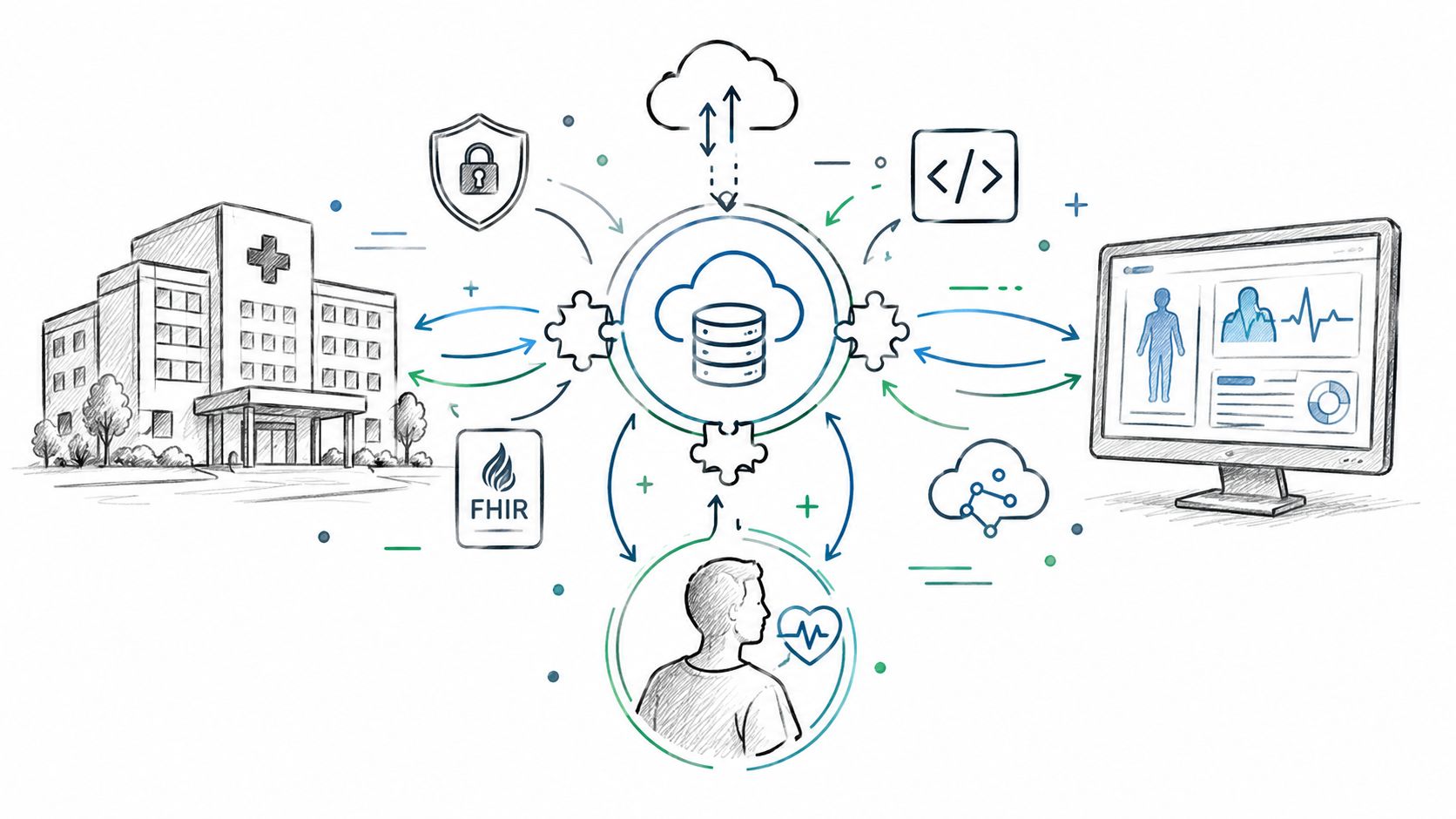
Connected care platforms need a four-layer pipeline, not a loose collection of dashboards. The architecture should move from data collection, to transmission and storage, to algorithmic analysis, and finally to information presentation. If any layer is missing, the stack ends up looking integrated while still failing in production.
The first layer is device capture. That includes wearables, bedside sensors, home monitors, and patient-generated inputs. The second is ingestion, where payloads have to be standardized before they can do anything useful. That's where HL7 FHIR-based integration layers and API-centric designs matter, because they let EHRs, care-management platforms, and government systems exchange data in a usable format rather than a brittle one Telstra Health.
Interoperability here is not just transport. It's semantic consistency. A blood pressure reading that arrives in the wrong unit, or a medication event that can't be matched to the right patient identity, doesn't become actionable just because it reached the server. The architecture has to preserve identity, privacy, and meaning across heterogeneous systems interoperability architecture.
If the data can't be interpreted by downstream workflows without manual review, it isn't interoperable enough.
The third layer is analysis. That's where trend detection, rules, and alert logic belong, but only after the platform has normalized device payloads and resolved patient identity. The fourth layer is presentation, where clinicians should see dashboards, alerts, and care tasks that connect directly to their existing routines.
A strong design decision here is whether to expose raw data, summarized data, or both. Raw feeds are useful for auditability and clinical nuance, but summarized data is often the only thing that fits bandwith, workflow, and attention constraints. The right answer depends on the care setting.
One practical way to think about the stack is this:
That sequence is what turns connected care from passive monitoring into a usable clinical system. It's also why many teams struggle when they buy point solutions without a shared data model. The software may work, but the workflow doesn't.
Connected care shows its value most clearly in chronic disease management, post-acute support, and aging-at-home workflows. In those settings, the goal is not to collect more data. It is to surface the right signal early enough for a nurse, physician, or caregiver to act on it.
Remote monitoring has already moved into everyday ambulatory practice, so the workflow has to fit primary care schedules, documentation rules, and patient communication patterns. If the program only works in a pilot room, it will stall when it meets real clinic operations.
The useful version is boring in the best way. A trend is reviewed, a task is queued, a follow-up happens, and the record reflects what changed. That is why stronger platforms avoid duplicate manual review and surface only the exceptions that matter. The payoff is less guesswork for the care team.
Aging at home creates a different problem. Families end up managing disconnected tools, each with its own login, alert style, and support burden. The Milken Institute's recommendations, taxonomize solutions, validate proofs of concept, build sustainable payment models, create a digital front door, point in the right direction.
That advice works because it matches caregiver reality. Home care fails when the system adds more fragments than a family can coordinate, especially when those fragments do not share context.
For teams designing healthcare offerings, Healthcare AI Services can sit beside connected monitoring when the underlying need is alert triage, data presentation, or documentation support. The value is not AI for its own sake. It is cleaner workflow, fewer false handoffs, and records that clinicians can genuinely use.
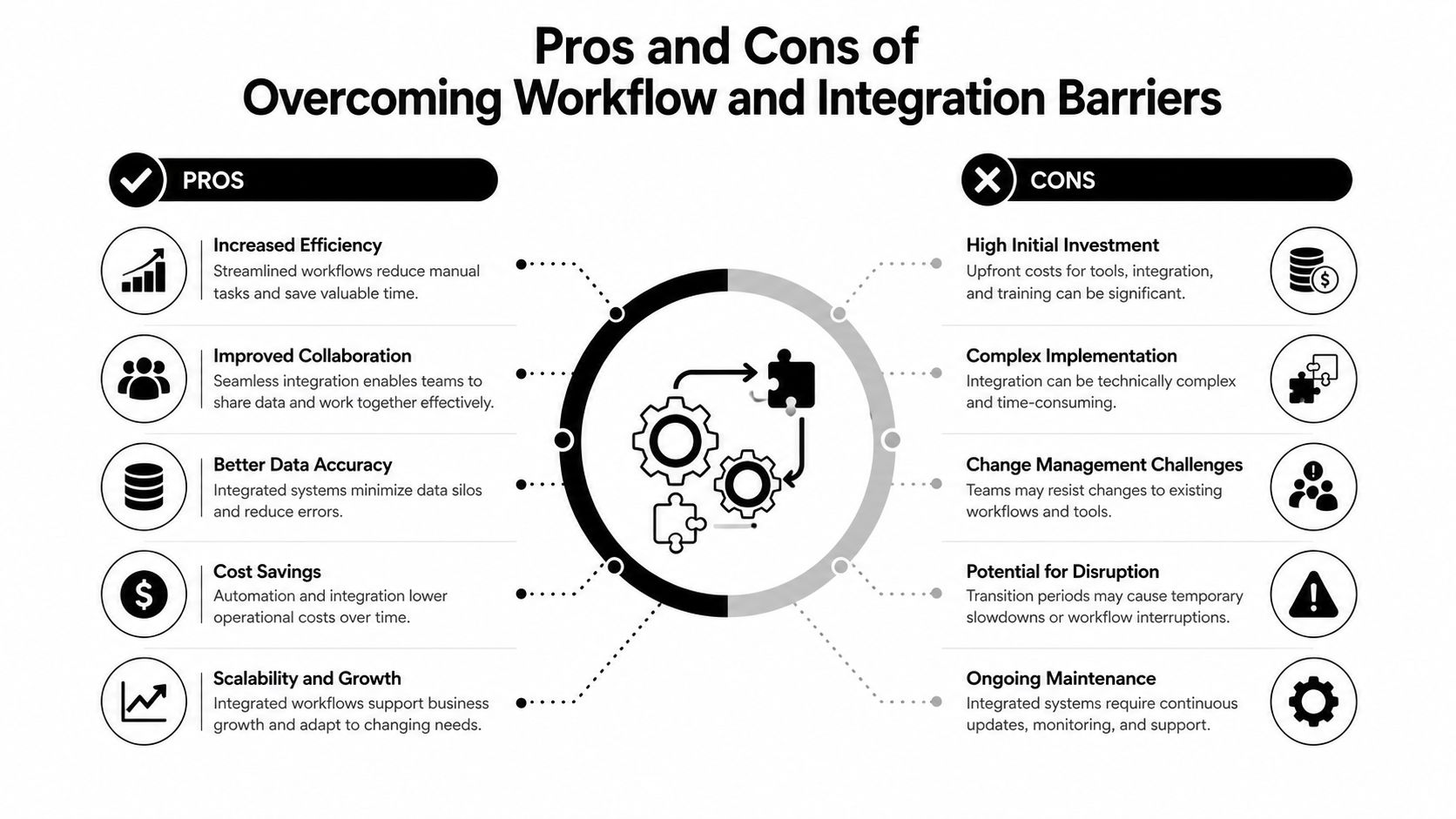
The hardest connected care problems are usually operational. A physician sees noisy alerts, a nurse gets data too late to act, and finance wants to know who absorbs the extra labor. Deloitte's analysis shows the split clearly, providers rank workflow integration, proving end-user value, and budget constraints as the top barriers, while medtech leaders focus more on interoperability and privacy Deloitte.
A connected care rollout fails when it serves only one group. Clinical users need fewer clicks and clearer tasks. Finance teams need reimbursement logic and cost control. Authorization rules also have to be explicit, so everyone knows what can be shared, with whom, and under what conditions.
Adoption therefore depends on simplifying workflow integration, proving end-user value, and resolving data authorization ambiguity. Deloitte's respondents ranked those same three barriers highest. If the program misses any one of them, pilots may look good and still stall when they reach everyday operations.
The real integration problem is not data movement. It is decision alignment.
Teams often treat change management as training, then wonder why adoption stays weak. Training matters, but it cannot rescue a workflow that asks clinicians to interpret too much on the fly. The platform has to make the next step obvious, not just technically possible.
Strong implementations map alert thresholds, escalation paths, and documentation requirements before rollout. That gives the care team one working process instead of three systems pretending to be one service. If the workflow works on paper but not in clinic, the architecture is incomplete.
For teams doing the rollout, AI Product Development Workflow can help structure implementation support around clinical adoption, not only software delivery. A connected care stack scales only when the deployment plan matches how people really work.
Connected care breaks down when teams buy for features instead of operations. A vendor can demo device support, but once the program includes EHR integration, clinical workflow design, privacy controls, and payer alignment, the decisive test is whether the partner can work through the care system end to end.
A pure software vendor usually leads with feature breadth. A healthtech engineering partner should show how clinical requirements become working systems, how EHR integrations are maintained, and how compliance engineering is handled across the product lifecycle. That distinction matters because connected care projects often fail where product, operations, and regulation meet.
A practical filter is straightforward:
The ITAD data security checklist is a useful procurement check even when the project is not about hardware, because vendor selection still has to cover data handling, asset disposition, and security hygiene.
For teams deciding whether to build internally or externally, custom healthcare software development can fit when workflows are unique and compliance demands are tight. Ekipa AI is one option in that category, especially where product teams need help with use case definition, EHR integration, and deployment planning.
Decision alignment matters more than data movement.
A strong partner should move from discovery to architecture to implementation without forcing the client to stitch together three different firms. That matters when the work spans clinical software, AI adoption, and operational reporting. It also matters when FHIR pipelines need to be normalized before they hit the EHR, because a clean interface is not enough if the receiving workflow cannot act on the data.
The right choice depends on how much change your team can absorb. Some vendors are fine for a narrow pilot. Others can support the full operating model, including escalation logic, documentation rules, and reimbursement alignment. If the partner cannot explain those trade-offs clearly, they are probably selling software, not helping you run a care program.
For teams comparing productized support, AI tools for business can fill narrower internal gaps, but only if they connect back to the larger care model. Otherwise, they become another silo with a nicer interface.
How do you secure patient data across heterogeneous devices?
Start with identity, access, and payload normalization. The core task is keeping meaning intact as data moves across systems, while still controlling who can see and act on it. That is why interoperability needs both standards and workflow controls Philips interoperability paper.
How long does a FHIR-based EHR integration usually take?
There isn't a single universal timeline, because the primary variable is how messy the source systems are. Projects move faster when the data model is already normalized and the care workflow is defined before integration starts.
How do you prove ROI to payers and health system leaders?
Tie the program to reimbursable workflows, reduced manual review, and clearer follow-up tasks. The strongest case is when the platform supports care delivery and documentation inside a covered model rather than creating a separate workstream.
What should leaders expect from a mature connected care stack?
It should turn data into action without forcing staff to re-enter information, guess at patient context, or maintain multiple disconnected portals. That is the difference between connected care and another monitoring tool.
Plan, run, and remediate a HIPAA compliance audit in 2026 with this practical guide covering scope, evidence, gaps, and reporting for IT and execs.
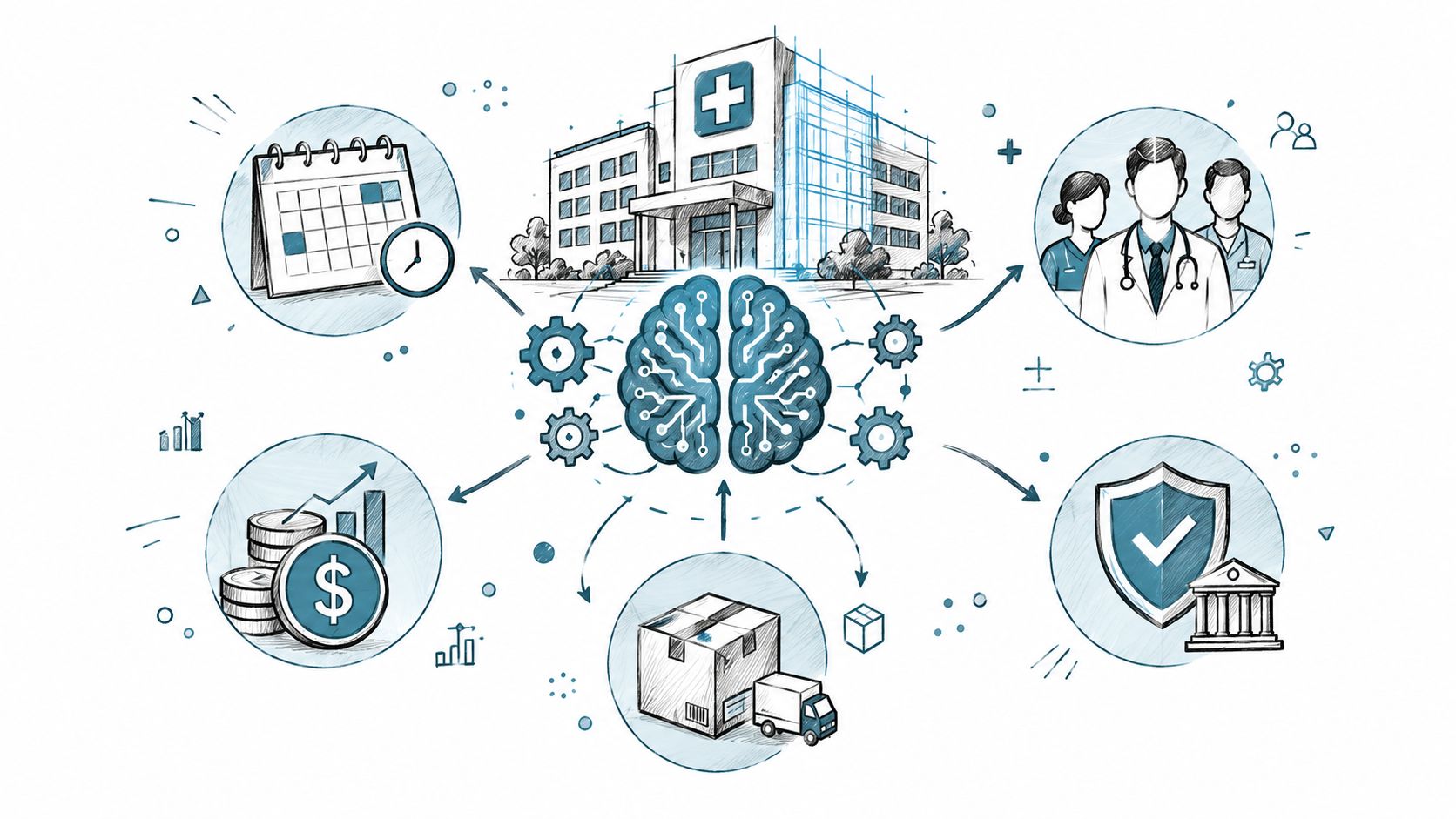
Discover how AI in healthcare operations transforms scheduling, revenue cycles, and workflows. Learn implementation strategies, ROI metrics, and governance.
A practical guide to healthcare data interoperability: FHIR, APIs, patient matching, governance, compliance, and an implementation roadmap with real trade-offs.
Connect with our team to explore how AI expertise can transform your business.