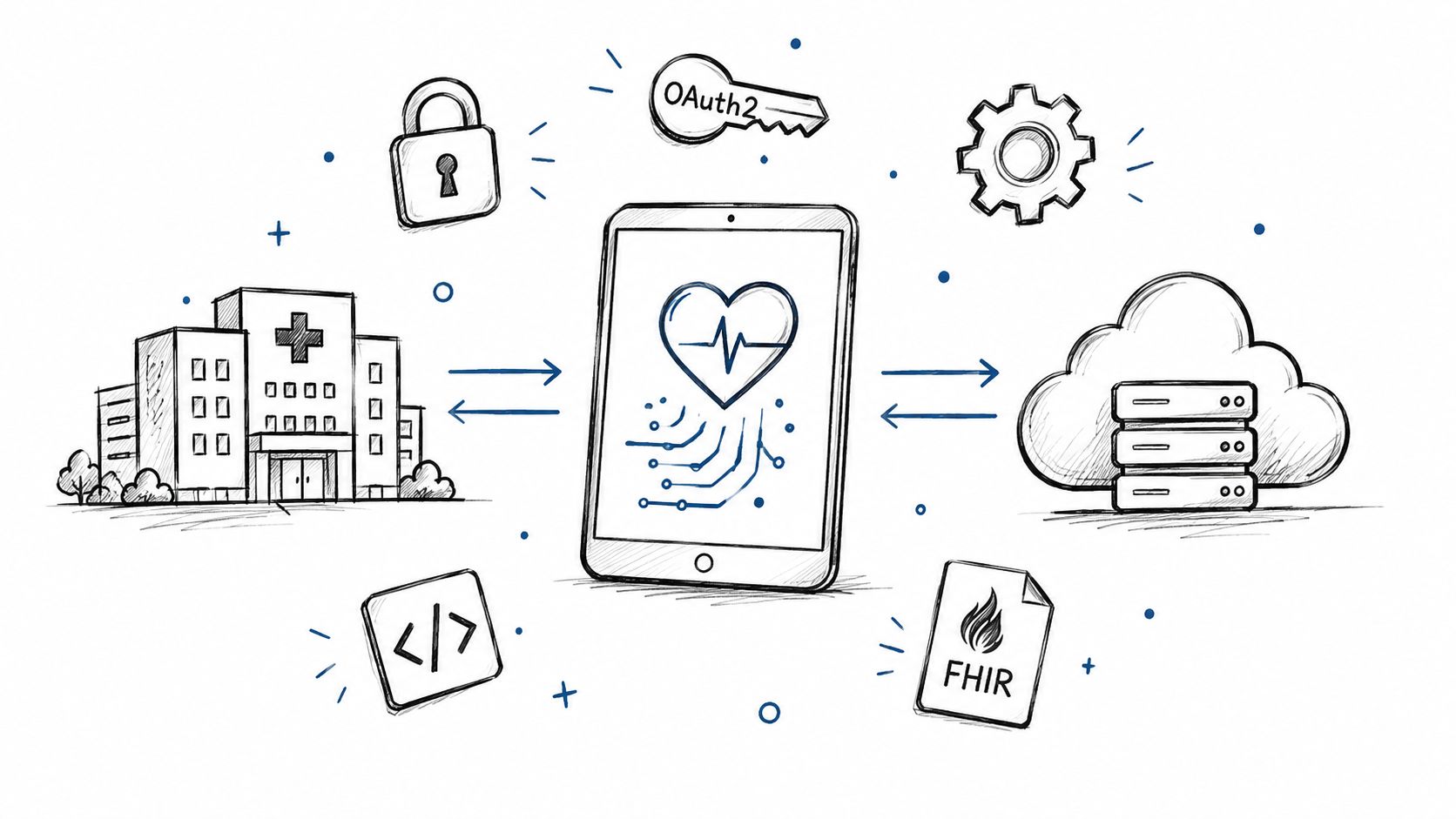
AI in Healthcare
Smart on FHIR: What It Is and How It Works in Practice
Smart on FHIR guide for healthtech engineers. Learn the OAuth 2.0 launch model, scope syntax, backend services, and US regulatory requirements.
October 14, 2026Read more
Discover how custom healthtech software development services can transform your organization. This guide covers compliance, AI integration, costs, and benefits.

When we talk about custom healthtech software development, we're talking about creating applications from the ground up, built specifically for a healthcare organization's unique way of working. It's the opposite of trying to fit a square peg into a round hole with a generic, one-size-fits-all product.
Instead, these services create solutions that perfectly match your clinical workflows, connect with your existing systems, and solve the specific patient care or administrative headaches you're actually dealing with.
Think about the last time you used a piece of off-the-shelf software that just didn't quite fit. It probably forced you to change your process, leading to workarounds, frustration, and lost time. In healthcare, that kind of friction isn't just inefficient; it can impact patient care.
This is why custom healthcare software solutions have become a strategic necessity. They allow providers to solve their own unique problems, whether it's simplifying a clunky patient intake process or finally connecting data systems that have never spoken to each other. It’s about building tools that truly work for you, not the other way around.
The market is clearly moving in this direction. The global healthtech sector was valued at USD 1.1 trillion in 2025 and is on track to hit an incredible USD 2.8 trillion by 2032. That's a powerful 13.5% compound annual growth rate. Custom software is a huge piece of that pie, expected to command a 46.8% market share in 2025 alone. You can dig deeper into these numbers in this detailed industry report.
For any leader planning their technology roadmap, the "build vs. buy" decision boils down to a few critical differences. A custom solution gives you a competitive edge that a generic product simply can't.
It’s the difference between using a standard paper map versus a GPS system built specifically for your ambulance fleet, programmed with your unique routes and real-time traffic data. To make this clear for busy executives, we've put together a quick comparison.
A direct comparison highlighting the strategic advantages of custom solutions for healthcare organizations.
| Feature | Custom Healthtech Software | Off-the-Shelf Software |
|---|---|---|
| Workflow Alignment | Built around your specific clinical and operational workflows, reducing friction and training time. | Forces you to adapt your established processes to fit the software's rigid structure. |
| Integration | Designed for seamless integration with your existing EHR/EMR, billing, and other legacy systems. | Often requires costly and complex third-party connectors or offers limited integration capabilities. |
| Scalability | Architected to grow with your organization, accommodating more users, data, and features as needed. | Scalability is often limited by the vendor's infrastructure and product tiers. |
| Competitive Edge | Creates unique digital assets and proprietary features that differentiate your services and patient care. | Provides the same generic features to you and your competitors, offering no unique advantage. |
By investing in tailored Healthcare AI Services, you're not just buying a piece of software. You are building a strategic asset—one that improves how you deliver care and sets you up for long-term success in a constantly changing digital world.
When we talk about custom healthcare software development, we're not just talking about building an app. We're talking about creating an entire digital ecosystem from the ground up. This foundation is made of several critical pieces, each one designed to solve a specific, real-world challenge in the complex world of healthcare. Getting these core capabilities right is the first step toward building something that actually helps clinicians and patients.
This concept map shows how being custom, scalable, and secure are the non-negotiable pillars of any modern healthtech platform.

The key thing to remember is that these pillars don't stand alone. They're all interconnected, forming the base for any successful digital health solution.
Think of Electronic Health Record (EHR) and Electronic Medical Record (EMR) systems as isolated islands, each with its own unique language. Without a bridge connecting them, information gets stuck, leading to fragmented patient data and clunky, inefficient workflows for clinical staff. Custom integration is that bridge.
By developing custom APIs and data pipelines, we essentially build a universal translator. This allows your new application to "speak" fluently with existing hospital systems, enabling a smooth, real-time flow of patient histories, lab results, and treatment plans. The result? A single, unified view of the patient, which helps clinicians make better, faster decisions without having to jump between a dozen different screens.
The demand for virtual care can be a rollercoaster, spiking during a public health event or swinging with the seasons. A telehealth platform built on a rigid, inflexible foundation will buckle under that kind of pressure, resulting in dropped calls, frustrating wait times, and a poor patient experience. That's where scalability comes in.
A truly scalable telehealth solution is built like a modern electrical grid. It doesn’t just provide a fixed amount of power; it intelligently sends resources where they’re needed in real time, ensuring a smooth connection whether one patient or one million are online.
This is made possible by a cloud-native architecture. Building out a solid DevOps / cloud infrastructure platform is what gives your healthtech solution the resilience to handle anything. This approach lets you dynamically scale server resources up or down based on actual demand, so you only pay for what you use while guaranteeing the system never falters. We offer AI Automation as a Service to streamline these complex backend operations.
A patient app should be more than a digital version of a hospital brochure. It's a crucial tool for helping people manage chronic conditions, stick to their treatment plans, and stay connected to their care team. The best apps are built with a deep empathy for the patient's journey, focusing on simplicity, accessibility, and genuine motivation.
A great patient app almost always includes:
Healthcare organizations are swimming in data. On its own, it's just raw noise. But when you apply the right analytics and AI tools for business, that noise transforms into a powerful signal that can help predict patient outcomes, optimize hospital operations, and identify at-risk populations before a minor issue becomes a crisis.
Through custom healthcare software development, this raw data is fed into predictive models. These AI tools can flag a patient who is at high risk for readmission or forecast staffing needs for the emergency department on a busy holiday weekend. This is the big shift we're seeing in the industry—moving from reactive care to proactive, preventative health management, all driven by intelligent software.
When you're building custom healthtech software, security and compliance aren't just features on a list—they are the very foundation of patient trust. A single data breach can have catastrophic consequences, far beyond the financial hit. It can shatter the confidence of the very people you're trying to help.
The numbers don't lie. In 2023, the average cost of a healthcare data breach climbed to $10.93 million per incident. For the 13th year in a row, it’s the most expensive industry for a breach. This puts the complex world of regulations like HIPAA and GDPR into sharp focus. These aren't just bureaucratic hoops to jump through; they're essential frameworks for creating software that respects and protects patient privacy at its core.

This is why working with a team that lives and breathes these rules is so crucial. A true expert partner doesn't just check boxes. They translate dense legal jargon into concrete software architecture, embedding compliance into the DNA of the application from day one, rather than trying to tack it on at the end.
Moving from legal text to a rock-solid security posture takes a layered defense. Think of it like securing a hospital. You wouldn't just lock the front door. You need perimeter security (firewalls), keycard access to sensitive areas (role-based controls), security cameras (constant monitoring), and a clear plan for emergencies (disaster recovery). Understanding the unique cybersecurity challenges facing the healthcare industry is the critical first step to building a platform that can withstand modern threats.
A solid security plan starts with the fundamentals. The following table breaks down the non-negotiables for any healthtech application.
| Security Measure | Key Objective | Implementation Focus |
|---|---|---|
| End-to-End Encryption | Protect data from unauthorized access, whether it's stored or being transmitted. | Encrypt all Protected Health Information (PHI) both "at rest" in databases and "in transit" across networks using strong, modern cryptographic standards. |
| Strict Access Controls | Enforce the principle of least privilege, ensuring users only see data they need. | Implement Role-Based Access Control (RBAC). A nurse's view should be different from an admin's, which should be different from a doctor's. |
| Comprehensive Audit Trails | Maintain a detailed, unchangeable record of all system activity for accountability. | Log every action: logins, data views, edits, and exports. These logs are vital for investigating any potential incidents down the line. |
| Regular Security Testing | Proactively identify and fix vulnerabilities before they can be exploited. | Conduct routine vulnerability scans and periodic penetration testing by ethical hackers, especially after major system updates. |
This checklist isn't just about technology; it's about creating a secure environment where sensitive information can be managed safely.
Beyond these technical controls, a real culture of security needs to run through the entire development process. This means secure coding practices are standard procedure, developers receive ongoing training, and a clear incident response plan is ready to go before you need it.
Compliance isn't a one-time checkbox; it is a continuous commitment. It means building systems that are not only secure by design but also have the resilience to adapt to new threats and the transparency to maintain patient trust over the long term.
This proactive, security-first mindset is what sets great custom healthtech software development services apart. The aim is to build a digital space where patients feel secure sharing their most personal data and clinicians feel confident that the tools they use are protecting everyone. We delve deeper into how to foster this trust in AI-powered systems over at VeriFAI, where a strong security footing is paramount: https://www.ekipa.ai/products/verifai.
Turning a breakthrough healthtech idea into a real-world, compliant product isn't about taking a wild leap of faith. It’s a structured journey. We call it the software development lifecycle, and it’s a roadmap that takes you from a back-of-the-napkin concept to a tangible solution making a genuine impact. Think of it as a collaborative trek with clear milestones, realistic timelines, and a transparent understanding of what shapes the final cost.
The market for digital health and AI-powered custom software is doing more than just growing—it's fundamentally reshaping how healthcare is delivered. The numbers are staggering: projections show the sector rocketing from USD 427.24 billion in 2025 to an incredible USD 2,351.24 billion by 2034. That’s a compound annual growth rate of 21.60%. This isn't just hype; it's a movement driven by custom-built platforms that offer predictive insights and truly personalized care. You can get a deeper look at the forces behind this growth in this digital health market analysis.
A typical custom healthtech software development services project moves through several distinct phases. Each one builds on the last, ensuring we don't miss a thing and that the final product is secure, scalable, and perfectly aligned with what you set out to achieve.
Picking the right way to work together is key to getting the results you want. The two most common models are designed for different kinds of projects.
A Fixed-Price model is like commissioning a pre-designed house—the scope and cost are set. A Dedicated Team model is like hiring an architect and construction crew to build your custom dream home—you have full control and flexibility as the project evolves.
A Fixed-Price engagement is a great fit for smaller projects where the scope is crystal clear, like building a Minimum Viable Product (MVP). For more complex, long-term initiatives that need room to adapt, a Dedicated Team gives you a hand-picked group of experts who operate as a natural extension of your own team.
How long will it take? Timelines can vary a lot depending on what we're building. A straightforward MVP might take 3-6 months from start to finish. A comprehensive platform with complex AI features and multiple EHR integrations could easily take 12-18 months or more.
The cost of custom development isn’t a number pulled out of thin air. It’s a direct reflection of the work and expertise needed to bring your vision to life. A few key things drive the final budget:
By understanding this journey from the outset, you can plan your investment with confidence and find a partner who can truly guide you from idea to impact. To see how we put these principles into action, take a look at our portfolio of real-world use cases. Our drive to turn complex ideas into powerful solutions is all thanks to our expert team.
Artificial intelligence is no longer just a buzzword in healthcare; it's the engine powering a new era of medical advancement. We've moved past theoretical applications and into the real world, where AI is making a tangible difference in saving lives. When we talk about custom healthtech software development services, AI isn't merely an add-on feature. It’s a fundamental change in how we diagnose illness, manage patient care, and run our healthcare systems.
Today, custom-built AI models can predict patient outcomes, take over mind-numbing administrative work, and help doctors analyze complex medical scans with a precision that was simply out of reach a few years ago.
This isn't just a niche trend. The market is pouring money into this space, signaling massive confidence. The healthcare IT sector—the backbone of these innovations—was valued at a staggering USD 866.48 billion in 2025. It's on track to explode to USD 2,864.39 billion by 2033, growing at an impressive 16.2% CAGR. This growth underscores just how essential custom software has become for everything from remote patient monitoring to managing the financial side of healthcare. You can dive deeper into these healthcare IT market trends and insights.

One of the most exciting frontiers for AI in healthtech is predictive analytics. Think about it: by crunching massive datasets from electronic health records, custom AI can spot almost invisible patterns. These patterns can flag a patient's risk for developing sepsis or diabetes long before the first clear symptom ever appears. This allows medical teams to get ahead of the problem, shifting the focus from simply treating sickness to actively preventing it.
AI is also making huge waves in diagnostics, especially when it comes to medical imaging.
Outside of direct patient care, AI is also tackling the mountain of paperwork and administrative tasks that bog down so many healthcare professionals. Intelligent automation is taking over workflows that used to be slow, manual, and full of potential for human error. For example, AI-driven internal tooling can now handle medical coding, process insurance claims, and manage patient scheduling. This frees up staff to do what they do best: focus on patients.
The goal of AI is not to replace clinicians. It's to supercharge their abilities. By taking over the repetitive work and delivering data-driven insights, AI empowers healthcare professionals to operate at the top of their game and dedicate their expertise where it truly matters—on patient care.
Bringing these powerful AI concepts to life isn’t as simple as flipping a switch. It requires a smart approach that blends innovation with the strict safety and compliance demands of the healthcare industry. The road from a promising idea to a scalable, compliant AI solution involves a lot of careful planning, from the initial analysis all the way to deployment. We help organizations quickly identify high-impact use cases without getting stuck in endless, expensive development cycles. The goal is to turn innovative ideas into practical solutions that deliver real, measurable results.
To see how these principles work in a real clinic, take a look at our Clinic AI Assistant, which shows how AI can be woven into daily operations to boost efficiency and improve patient care. Our whole approach is designed to help you navigate this complex field with speed and confidence.
Picking a development partner is probably the single most important decision you'll make. This isn't just about hiring a team to write code. You're bringing on a strategic partner and trusting them to turn your vision into a secure, compliant, and genuinely useful product. The best teams get that custom healthtech software development services are ultimately about improving patient care, not just shipping features.
A good partner does more than just take orders. They should push back, question your assumptions, and bring their own deep industry experience to the table. They’re the ones who can guide you through the minefield of healthcare regulations. That kind of collaboration is what separates a technically functional product from one that’s actually valuable in a clinical setting and viable in the market.
A potential partner's portfolio is their track record—plain and simple. Look for proven experience building complex healthcare software solutions, particularly anything involving AI or cloud infrastructure. Have they actually integrated with clunky, old EHR/EMR systems before? Do they really understand the fine print of data privacy laws? As we explored in our AI adoption guide, a team that knows the industry inside and out can spot problems long before they derail your project.
This is where real consulting chops make a huge difference. A firm that provides rapid AI strategy consulting can help you figure out if your idea has legs and map out a clear path forward from day one. They should be able to take your business goals and turn them into a detailed technical blueprint through a thorough AI requirements analysis.
Technical skill is the price of entry, but a real partnership is built on something more: shared vision and trust. Open and honest communication is the foundation of any successful project, keeping you in the loop at every stage.
Use this checklist to help you size up potential partners:
At the end of the day, you're choosing the people who will bring your idea to life. If you want to see who’s behind our work, you can meet our expert team.
When you're considering a significant investment like custom healthtech software, questions are a good thing. It means you're thinking strategically. Here are the answers to some of the most common ones we hear from leaders just like you.
Think of it like buying a suit. An off-the-shelf SaaS solution is like grabbing one off the rack—it's fast and gets the job done, but it's not made for you. You'll likely have to adjust your clinical workflows to fit its limitations.
Custom healthcare software development, on the other hand, is like getting a suit tailor-made. It's designed to fit your specific needs, your team, and your existing systems perfectly from the get-go. While it costs more upfront, the long-term payoff in efficiency, user adoption, and a genuine competitive edge almost always delivers a much higher return.
Getting a Minimum Viable Product (MVP) into the hands of users is the critical first step. For most healthtech applications, you can expect this to take between 3 and 6 months.
The cost has a wider range, typically landing between $50,000 and $150,000. This depends heavily on the complexity—are we talking about a simple patient portal or a platform with complex EMR integrations and AI features? The whole point of an MVP is to launch the core, most essential version of the product quickly, gather real-world feedback, and then scale intelligently.
This is a simple one: you do. In any custom development project, you own 100% of the intellectual property (IP) and every bit of patient data.
The software is your strategic asset, built exclusively for you. Any trustworthy development partner will have this spelled out clearly in your contract, guaranteeing you maintain full control over both your proprietary technology and the sensitive data it handles.
Security and compliance aren't afterthoughts; they have to be woven into the fabric of the software from the very first line of code. It's a foundational part of the process, not something you can just bolt on at the end.
Our approach involves several layers of protection:
This isn't just a checklist for us. It's a disciplined methodology that ensures the final product is built to exceed the stringent requirements of HIPAA and other global regulations. You can meet our expert team and see the people who live and breathe this every day.
Smart on FHIR guide for healthtech engineers. Learn the OAuth 2.0 launch model, scope syntax, backend services, and US regulatory requirements.
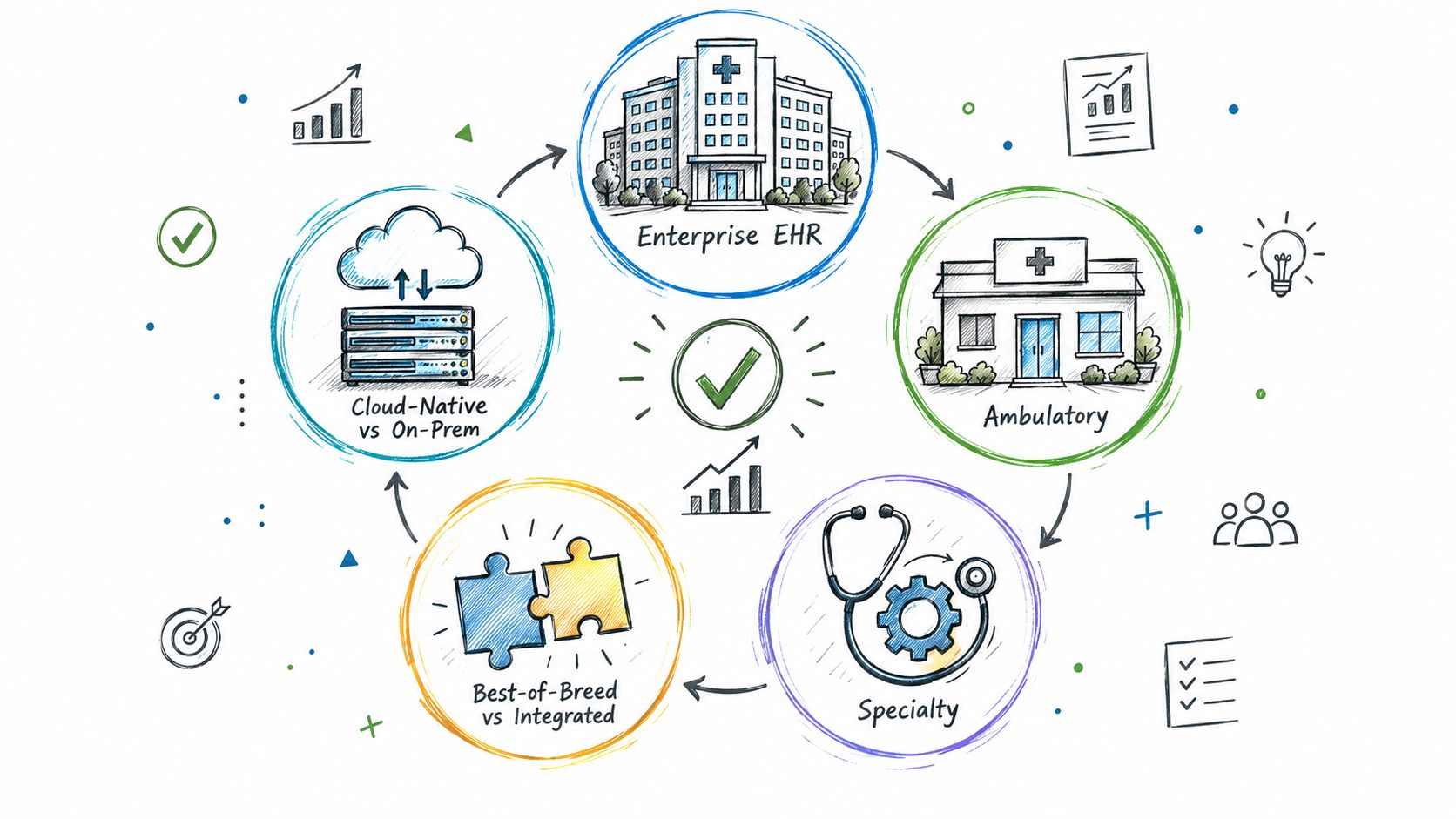
Explore the types of EHR systems by deployment model, care setting and scope. Compare integration options, trade-offs and selection tips for healthtech teams.
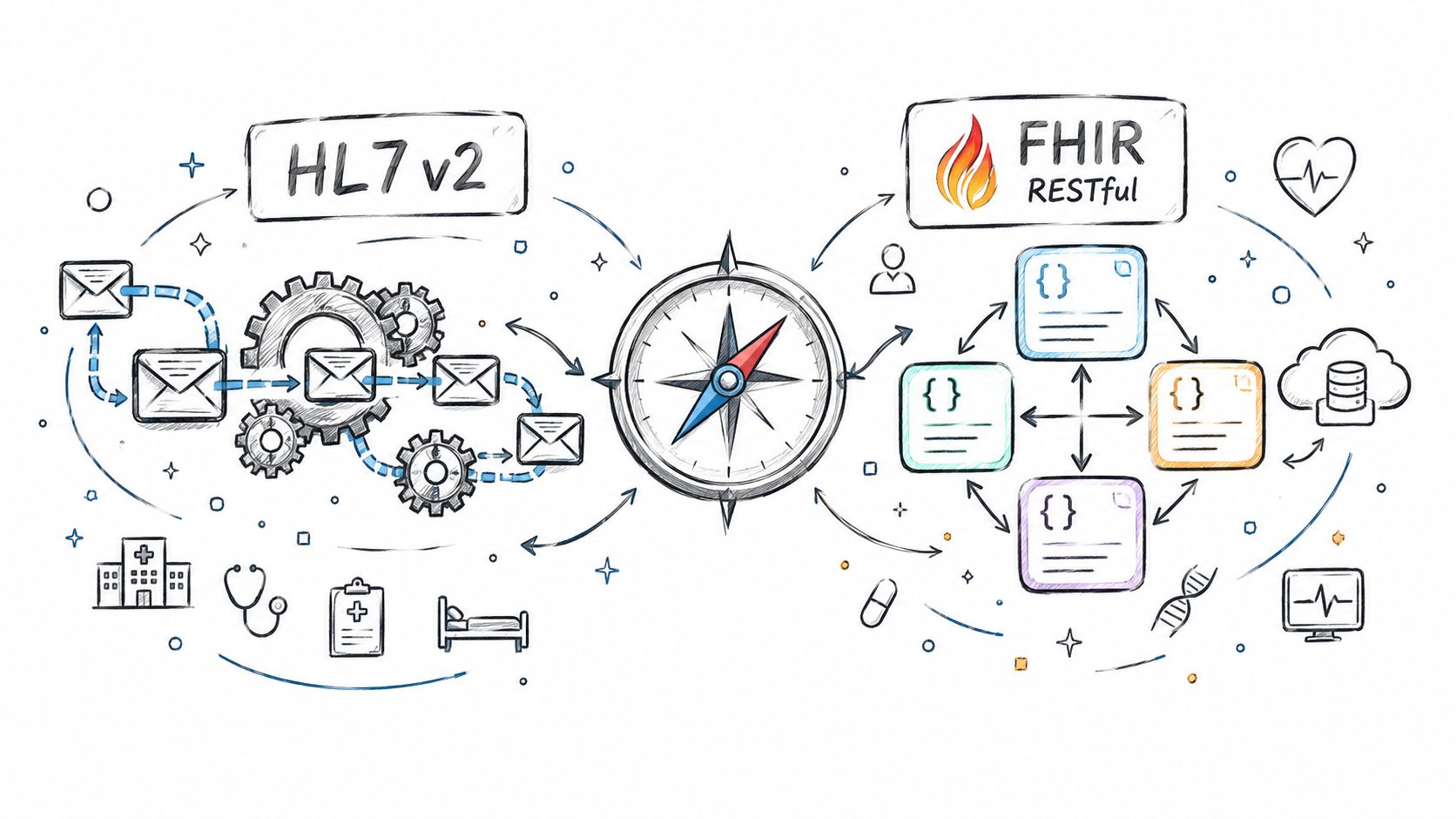
Compare Fhir vs. hl7 standards for healthtech integration. See how HL7 v2 and FHIR differ in use, mechanics, regulation, and real-world architecture.
Connect with our team to explore how AI expertise can transform your business.