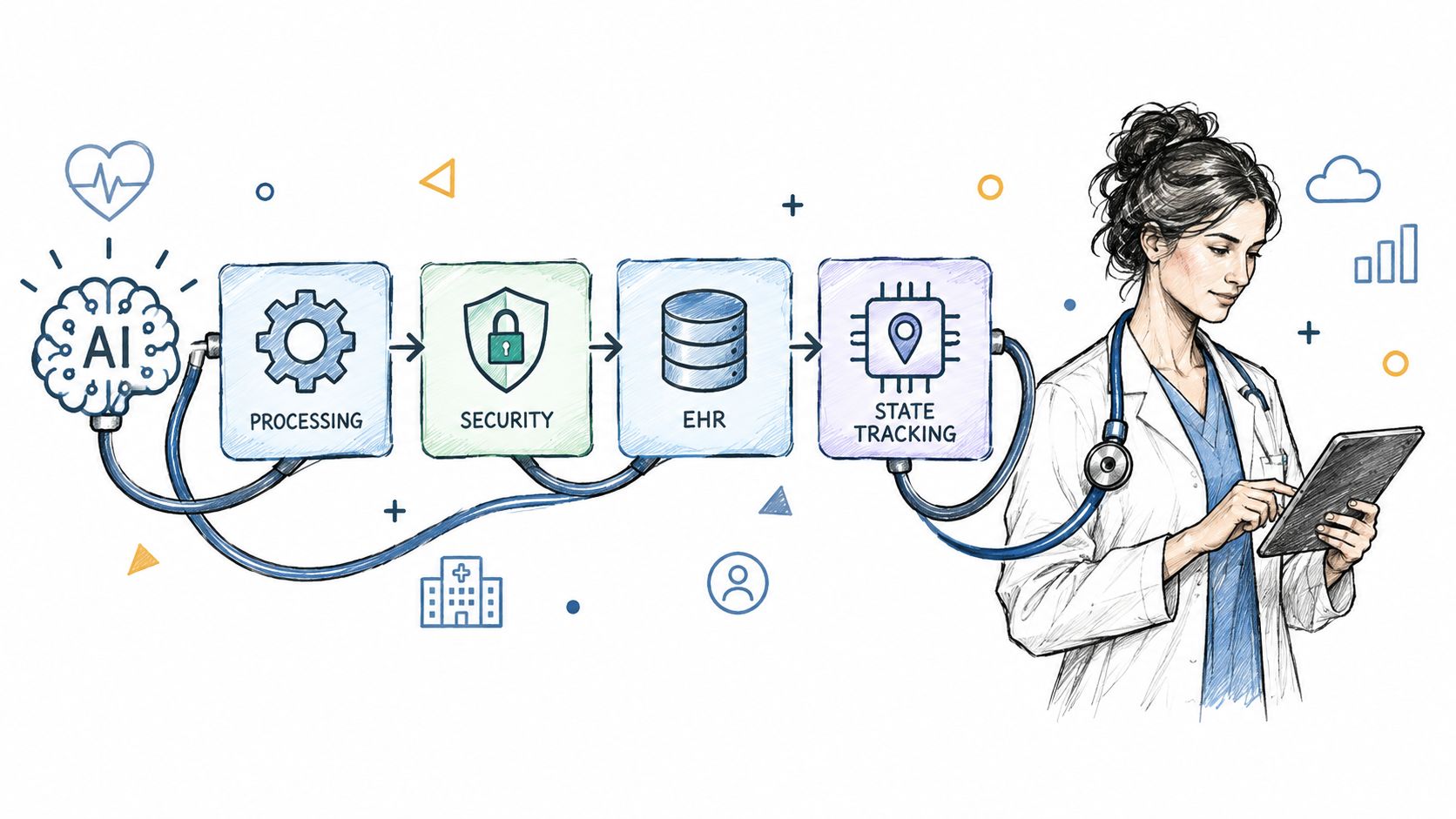
AI Agent Architecture for Healthcare: A Practical Guide
Explore AI agent architecture design for healthcare. Learn modular patterns, FHIR integration, state management, and reliability strategies
October 09, 2026Read more
Discover how healthcare organizations can successfully scale AI projects from pilot stages to enterprise-wide deployment while ensuring reliability, compliance, and measurable impact.
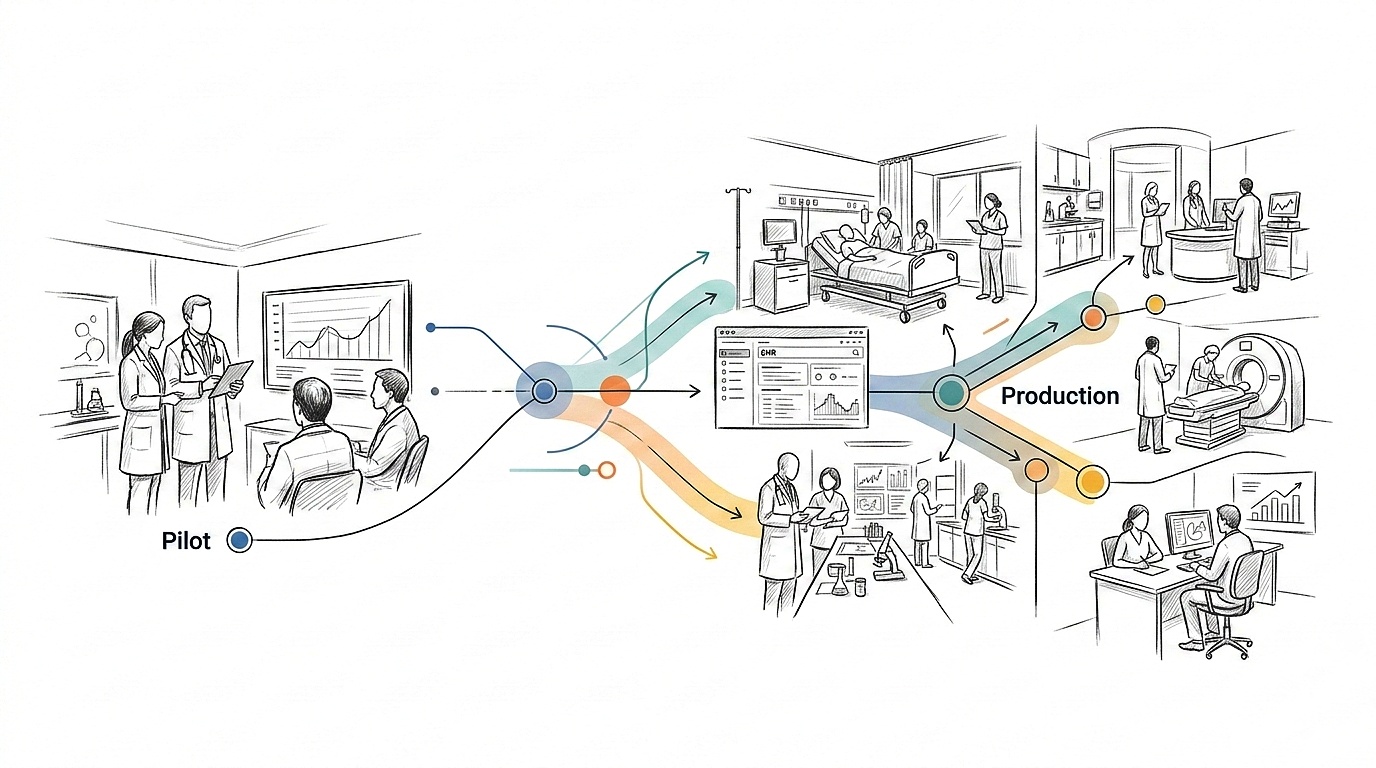
Across the world, healthcare systems are experimenting with artificial intelligence through small pilot projects aimed at supporting clinical practice, streamlining operations, and protecting patient safety. These early trials highlight both the promise of AI and the real challenges that appear in everyday medical and administrative work. The real value emerges when these pilots grow into full production programs that can operate effectively across multiple hospitals, departments, and services. Scaling AI in healthcare requires careful planning, creative thinking, smart use of resources, and a steady commitment to long-term progress that delivers measurable results for both patients and clinicians.
Pilot projects are focused trials of artificial intelligence for tasks like diagnostic imaging or appointment management. These trials usually involve a small group of people, limited data, and a controlled setting. They provide healthcare teams with early experience of AI applied to a single task. Success in a pilot does not always mean the same system will work across an entire healthcare network. Organizations explore broader healthcare AI services. Their goal is to understand how individual tools connect to broader clinical and operational strategies.
Production is different. It means the AI system operates in daily clinical work, integrated with core systems including electronic health records and imaging platforms, and trusted by doctors and nurses to guide everyday decisions. At this stage, the system must perform reliably for many users, across different patient needs, and under varied conditions. Transitioning from pilot to production is a complex process that requires clear goals, planning, and review as the program expands.
Large healthcare systems face challenges in expanding pilot projects. Technical issues often appear first. Pilots usually run in simplified settings with limited data. Production systems must manage various data formats, large amounts of information, varying input quality, and immediate access across multiple facilities. Problems such as data silos, missing records, and outdated systems add layers of complexity that pilots do not reveal.
Challenges also come from people and culture. Clinical teams need to trust that the system adds real value without disrupting daily routines. Concerns about change, worries about losing professional control, or unclear communication about how the system works can slow progress. Training programs create trust and familiarity, which encourages consistent tool use.
Governance and compliance add another challenge when expanding AI projects. Pilots often run with lighter oversight because they are small and closely managed. Once a system reaches full scale, it must include strong data protection, clear audit trails, alignment with regulations, and ethical review processes that meet institutional standards. Formal reviews often check AI solutions for clinical, operational, and ethical readiness before wider use. Healthcare organizations require clear responsibility, patient privacy, and clinical oversight.

Expanding AI projects across healthcare systems succeeds with a phased approach that adds complexity over time. Each stage strengthens workflows and prepares teams for wider adoption.
Phase one: Broader departmental testing where clinical, operational, and technical groups refine workflows, connect with live systems, and track outcomes with regular feedback and training.
Phase two: Gradual expansion to nearby service areas with similar data and workflow patterns, reducing risks and promoting steady learning.
Phase three: Enterprise integration across most or all units, focusing on platform stability, centralized data systems, clear governance, workforce growth, and performance dashboards that highlight trends and guide timely action.
By following these steps, healthcare organizations can move from small pilots to reliable production programs that deliver consistent value across the entire system. AI strategy consulting plays a role at this stage by aligning technical execution with clinical priorities, operational goals, and long-term system planning.
Leadership plays a central role in guiding AI projects from pilots to full production. Leaders must articulate how these tools connect to clinical and operational goals, viewing them as lasting capabilities that support care and results. Their involvement also strengthens accountability for performance and long-term stability across departments.
Culture is just as important. Teams that take part in the design, testing, and refinement of AI solutions are more engaged and more willing to adopt them. Resistance to change fades when clinicians and staff understand the system’s purpose, receive timely training, and experience improvements in their daily work. When leadership priorities match well-defined AI use cases, teams gain confidence in the purpose and application of these systems.
As AI projects expand across a healthcare system, the measurement of results must also evolve. Pilot projects usually focus on technical measures such as accuracy or system performance. At the production stage, evaluation must examine broader outcomes that matter to the entire organization. These include fewer hospital readmissions, shorter wait times in emergency departments, stronger risk prediction, and smoother patient flow.
Setting these outcomes early provides teams with a clear framework to track progress, compare results, and make the case for future investment. Evidence from real-world use helps improve predictions, strengthen daily workflows, and maintain trust from leadership and clinical teams. Insights from a custom AI strategy report often guide the next phase of decisions during enterprise expansion.
Data architecture is the base for expanded systems. Production platforms need clear rules for collecting, transforming, and storing data. Shared access maintains model performance across settings, reducing gaps caused by poor input or missing records. Linking with central systems such as electronic health records adds context and makes workflows smoother for clinicians.
Security and privacy are equally important. Production systems must comply with regulations, protect patient information, and uphold institutional policies. These safeguards build trust between patients, clinicians, and the organization.
Training and education remain ongoing needs. Teams require regular learning opportunities addressing new staff, technology updates, and evolving clinical use cases. Simulations, refresher courses, and timely guidance increase confidence and support long-term adoption.
Production systems must adapt. Patient groups shift, treatment methods evolve, and operational priorities vary over time. A model that worked well before may lose accuracy as patterns change. Regular monitoring, updated data, and ongoing evaluation keep systems relevant and effective.
Feedback from clinical teams is equally important. Frontline users often notice issues that numbers alone do not reveal. Gathering their input and adjusting tools accordingly maintains technology alignment with daily work and patient care.
The journey from pilot projects to full enterprise use of digital intelligence in healthcare requires a clear strategy, teamwork across departments, careful planning, and ongoing refinement. Leadership, culture, data readiness, and operational frameworks all influence how well these systems perform at scale. With discipline and defined measures, health systems can achieve consistent results that improve both clinical care and daily operations. Scaling AI in healthcare reflects lasting maturity in technology adoption rather than short-term success. Reach out to us to explore structured approaches that turn pilots into sustainable enterprise success.
Scaling AI in healthcare means expanding successful pilot projects into full production systems that support clinical and operational workflows across the entire healthcare organization.
Healthcare AI services help integrate AI Solutions with existing systems, streamline workflows, and ensure consistent performance across departments.
AI strategy consulting helps organizations identify the right AI use cases and create a custom AI strategy report that aligns AI initiatives with clinical and operational goals.
An AI readiness assessment and AI maturity model help evaluate infrastructure, data quality, and governance before scaling AI projects.
Working with an AI implementation partner and following a structured AI adoption roadmap helps healthcare organizations scale AI solutions reliably and sustainably.
Explore AI agent architecture design for healthcare. Learn modular patterns, FHIR integration, state management, and reliability strategies

Learn what compliance engineering is, why it matters in healthtech, and how to embed privacy, security, and audit-ready practices into product delivery.
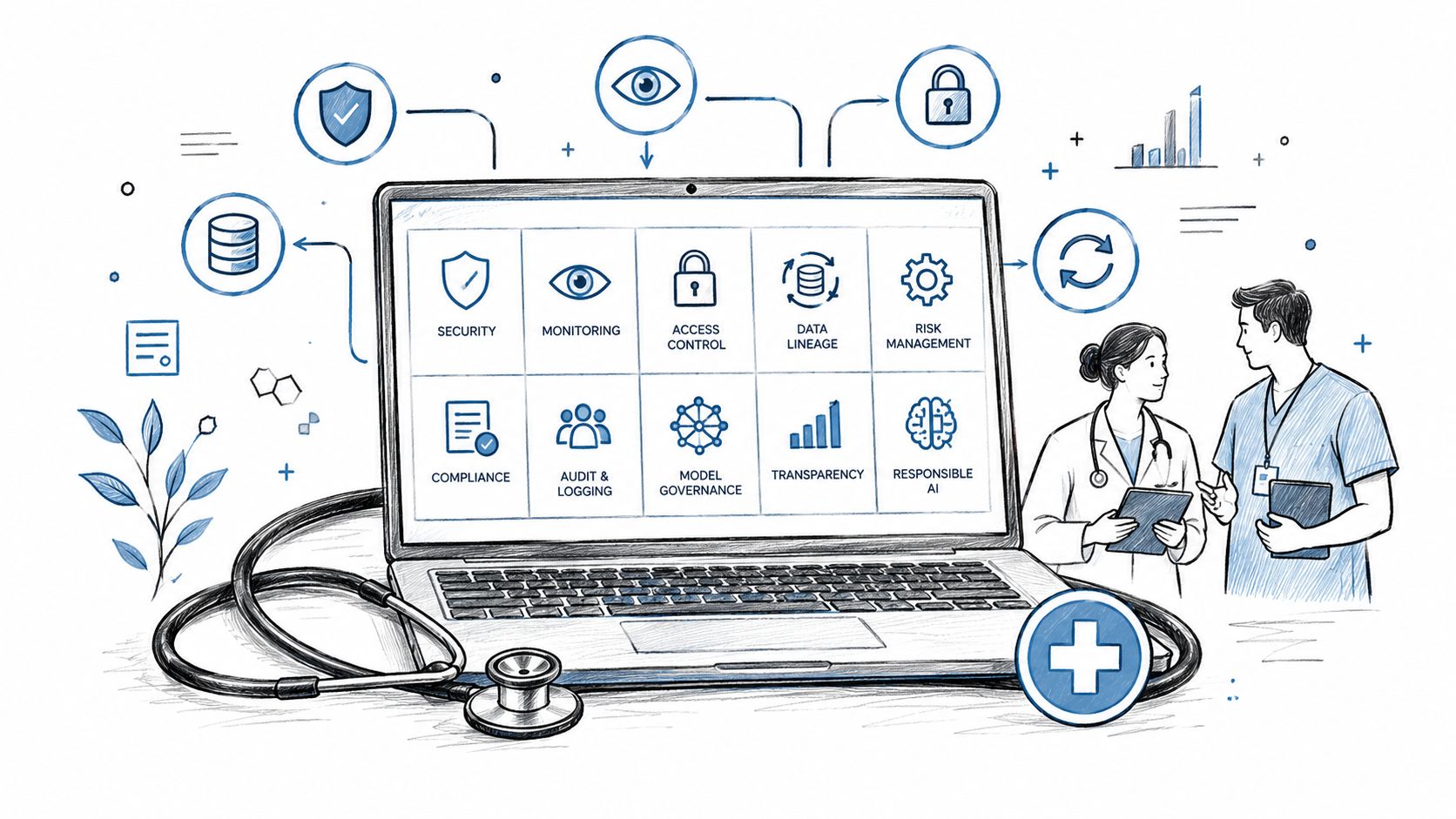
Compare 10 AI governance platforms for healthcare teams, covering model lineage, monitoring, access controls, compliance, and selection criteria.
Connect with our team to explore how AI expertise can transform your business.