AI in Healthcare
HIPAA-Compliant AI: How to Use LLMs With PHI Safely
How to build HIPAA-compliant AI: when LLM providers need a BAA, data minimization, de-identification, audit controls and a reference architecture.
October 16, 2026Read more
Discover how hospital performance intelligence uses AI and data to enhance patient care, streamline operations, and drive real financial results.
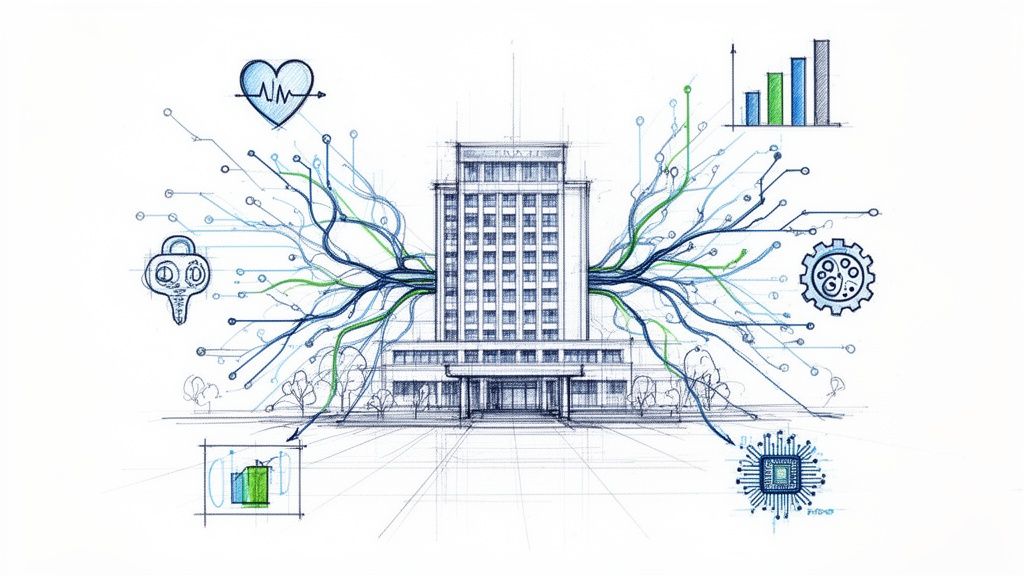
Hospital performance intelligence is all about connecting the dots. It's the practice of weaving together a hospital's clinical, financial, and operational data to get a single, real-time snapshot of the entire organization. This isn't just about a new piece of software; it's a complete shift in approach. The goal is to turn a flood of raw information into clear, actionable insights that help leaders manage resources, elevate patient care, and keep the hospital on solid financial ground. This is where modern AI solutions really shine, making sense of incredibly complex data sets.
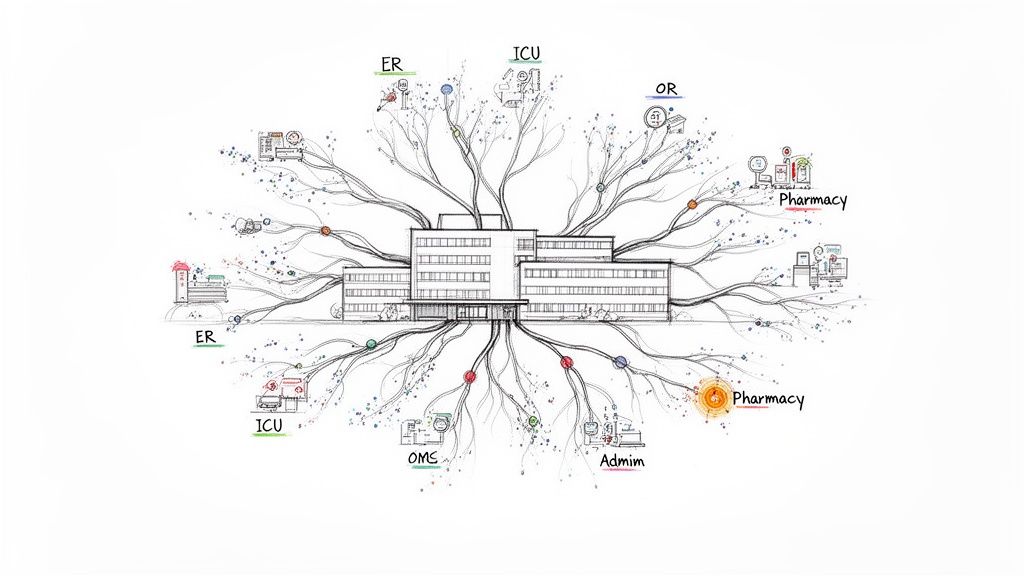
Think of hospital performance intelligence (HPI) as the central nervous system for your entire facility. It’s a living system that senses, processes, and reacts to signals from every single department—the ER, the OR, pharmacy, billing—all at once. This is a huge leap from traditional reporting, which usually gives you a rearview mirror look at data from isolated departments. HPI creates a dynamic, up-to-the-minute picture of what's happening right now.
This approach works by pulling together all your different data sources. We're talking electronic health records (EHRs), billing systems, staff schedules, and even supply chain logs. By funneling all of that into one coherent "source of truth," hospital leaders finally get the clarity they need to make smart, informed decisions that ripple across every part of the care journey.
The real magic of hospital performance intelligence is how it shifts the entire organization's mindset from being reactive to proactive. Instead of scrambling to deal with a sudden patient bottleneck in the emergency department or an unexpected shortage of critical supplies, leaders can see these problems coming. For instance, an HPI system might predict a spike in ER visits by analyzing local public health data, giving you enough time to adjust staffing levels before the rush hits.
This strategic foresight is powered by the incredible growth of AI in medicine. The global AI in healthcare market ballooned from $6.7 billion in 2020 to $22.4 billion in 2023, and it's on track to hit an astonishing $208.2 billion by 2030. This explosion underscores just how central AI has become to HPI, with a staggering 94% of healthcare companies worldwide already using AI or machine learning. You can discover more insights about AI trends in healthcare on openandaffordable.com.
A solid HPI framework is built on a few essential pillars that work in harmony to turn data into decisive action. This table breaks down the essential components of a modern HPI framework, showing how each pillar contributes to a smarter, more efficient hospital.
| Pillar | Description | Key Outcome |
|---|---|---|
| Data Aggregation & Integration | The foundation. It involves pulling data from all hospital systems (EHRs, billing, HR) to break down silos and create a unified view. | A single, reliable source of truth for comprehensive analysis. |
| Advanced Analytics & AI | The "brain" of the operation. Uses machine learning and predictive models to spot trends, forecast demand, and flag potential issues. | Proactive insights and the ability to anticipate future challenges. |
| Actionable Reporting & Visualization | The communication layer. Presents complex data through intuitive dashboards and reports that anyone, from clinicians to executives, can understand. | Empowered decision-making at every level of the organization. |
Each of these pillars is crucial. Without good data integration, the analytics are useless. And without clear visualization, the insights from the AI get lost. When they work together, they form the bedrock of a truly data-driven healthcare environment.
By grasping this framework, it becomes clear that a robust HPI strategy, often guided by expert AI strategy consulting, isn't just a "nice-to-have." It’s an essential toolkit for navigating the immense complexities of modern healthcare.
Staying put in healthcare today means you’re already falling behind. Hospital Performance Intelligence (HPI) has moved from a "nice-to-have" upgrade to an essential strategy for survival. Hospitals are caught in a tight squeeze, facing intense pressures that make it harder than ever to deliver great care while keeping the lights on.
The challenges just keep coming. The whole industry is moving toward value-based care, where hospitals get paid for patient outcomes, not just for the number of procedures they do. At the same time, the cost of everything is going up—inflation, supply chain headaches, and pricey new medical tech are all eating into budgets. Add to that the ongoing staff shortages that lead to burnout and put patient safety at risk.
On top of all this, patients are savvier than ever. They expect clear communication, transparent pricing, and top-tier care. You simply can't meet these demands when your data is locked away in disconnected, outdated systems.
This is where Hospital Performance Intelligence steps in with a clear, powerful solution. HPI takes the mountains of data your hospital generates every day—data that’s often ignored or underused—and turns it into your most valuable strategic asset. It cuts through the noise and gives you the clarity to tackle these problems directly.
Instead of waiting for last month’s reports and making educated guesses, HPI lets your leadership team make confident, data-backed decisions on the fly. This is the key difference between hospitals that are thriving and those that are just trying to tread water. The right AI strategy consulting can help you build a practical roadmap for converting the data you already have into a real competitive edge.
The true value of HPI shines when you see how it solves real, high-stakes hospital problems. Think about these everyday scenarios where a data-driven approach can make a massive difference:
These aren’t just ideas for the future; they are practical solutions that are working right now. Tools like AI Automation as a Service can help you quickly put these systems in place, turning raw insights into automated processes that make your hospital more efficient.
By transforming raw data into predictive insights, HPI allows hospitals to move from a constant state of reaction to a forward-looking posture of strategic anticipation. It’s the difference between firefighting and fire prevention.
Ultimately, adopting Hospital Performance Intelligence is about building a more resilient organization. It gives you the tools not just to survive the current storm in healthcare, but to come out the other side stronger, more efficient, and ready to provide the best possible care for your patients. As we’ve explored in our AI adoption guide, a well-defined strategy is the first step toward achieving this transformation. The insights provided by our expert Healthcare AI Services can illuminate the path forward, ensuring your facility remains a leader in a demanding industry. Consulting with our expert team can provide a clear roadmap for implementation.
You can't fix what you can't see. For hospital performance intelligence to be anything more than a buzzword, it has to be grounded in the right key performance indicators (KPIs). A truly effective system doesn't just collect data; it organizes it across the three pillars that hold up any successful healthcare organization: clinical outcomes, operational efficiency, and financial health.
Getting a handle on these metrics is the first step. The real magic happens when you use that information to predict what’s coming next—turning static numbers into a dynamic, forward-looking strategy. This is where AI becomes a game-changer, helping you forecast a patient surge to get staffing right or spot a revenue shortfall before it ever hits the books.
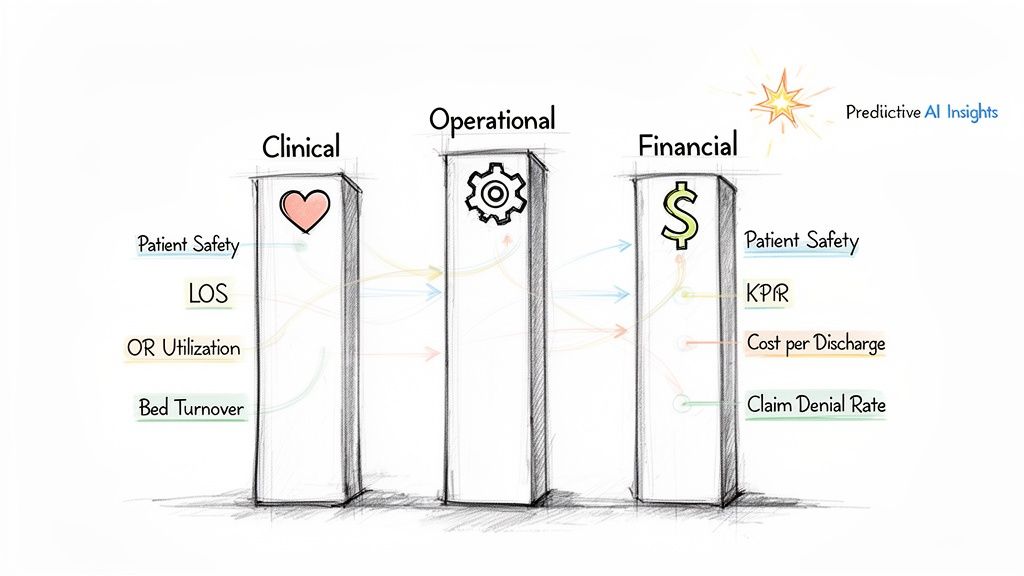
To build a complete picture of performance, leaders need to track a balanced set of metrics across these core areas. Each domain tells a critical part of the story, and they are all deeply interconnected.
The table below breaks down some of the most essential KPIs for any hospital leader to keep on their radar.
A comparative look at critical KPIs for hospitals, categorized to help leaders focus their performance intelligence efforts.
| Domain | Key Performance Indicator (KPI) | Why It Matters |
|---|---|---|
| Clinical | 30-Day Readmission Rates | High rates often point to gaps in discharge planning or follow-up care and frequently result in financial penalties from payers. |
| Clinical | Patient Safety Indicators (PSIs) | Tracks preventable issues like hospital-acquired infections. Lower PSI rates are a direct reflection of safer, higher-quality care. |
| Clinical | Average Length of Stay (ALOS) | An optimized ALOS means patients get the care they need without tying up beds unnecessarily, which is crucial for patient flow and cost control. |
| Operational | Operating Room Utilization | This measures how much of your most valuable real estate is actually generating revenue. High utilization prevents backlogs and boosts the bottom line. |
| Operational | Bed Turnover Rate | Shows how quickly a bed is ready for the next patient. A fast, efficient turnover is the engine of patient throughput. |
| Operational | Emergency Department Wait Times | A key patient satisfaction metric that also signals potential bottlenecks in staffing or internal processes. |
| Financial | Cost Per Discharge | Calculates the total cost to treat one patient. Keeping this number in check is fundamental to profitability. |
| Financial | Claim Denial Rate | The percentage of claims rejected by insurers. A high rate is a direct hit to your revenue and signals problems in the billing cycle. |
| Financial | Days in Accounts Receivable (A/R) | Measures how long it takes to get paid. Bringing this number down is the fastest way to improve cash flow. |
These KPIs are more than just numbers on a spreadsheet; they are the vital signs of your organization. Mastering them requires a deep dive into the data, which is where a dedicated Financial Insights Dashboard can make all the difference.
There's a reason the entire healthcare industry is racing to adopt AI-driven tools. The value is just too big to ignore.
By 2025, a staggering 92% of healthcare executives expect to gain a significant competitive advantage from AI. And they’re not just hoping for a return; 68% anticipate a moderate to very high ROI from their AI projects. This isn't just a U.S. phenomenon, either—52% of healthcare leaders outside the U.S. see digital tools as the key to overhauling both clinical and administrative workflows.
By focusing on these three core domains, hospital leaders can build a comprehensive performance intelligence strategy that drives real, measurable improvements across every corner of the organization.
At the heart of modern hospital performance intelligence is a powerful engine built on artificial intelligence and advanced analytics. These aren't just buzzwords; they are the practical tools that turn a hospital's flood of data from a jumble of disconnected numbers into a clear, predictive roadmap. This is what allows hospitals to stop reacting to yesterday's problems and start proactively shaping tomorrow's outcomes.
Think of it like this: traditional reporting is like driving while only looking in the rearview mirror. It shows you where you've been, but that's about it. An AI-powered HPI system is more like a sophisticated GPS that also pulls in live traffic and weather data. It doesn't just show you the road ahead; it flags potential bottlenecks (like a coming patient surge) and suggests the best routes to get you to your destination safely and efficiently.
Predictive analytics is where HPI really starts to shine. By digging into historical data, machine learning algorithms can spot subtle patterns and make remarkably accurate forecasts about what’s likely to happen next. This shifts decision-making from being reactive to proactive, which is a game-changer for allocating resources and improving patient care.
This isn't some far-off future concept. In 2024, a staggering 71% of non-federal acute-care hospitals in the U.S. reported using predictive AI applications right inside their EHRs. With 80% of hospitals sourcing these models directly from their EHR vendors, it's clear this technology is becoming a standard part of daily operations. You can learn more about AI adoption statistics in hospitals on intuitionlabs.ai to see just how widespread this trend has become.
Real-world results show the impact. For example, stories like Kaiser Permanente's AI initiatives to cut mortality by 16% and save 500 lives prove how these tools directly improve hospital performance and, more importantly, save lives.
A huge amount of critical clinical information—up to 80% of it—is locked away in unstructured formats like a physician's scribbled notes, discharge summaries, or even patient emails. This is where Natural Language Processing (NLP), a key branch of AI, comes in.
NLP acts as a universal translator. It can read and make sense of human language at a massive scale, scanning thousands of clinical documents in seconds to spot trends, signals of adverse events, or patient sentiment that a person could never find manually.
This allows an HPI system to pull in a much richer, more nuanced set of data for its analysis. For instance, an NLP model can flag patients at high risk for readmission based on the specific phrases used in their records, giving care teams an invaluable early warning. To tackle these kinds of complex data puzzles, an AI-powered data extraction engine can be the key to structuring all that valuable information.
Beyond just predicting outcomes, AI is incredibly good at optimization and automation. It can directly tackle the administrative and operational headaches that drain time and money, freeing up your staff to focus on what they do best: patient care. The right AI tools for business can make a huge difference here.
Here are a few high-impact examples:
By weaving these technologies into the fabric of daily work, hospital performance intelligence becomes more than just a reporting tool. It becomes an active, intelligent partner in running the hospital. As we've covered in other guides on AI adoption, this allows organizations not just to see what's happening, but to truly understand why it's happening and what they should do next.
Moving hospital performance intelligence from a great idea to a practical reality takes a clear, structured plan. This isn't just about "adopting AI"; it’s about methodically solving specific, high-value problems that are holding your hospital back. A well-defined roadmap is what ensures your HPI initiative delivers tangible results, builds momentum, and gets long-term buy-in from everyone involved.
At its core, the entire process is about turning raw data into actionable insights. Think of it as a simple, logical flow.
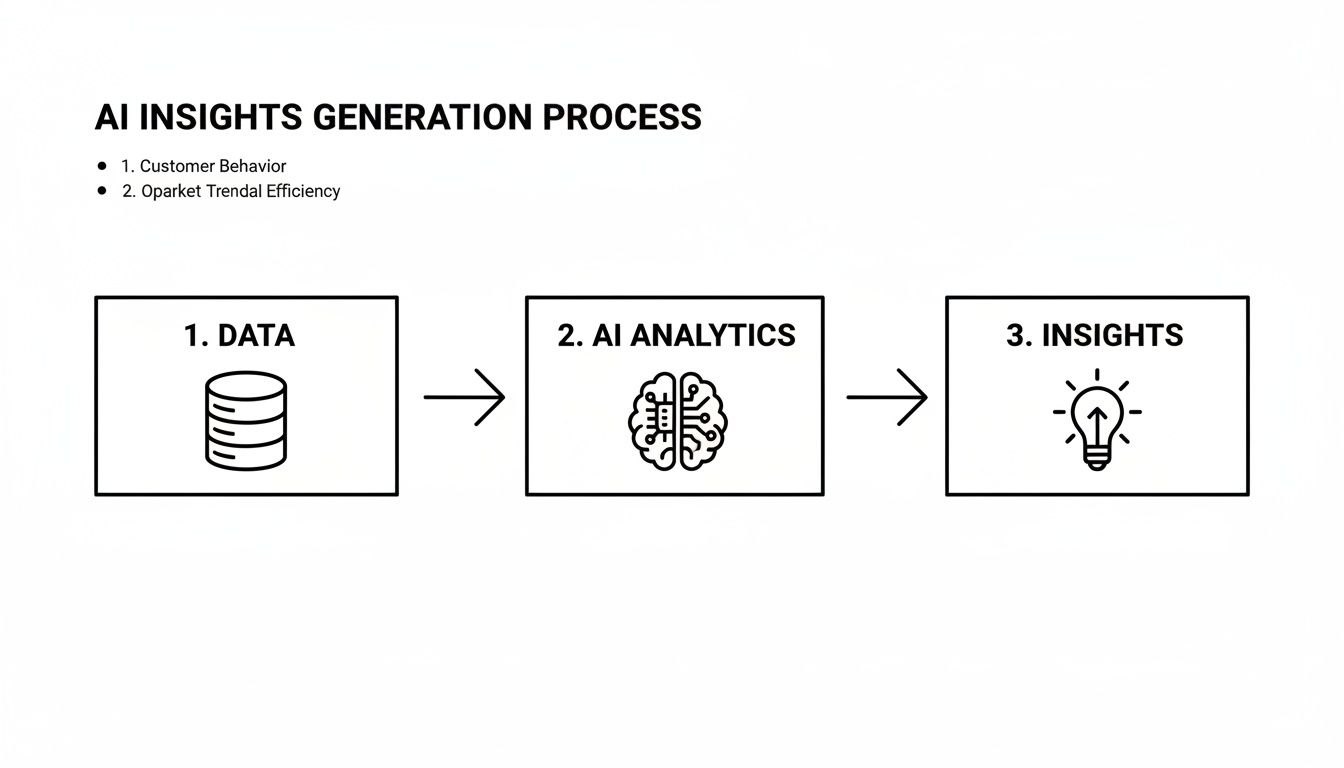
This journey shows how the AI analytics engine is the crucial link, converting disconnected data points into a real strategic advantage for your hospital.
I've seen it a hundred times: the biggest mistake is starting with the shiny new tool instead of the nagging old problem. Before you do anything else, get your leadership team in a room and identify a specific, measurable challenge you want to solve. A vague goal like "improve efficiency" just won't cut it.
You need to get granular. A much better starting point is something like, "reduce average emergency department wait times by 20% within six months" or "decrease 30-day readmission rates for congestive heart failure patients by 15%." This sharp focus gives your HPI efforts a clear target to aim for. A thorough AI requirements analysis is the foundational step here—it helps you pinpoint these high-impact opportunities and define what success looks like from day one.
Let’s be honest: your HPI system is only as good as the data it’s fed. Most hospitals have incredibly valuable data, but it's often locked away in separate silos—EHRs, billing platforms, scheduling software, and more. The next critical step is to take a hard look at your data landscape.
You have to answer a few key questions:
This technical groundwork is absolutely non-negotiable. Skipping it is like trying to build a skyscraper on a shaky foundation.
Once you have clear goals and a handle on your data, you can finally start looking at the right technology stack. This might mean an all-in-one platform, a suite of specialized AI tools for business, or even going the route of custom healthcare software development if your needs are truly unique.
But remember, your choice of partner is just as important as the software itself. A truly strategic partner does more than just sell you a product; they help guide your strategy and make sure the implementation is a success. Look for a team that genuinely understands the complexities of healthcare and can deliver a Custom AI Strategy report to perfectly align the technology with your specific clinical and business objectives.
Technology alone changes nothing. For HPI to succeed, you need a cultural shift where making decisions based on data becomes the default, not the exception. This means training your staff on how to use new dashboards, celebrating early wins to build enthusiasm, and empowering department heads to actually act on the insights HPI provides.
Leadership has to champion this change from the top. When leaders celebrate data-informed successes and encourage a mindset of constant improvement, everyone else follows.
Finally, resist the urge to do a massive, hospital-wide rollout all at once. It’s far smarter to start with a focused pilot project. Pick one of those high-impact problems you identified back in Phase 1 and apply your new HPI solution to solve just that one thing.
A successful pilot—like optimizing OR scheduling for a single surgical department—provides priceless lessons and creates a powerful success story. This initial win builds confidence, proves the ROI, and paves the way for a broader, more ambitious HPI rollout across the entire organization. We’ve seen this work time and again with our AI Product Development Workflow.
Once you have your strategic roadmap in hand, you hit a fork in the road. How, exactly, are you going to build these hospital performance intelligence capabilities? This usually boils down to three main options: build it all yourself, buy an off-the-shelf product, or find a specialist partner. Each path has some serious trade-offs.
Building a team from scratch gives you complete control, but it’s a long, expensive road. You're not just paying for developers; you're also entering the fiercely competitive battle to hire and keep top AI talent. On the other end of the spectrum, off-the-shelf software promises a quick win. The problem is, these generic solutions rarely account for the unique way your hospital works, leaving you with a tool that just doesn't quite fit your needs.
This is why a hybrid model so often makes the most sense. It’s about getting the best of both worlds. You get the speed and proven technology of an existing platform, but you combine it with the custom-fit guidance of an expert partner. The whole idea is to get results tailored to your hospital without waiting years for a purely in-house build to come to life.
A real partner does much more than just sell you software. They should give you a clear implementation plan, help you build effective internal tooling, and stay with you to make sure your HPI vision actually leads to measurable results. As you build this out, it’s also critical to work with IT partners specializing in health care services who already know the ins and outs of the sector's tough compliance and operational demands.
The right partnership isn't about buying a tool; it's about co-creating a solution. It combines your deep institutional knowledge with specialized AI expertise to achieve outcomes that neither could accomplish alone.
Picking a partner is one of the most important decisions you'll make on this journey. The right collaborator won't feel like a vendor; they'll feel like an extension of your own team, offering both big-picture strategic direction and the technical firepower to get it done.
Here’s what you should be looking for:
At Ekipa, we bridge this gap. We work with you to turn your vision into a reality, providing strategic guidance every step of the way.
Let's tackle some of the most common questions we hear from hospital leaders. These answers should clear things up and give you a practical starting point.
The best place to start is with a single, nagging problem you can actually measure. Don't aim for a vague goal like "improving efficiency." Instead, get specific. Think along the lines of, "How can we cut our readmission rates for cardiac patients by 15%?" When you focus on a targeted use case like that, you can show real, tangible results fast. It's the best way to get your stakeholders on board and build the momentum needed for bigger projects down the road. An AI Strategy consulting tool can be invaluable here, helping you dig into your own data to find the opportunities with the biggest payoff and explore real-world use cases.
Not at all. Think of it this way: traditional Business Intelligence (BI) is like driving while looking in the rearview mirror. It’s great at telling you what’s already happened—last month’s patient volume, for example. HPI, on the other hand, is like a GPS with live traffic updates. It uses AI to look ahead, predicting what’s likely to happen—like an impending spike in flu cases—and then suggests the best route. It might recommend adjusting staff schedules or ordering more supplies before the surge hits. It’s the shift from reactive reporting to proactive, intelligent action.
Thankfully, no. That used to be the case, but the landscape has changed. While having an in-house team is a great long-term goal for enterprise-wide AI, it's no longer a prerequisite to get started. Modern platforms and specialized partners have made this technology much more accessible. Working with a firm like Ekipa means you get access to seasoned AI strategists and engineers right away. We handle the heavy lifting—from finding the right use cases to building and deploying the models—so you can see results without the massive overhead of hiring a full-time team from scratch. A great first step is to talk with our experts and map out a realistic plan.
This is the most important question, and the answer is simple: it’s non-negotiable. Patient data privacy and HIPAA compliance are the bedrock of any legitimate HPI solution. A properly designed system incorporates security at every single layer. This means things like:
When you're choosing a partner, grill them on their security credentials and data governance policies. Any partner worth their salt will treat security as a core design principle, not just a box to check.
Ready to see how a data-first strategy could reshape your hospital's performance? The Ekipa AI team is here to guide you, from identifying your most pressing challenges to implementing AI solutions that deliver real value. Contact our expert team today and let’s start building a more intelligent, efficient, and proactive healthcare organization together.
How to build HIPAA-compliant AI: when LLM providers need a BAA, data minimization, de-identification, audit controls and a reference architecture.
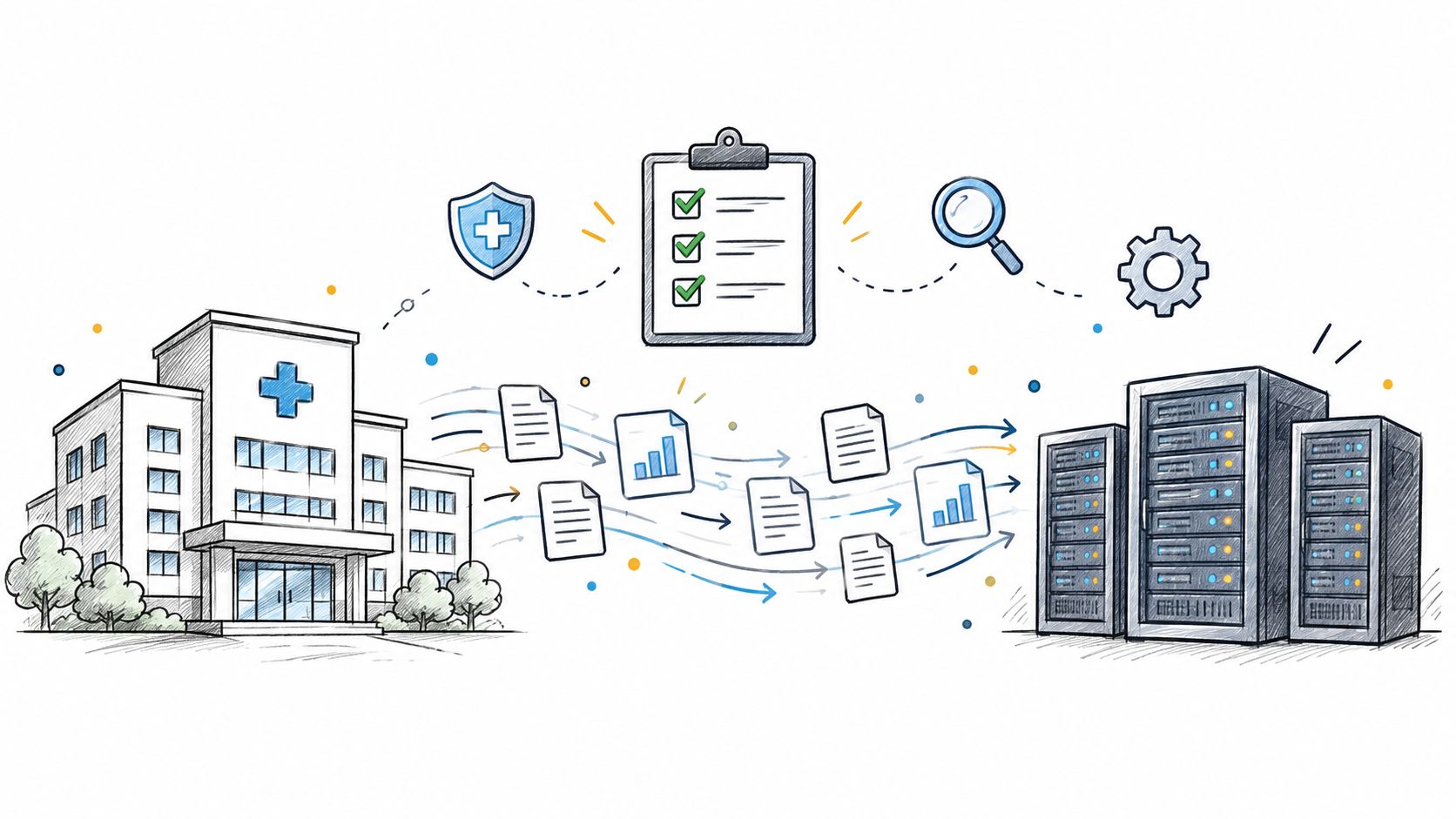
Practical data migration planning guide for healthcare teams. Scope, mapping, compliance, validation, cutover and rollback decisions explained end to end.
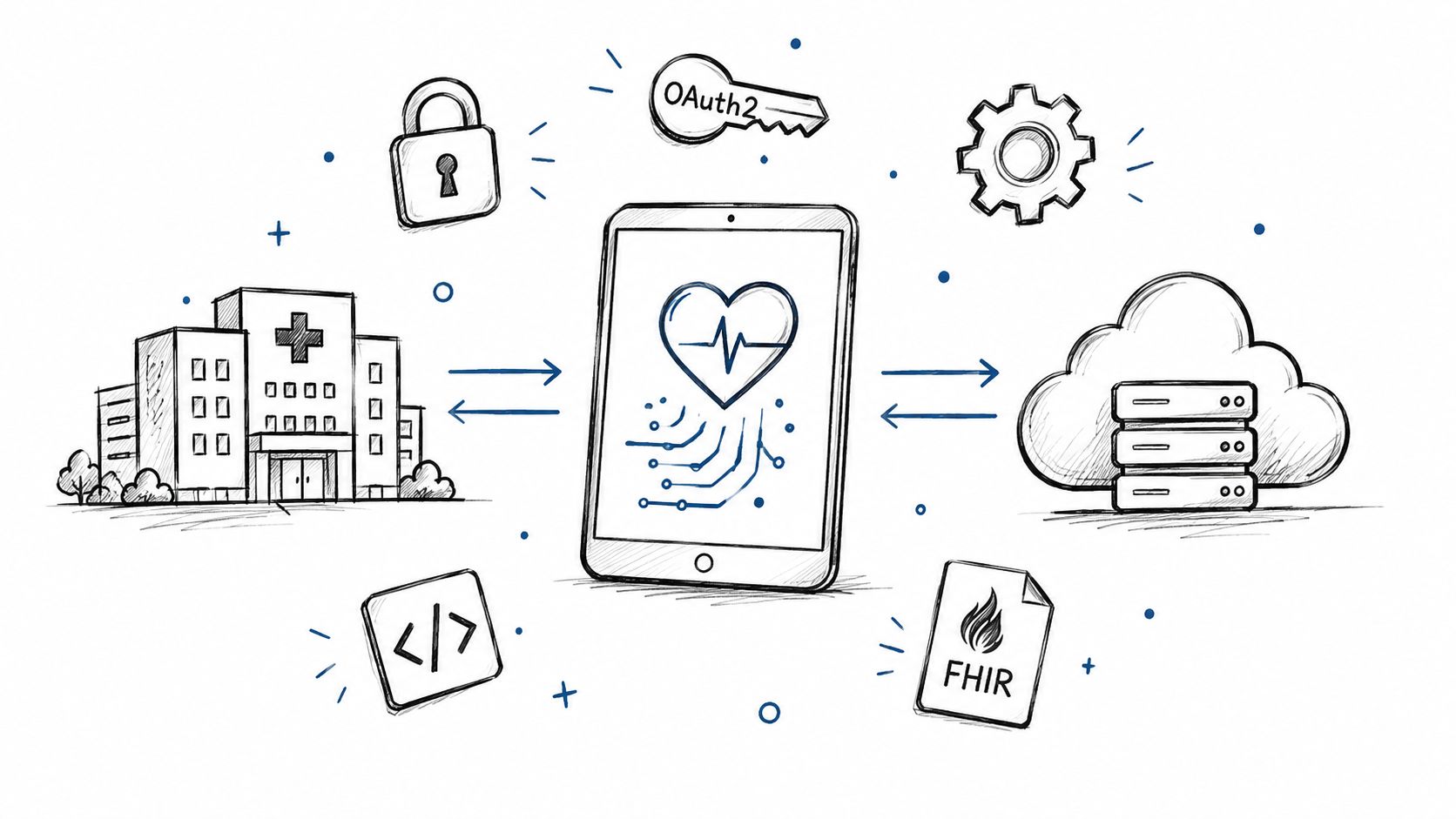
Smart on FHIR guide for healthtech engineers. Learn the OAuth 2.0 launch model, scope syntax, backend services, and US regulatory requirements.
Connect with our team to explore how AI expertise can transform your business.