AI in Healthcare
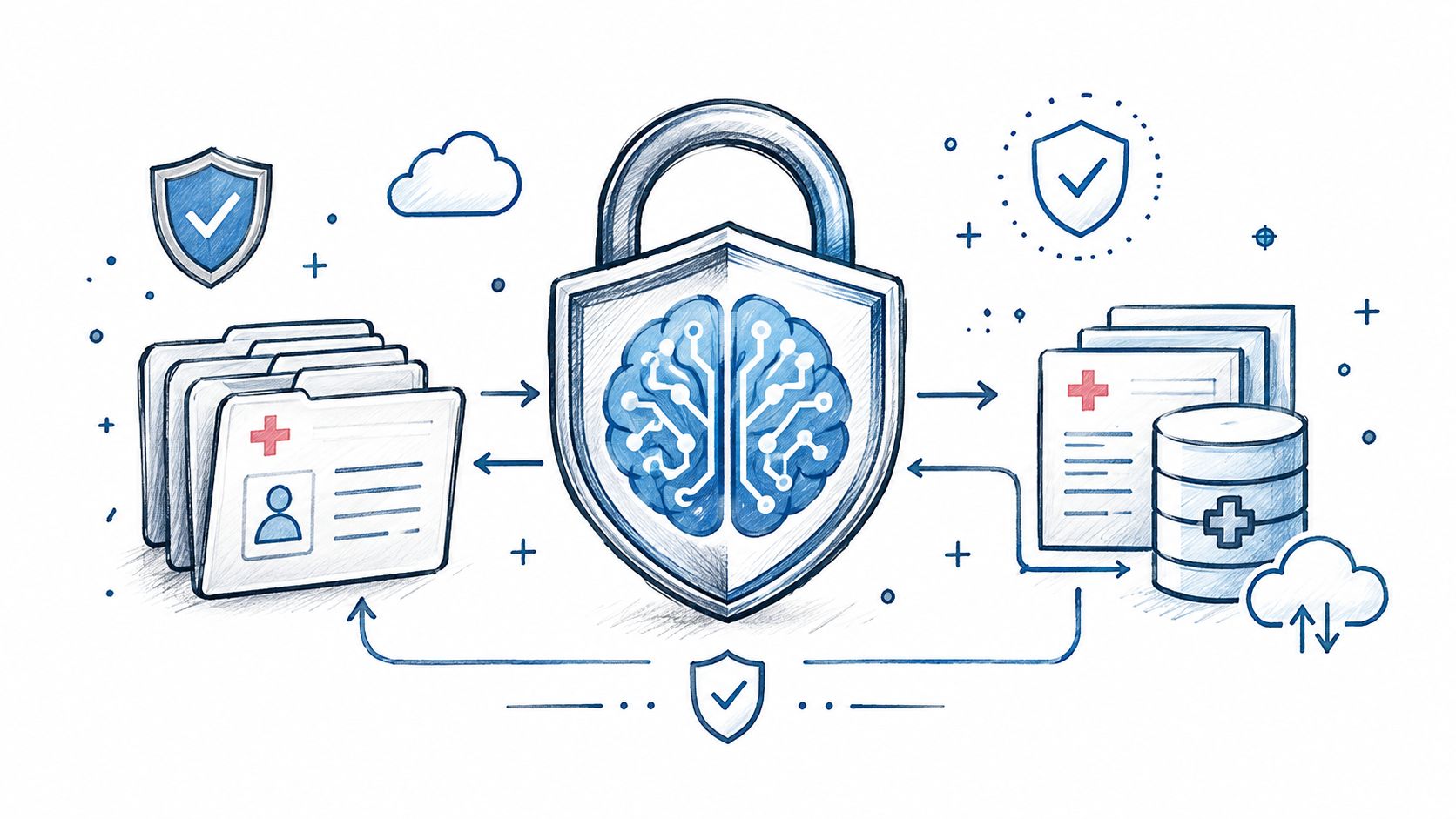
HIPAA-Compliant AI: How to Use LLMs With PHI Safely
How to build HIPAA-compliant AI: when LLM providers need a BAA, data minimization, de-identification, audit controls and a reference architecture.
October 16, 2026Read more
Explore real-time clinical insights powered by AI and see how they transform patient outcomes. Learn strategies and tools shaping modern healthcare.
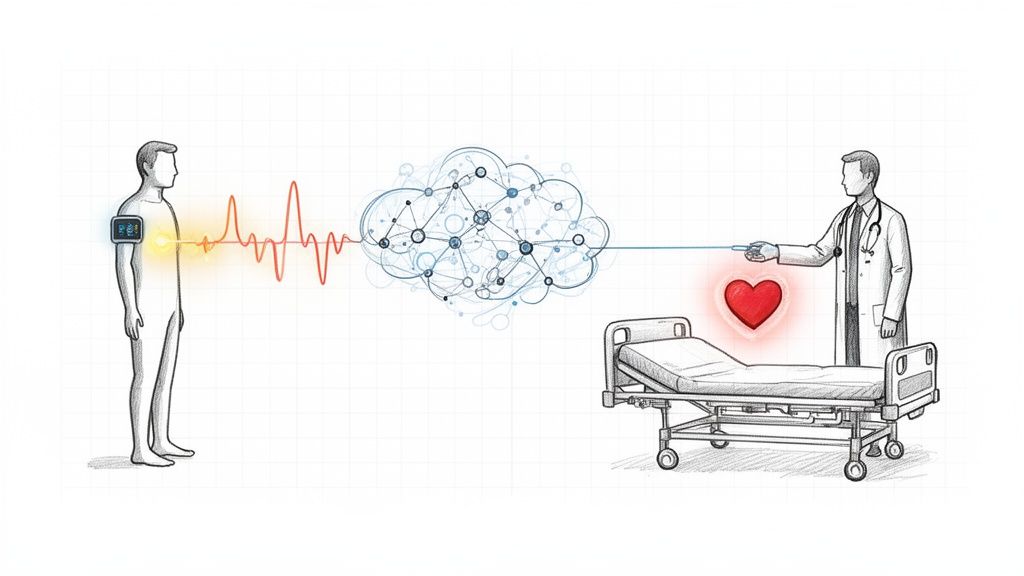
Imagine healthcare that doesn't just react to problems but gets ahead of them. That's the promise of real-time clinical insights.
Think about the old way of doing things: a doctor reviews a patient's chart days after an event, trying to piece together what happened. Real-time insights are the complete opposite. It’s about analyzing health data the second it's generated, giving care teams the power to act now, not later.
This isn't just about speed; it's a fundamental change from reactive treatment to genuinely proactive, preventative care. It’s the difference between reading a post-game analysis and having a coach on the sidelines, seeing the play develop and calling out a strategy in the moment.
We're talking about a world where clinical decisions are guided by what's happening with a patient at this very second. Traditional healthcare data often feels like looking in a rearview mirror. You can see where you've been, but it doesn't help you navigate the road ahead.
Real-time insights change the entire game. They provide that forward-looking view, turning a continuous stream of data into a powerful tool for making immediate, life-saving decisions.
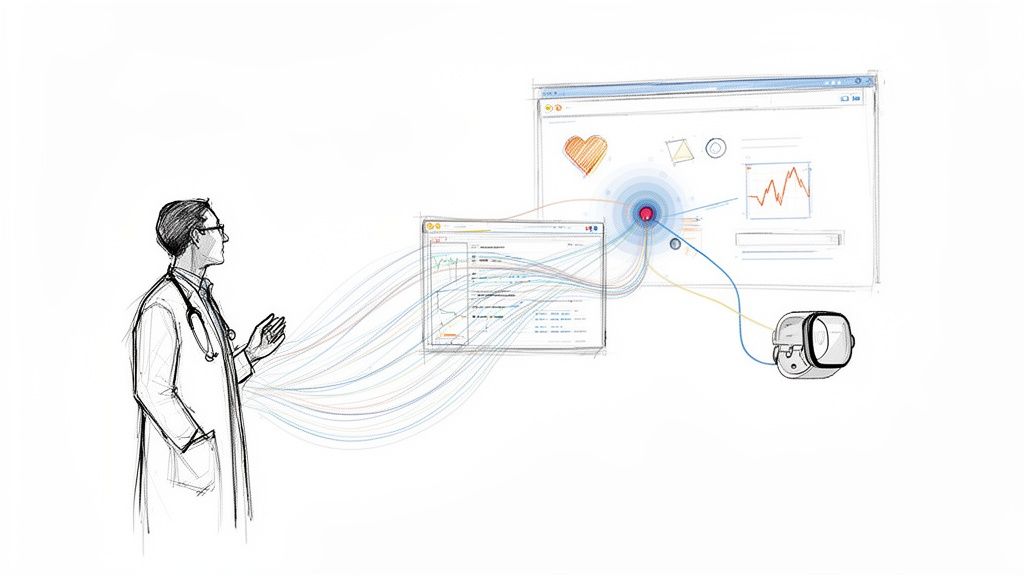
This shift is made possible by tapping into live data streams from everywhere—Electronic Health Records (EHRs), bedside monitors, pharmacy systems, and even patient wearables. Sophisticated AI models sift through this constant flow of information, flagging risks, predicting needs, and guiding personalized care plans.
Instead of waiting for the next set of lab results to come back, a nurse can get an alert on their dashboard about a subtle drop in a patient's vitals that signals a coming crisis. This early warning allows them to step in sooner, often preventing a serious complication before it ever takes hold.
The core value here is simple but profound: shortening the time between a piece of data being created and a clinician taking meaningful action. It turns patient care from a retrospective review into a forward-looking strategy.
Bringing real-time analytics into your clinical workflow isn't just a nice-to-have; it's a strategic advantage. It allows your organization to run more smoothly while delivering a higher standard of care.
Here’s a look at what that means in practice:
Enhanced Patient Safety: Smart algorithms can spot the early signs of sepsis or cardiac events hours before a human might, giving care teams a critical window to intervene.
Improved Operational Efficiency: What if you could accurately predict patient admissions and discharges? This helps you manage bed availability, cut down on wait times, and make sure your staff is where they're needed most.
Personalized Treatment Plans: By looking at a patient's complete data picture in the moment, doctors can adjust therapies and medications on the fly, getting much closer to true precision medicine.
Reduced Healthcare Costs: Getting ahead of emergencies and preventing readmissions doesn't just improve patient outcomes—it leads to major cost savings and smarter use of resources.
The ultimate goal is a more responsive, intelligent healthcare system. Tools like our Clinic AI Assistant are built to make this happen, turning complex data into clear, actionable guidance right at the point of care. By building these capabilities, organizations unlock new levels of performance and create a safer, more effective environment for everyone.
The surge in demand for real-time clinical insights isn’t happening in a vacuum. It’s a direct response to a few powerful shifts completely reshaping the healthcare industry. Several key forces are coming together, creating an urgent need for the kind of immediate, data-driven intelligence that only advanced AI can deliver.
It's no longer just about collecting information—it's about activating it the moment it's created. This whole movement is fueled by an unprecedented explosion of digital health data. From EHRs and lab systems to wearable sensors and genomic sequences, the sheer volume of information has become impossible for human teams to manage alone. This data deluge is both a massive challenge and an incredible opportunity.
Perhaps the biggest driver is the industry-wide move away from fee-for-service to value-based care. In this new world, providers get paid based on patient outcomes, not just the number of procedures they perform. This completely flips the economic incentives of healthcare on their head.
This model puts a huge premium on proactive and preventative medicine. The main goal is now to keep patients healthy and out of the hospital. To pull that off, organizations need to spot at-risk populations and intervene early, which requires a constant, real-time pulse on patient health. Not adopting these tools is a major strategic risk when efficiency and outcomes define success.
The core idea behind value-based care is simple: better outcomes at a lower cost. Real-time analytics are the engine that makes this possible, turning reactive treatment into proactive health management.
Today’s patients are more involved in their healthcare than ever. They expect the same personalized, convenient, and transparent experiences they get from retail or banking. This consumer demand is pushing providers to offer more sophisticated digital tools that give immediate feedback and support.
The rapid growth of health tech, including services like telemedicine, is a major market force. Understanding the details of telemedicine app development is key for planning ahead in this new environment.
At the same time, regulatory bodies are paving the way for the use of real-world data and advanced analytics. This market pressure is pushing healthcare and pharmaceutical companies to invest heavily in smarter, faster data infrastructure. Investing in advanced Healthcare AI Services isn’t just an option anymore; it’s a necessity for staying competitive.
The market’s direction is undeniable. The global clinical data analytics market is projected to skyrocket to USD 930.01 billion by 2034, growing at a compound annual growth rate (CAGR) of 27.57%. This incredible growth shows a fundamental shift in how healthcare organizations are using data to improve patient outcomes. The business case for real-time insights is no longer a "what if"—it's a market imperative for survival and growth.
Getting real-time clinical insights isn't about buying a single piece of software off the shelf. It’s about building a modern data foundation from the ground up. This means making a strategic shift away from outdated data warehousing and toward an agile, responsive architecture built for the speed of modern healthcare. This is what lets your organization stop just looking in the rearview mirror at past events and start actively predicting what’s coming next.
At its core, this foundation needs to ingest, process, and analyze massive streams of data the moment they’re created. The right tools are essential to make this happen, providing the engine that turns a flood of raw data into genuine predictive power. A well-designed foundation is the difference between simply having data and actually using it to make a difference.
A successful real-time analytics platform stands on a few key technological pillars. Each one plays a critical role in making sure data flows securely and quickly from the point of care to the point of decision.
Secure Cloud Infrastructure: Your entire system has to be built on a secure, scalable cloud platform. This gives you the raw computing power and storage needed to handle continuous data streams from EHRs, patient monitors, and wearables—all while meeting strict healthcare compliance standards.
Data Streaming and Ingestion: Old-school systems use batch processing, where data is collected and processed in big chunks every few hours. For real-time insights, that’s just too slow. Modern systems use data streaming pipelines that continuously pull in data, like a river that never stops flowing, ensuring your information is always up to the minute.
Interoperability and Data Enrichment: Data from different systems—labs, pharmacy, EHRs—is often trapped in silos and formatted differently. An interoperability layer, often using standards like FHIR, is absolutely crucial for bringing it all together. This lets the system enrich incoming data with vital context, creating a single, complete picture of the patient.
The market forces pushing for this modern architecture—explosive data growth, the shift to value-based care, and rising patient expectations—are powerful.
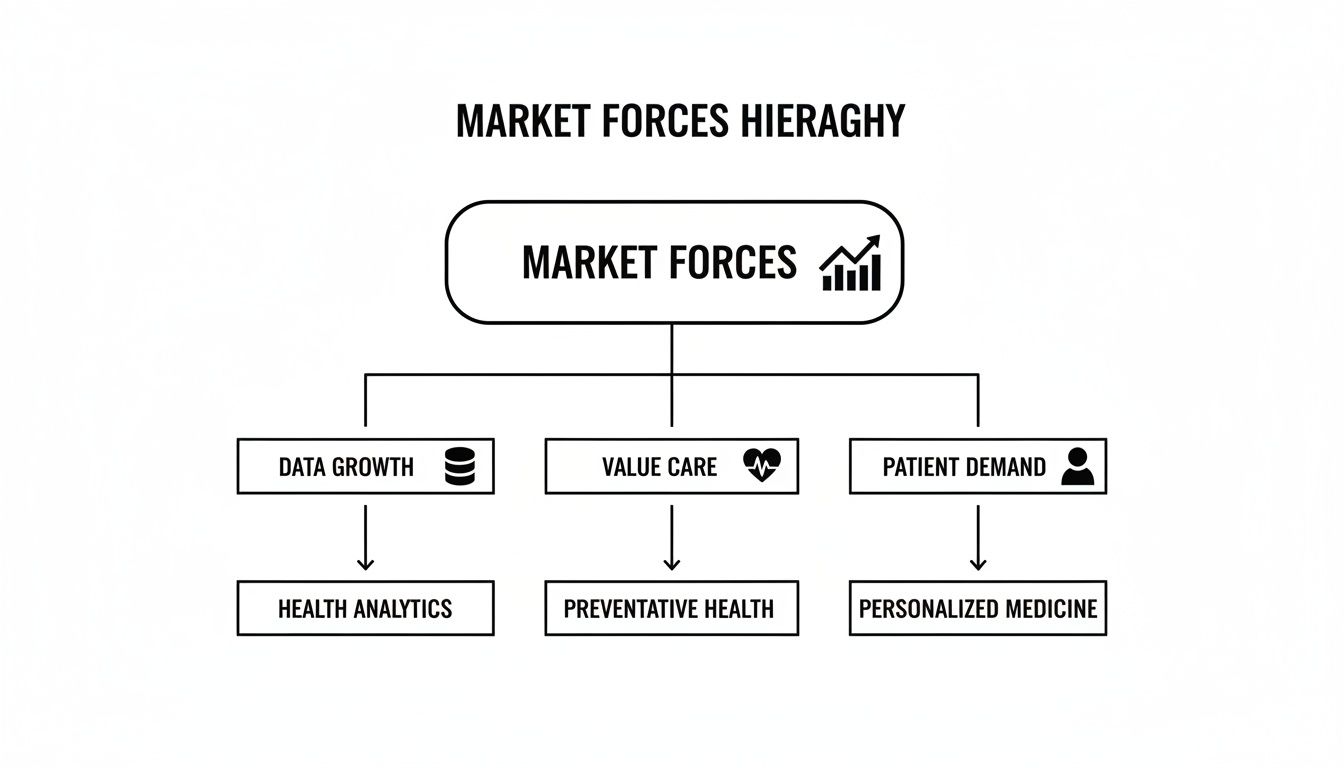
As you can see, these external pressures directly create the internal need for more advanced, real-time data capabilities just to stay competitive and improve care.
Just having fast data isn't the endgame. The real magic happens when you apply AI and machine learning models to that data. This is what elevates the system from a simple reporting tool to a predictive engine that can actually anticipate clinical events before they happen. For example, an AI model can analyze thousands of real-time data points to forecast sepsis risk hours in advance or optimize patient flow in the emergency room before a bottleneck even forms.
This leap in capability is significant. To get a better sense of how raw, messy data is transformed into structured, usable information, check out Ekipa AI's AI-Powered Data Extraction Engine.
The goal is to move beyond retrospective dashboards that show what happened and toward predictive tools that guide what should happen next. This proactive stance is the hallmark of a mature real-time analytics strategy.
To really grasp the architectural shift required, it helps to see the old and new approaches side-by-side.
This table breaks down the key differences between the outdated batch-processing approach and the modern, event-driven architecture that real-time insights demand.
| Component | Traditional Batch-Processing Approach | Modern Real-Time Architecture |
|---|---|---|
| Data Ingestion | Data is collected and processed in batches, often hourly or daily. | Data is ingested continuously through streaming pipelines as it is generated. |
| Processing Speed | High latency; insights are delayed by hours or even days. | Ultra-low latency; insights are available in seconds or minutes. |
| Data Source | Primarily structured data from systems like EHRs. | Integrates structured, unstructured, and streaming data from diverse sources. |
| Analytical Focus | Historical reporting and retrospective analysis. | Predictive and prescriptive analytics, focused on immediate action. |
The takeaway here is clear: this is a fundamental move from a static, historical view to a dynamic, forward-looking one. Building this modern foundation is a strategic imperative for any healthcare organization that wants to unlock the full potential of its data to improve patient outcomes and operational efficiency.
So far, we've talked a lot about the technical architecture behind real-time clinical insights. Now, let’s see where the rubber meets the road. The true power of this technology isn't in the code; it’s in the real-world applications that are already saving lives and making hospitals run smarter. These aren't just ideas on a whiteboard—they're proven solutions that show a clear return on investment for any organization that implements these advanced AI solutions.
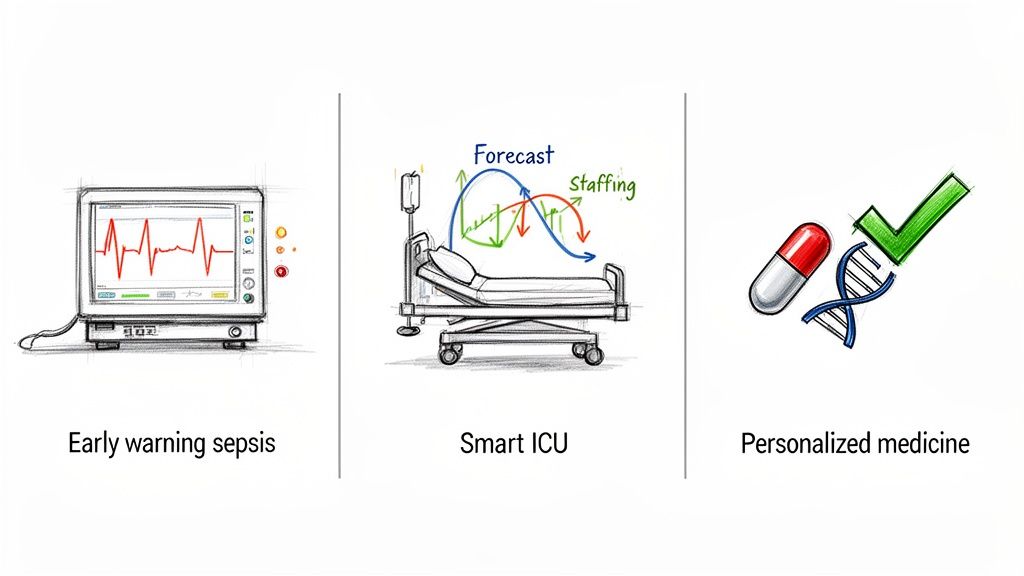
These examples show how abstract data points get turned into life-saving actions, fundamentally changing how care is delivered.
Sepsis is a clinician's nightmare. It’s a fast-moving, life-threatening condition where every minute counts. The problem is, its early signs—a slight uptick in heart rate, a small change in breathing—are incredibly subtle and easy to miss during a busy shift. The old way of doing things relies on a clinician happening to spot these patterns during routine checks, which often creates a dangerous delay.
This is a perfect job for an AI-powered system. By constantly monitoring patient vitals from EHRs and bedside devices, an algorithm can analyze the data stream in real time. It’s trained to detect the faint signals that are the precursors to a septic event.
When the model spots a high-risk pattern, it triggers an immediate, automated alert right on the care team’s dashboard. This often happens hours before a person would have connected the dots. It’s the difference between reacting to a crisis and proactively stopping one in its tracks, which not only saves lives but also cuts down on the staggering costs of advanced sepsis treatment.
Intensive Care Units are the epicenter of a hospital, but they're also a massive operational puzzle. Staffing shortages and overcrowding can quickly lead to clinician burnout and put patient care at risk. On the other hand, empty ICU beds are a huge waste of expensive resources. Trying to predict patient flow in this kind of high-stakes environment is a constant challenge.
This is where predictive models come in. By analyzing both historical and live data, these systems can forecast admissions, transfers, and which patients are likely to decline. For instance, the system can flag a patient on a general ward who has a high probability of needing an ICU bed in the next 24-48 hours.
This kind of foresight allows hospital administrators to:
Proactively manage bed allocation and avoid critical bottlenecks.
Fine-tune staffing schedules to match anticipated demand.
Coordinate patient transfers smoothly, creating a more efficient workflow.
Instead of constantly scrambling, hospitals can use a data-driven strategy to manage their most critical units. As we've covered before, a solid AI Product Development Workflow is essential to get these complex systems built and running effectively.
The ultimate goal of smart ICU management is to ensure the right resources are available for the right patient at the right time, every time. This predictive capability is a cornerstone of a truly resilient healthcare system.
For complex diseases like cancer, finding the right drug regimen can feel like a shot in the dark. It’s often a slow, expensive, and emotionally taxing process of trial and error for the patient. We know the ideal treatment is hidden in a unique mix of a person's genetic markers, lifestyle, and other health conditions—but that information is buried in massive datasets.
Real-time clinical insights bring that precision right to the bedside. By pulling in genomic data alongside live EMR information, AI algorithms can instantly analyze a patient's complete profile against a huge library of treatment outcomes. In a matter of moments, the system can suggest the most effective drug combinations and dosages for that specific person.
This isn't just a slightly better version of standard protocols; it's a completely new way of practicing medicine. It guides clinicians toward therapies with the highest chance of success from the very beginning. As we've detailed in our other guides, finding these kinds of high-impact, real-world use cases is always the first step toward building an AI program that delivers truly advanced, personalized care.
Innovating in healthcare, especially with sensitive patient data, comes with a massive weight of responsibility. When you're dealing with systems that deliver real-time clinical insights, rock-solid compliance and governance aren't just a nice-to-have; they are the very bedrock of trust. This means you have to expertly navigate a dense thicket of regulations like HIPAA in the U.S. and GDPR in Europe to make sure every single piece of data is handled with the utmost security.
But today, great governance is about so much more than ticking boxes on a compliance checklist. It’s about creating a framework that actually empowers responsible innovation. This involves putting concepts like Explainable AI (XAI) into practice, so that algorithmic decisions are completely transparent and make sense to clinicians. It also demands constant monitoring to catch and correct algorithmic bias, ensuring that the care provided is fair and equitable for every patient.
For years, many people saw strict regulations as a frustrating obstacle to new technology. That whole perspective is shifting. Regulatory bodies are now actively encouraging the use of real-world data and evidence—as long as it's managed correctly—because they see its incredible potential to improve patient outcomes.
This push from regulators has actually become a major reason for adopting these new systems. For example, the FDA's updated guidance on using real-world evidence in drug submissions is lighting a fire under pharmaceutical companies, who now have a greater need for advanced data platforms. This trend is expected to push industry spending on pharmaceutical analytics to $3 billion by 2025, as companies rush to validate drug performance with real-world data pulled from EHRs and claims.
This completely changes the conversation around governance. It's no longer a roadblock. Instead, it becomes a powerful enabler of trust and a foundational piece of any successful AI strategy consulting partnership.
Governance is no longer just about managing risk; it's about building the trust that clinicians, patients, and regulators need to fully embrace the next wave of healthcare technology.
To innovate responsibly, organizations absolutely need a multi-layered game plan for data security and ethical AI. This is a non-negotiable part of any custom healthcare software development project.
A truly solid framework has to include a few key components:
Data Encryption and Anonymization: All patient data, whether it's sitting on a server or moving across a network, must be encrypted. Techniques for anonymizing and de-identifying data are also vital for protecting privacy while training and analyzing models.
Access Control: You need to implement strict, role-based access controls. This guarantees that only people with the right permissions can ever see or interact with sensitive patient information.
Model Explainability (XAI): Clinicians aren't going to follow recommendations from an AI they don't trust. XAI techniques open up the black box and show why a model came to a specific conclusion, transforming it from a mysterious algorithm into a trusted clinical partner.
Continuous Auditing and Monitoring: Algorithms aren't "set it and forget it." They need to be watched constantly for any drop in performance, drift, or the appearance of bias to make sure they stay fair and accurate over the long haul.
To keep patient data private and stay on the right side of regulations, it's wise to follow best practices for securing big data at scale. Following these principles proves to leadership that fast-paced innovation and strong compliance can absolutely coexist, creating a safe and effective environment for deploying advanced Healthcare AI Services.
Turning a great idea into a practical, working solution requires a clear, step-by-step plan. The journey from ambition to execution isn't about a single giant leap; it's about building a solid foundation first, identifying high-impact opportunities before you sink significant resources into development. This phased approach makes sure every move is deliberate, measurable, and directly tied to your core clinical and business goals.
The first step is always discovery. This is where we roll up our sleeves and dig into your current workflows, data infrastructure, and clinical pain points. The goal is to pinpoint exactly where real-time clinical insights will make the biggest difference. We help you move past vague ideas to define concrete applications, making sure your investment solves real problems and delivers a clear return. As we explored in our AI adoption guide, choosing the right use cases is the single most important factor for long-term success.
With a clear strategy in place, the focus shifts to a structured implementation. You can't just wing it when building complex healthcare technology. A detailed blueprint is non-negotiable for navigating everything from regulatory compliance to managing stakeholder expectations and guiding the project from a concept on a whiteboard to a tool in clinicians' hands.
Our structured AI Product Development Workflow is built to make this process smooth and predictable, breaking the project into four manageable stages:
AI Requirements Analysis: First, we translate your big-picture goals into detailed technical and functional specs. This guarantees that what we build is exactly what you need.
Prototyping and Validation: We don’t start coding an entire system right away. Instead, we create interactive prototypes so clinicians and other stakeholders can get their hands on it, test the experience, and confirm it works in a real-world context.
Agile Development Sprints: We build the solution in short, iterative cycles. This means you see progress regularly, provide feedback along the way, and we can adjust on the fly to keep everything on track.
Integration and Deployment: Finally, we carefully plug the new system into your existing EHR and IT infrastructure. We then manage a phased rollout to ensure a smooth, disruption-free transition for your care teams.
Our aim is to be more than just a consultant who hands you a report. We're your execution partner, here to bridge the gap between idea and impact. We offer flexible ways to work together, designed to fit your specific needs. Whether that means deploying targeted solutions through AI Automation as a Service or building custom internal tooling for your unique challenges, we have the technical horsepower to get it done right.
Building lasting solutions starts with a clear vision and a trusted partner to bring it to life. The right strategy, combined with expert execution, turns the promise of AI into tangible improvements in patient care and operational efficiency.
We believe the most powerful AI solutions come from a deep understanding of the problems they're meant to solve. It all starts with a conversation about your goals. By partnering with our expert team, you get the strategic insight and technical skill you need to put real-time clinical insights to work and secure your place at the forefront of healthcare.
When we talk with healthcare leaders about bringing real-time clinical insights into their organizations, a few key questions always come up. Here are some straightforward answers to help you think through this process.
This is probably the most common hurdle we see, and it's absolutely solvable. The trick is not to rip and replace, but to build a smart bridge between your existing systems and a modern analytics platform.
We do this using established interoperability standards like FHIR and specialized API gateways. Think of it as creating a secure, dedicated pipeline that streams data from your legacy EHRs into one central place. The best part? It happens in the background, so your day-to-day clinical workflows aren't disrupted. This way, you get the benefits of a modern data environment without having to abandon your current infrastructure. Our Healthcare AI Services are specifically designed to make this connection seamless.
The return on investment here is two-fold: you see it in your budget and at the bedside.
Financially, the gains come from running a tighter ship. Think reduced patient stays, fewer costly mistakes like hospital-acquired infections, and smoother operations overall. The right AI tools for business can make a serious dent in operational costs.
Clinically, the payoff is even more profound: lower readmission rates, better patient safety, and more effective treatments. We typically start with a focused AI strategy consulting engagement to identify the use cases that will deliver the biggest impact first. This helps demonstrate value quickly and builds momentum for the entire initiative.
The dual benefit of financial savings and enhanced patient outcomes makes the business case for real-time clinical insights exceptionally strong. It’s an investment in both efficiency and quality of care.
This is non-negotiable, and it requires a disciplined approach. First, it all starts with the data. We ensure the training data is diverse and truly represents your patient population—not some generic dataset. During our AI requirements analysis, we define exactly what "fair" and "accurate" look like for you.
Next, we don't build "black boxes." We use explainable AI (XAI) techniques so that clinicians can understand why a model made a certain recommendation. Finally, it’s not a one-and-done setup. We continuously monitor the model's performance in the real world to catch any drift or bias that might emerge. It's this rigor that builds trust in the AI solutions we help implement. You can see how this plays out in our collection of real-world use cases.
You don’t have to wait years for a payoff. The timeline really depends on your starting point and the complexity of the problem you're solving first.
But our approach is all about getting quick wins. By starting with a well-defined project, often identified in a Custom AI Strategy report, many organizations can get a pilot up and running and start seeing actionable insights within a few months. The goal is to deliver tangible value early, prove the concept, and build the confidence needed for a wider rollout.
If you're curious about how we speed up that timeline, our expert team can walk you through it.
Ready to see what real-time insights can do for your clinical operations? Ekipa AI is here to help you through every step, from the initial idea to a fully implemented solution. We specialize in turning messy data challenges into real-world improvements in patient care and efficiency.
How to build HIPAA-compliant AI: when LLM providers need a BAA, data minimization, de-identification, audit controls and a reference architecture.
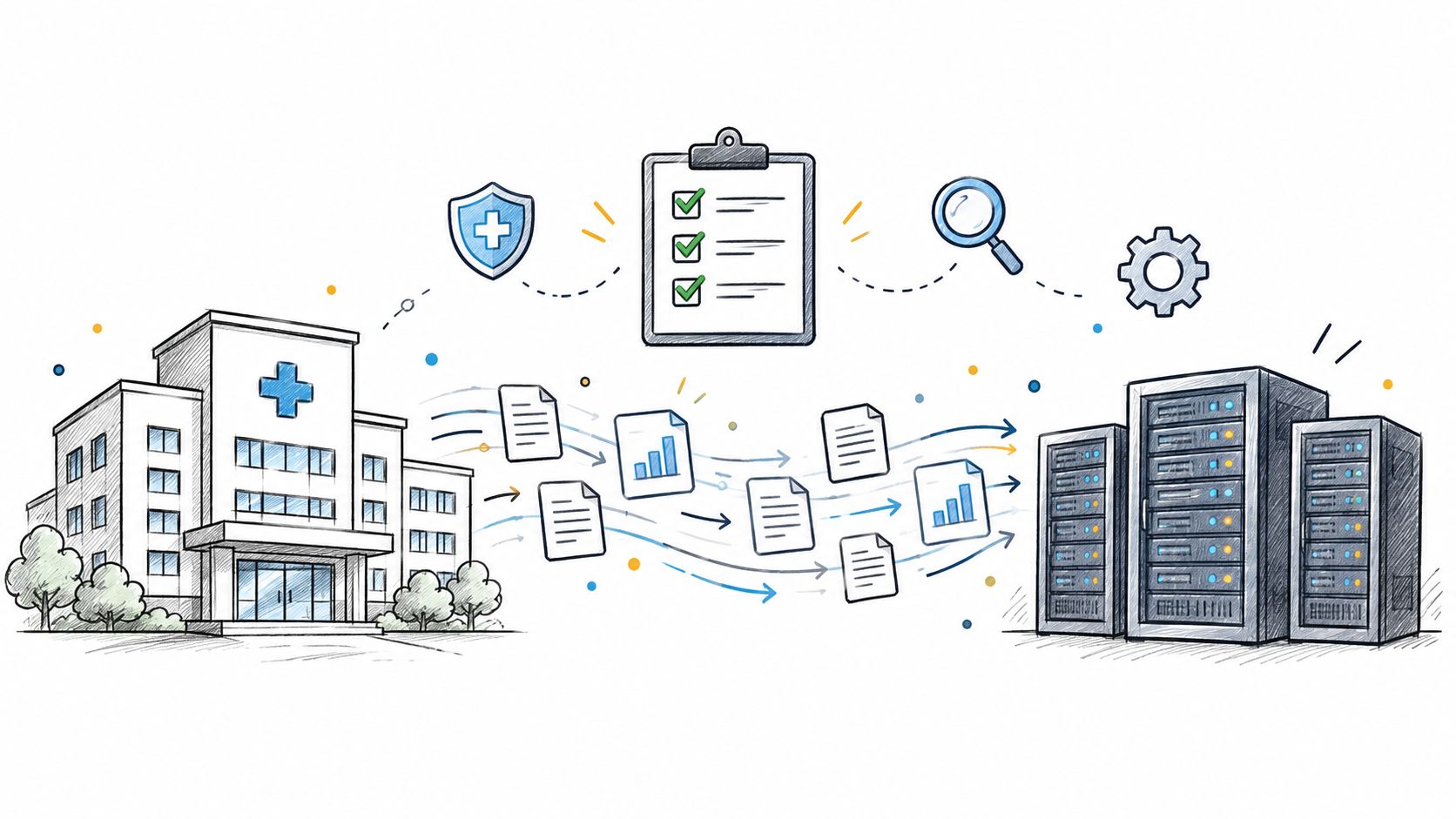
Practical data migration planning guide for healthcare teams. Scope, mapping, compliance, validation, cutover and rollback decisions explained end to end.
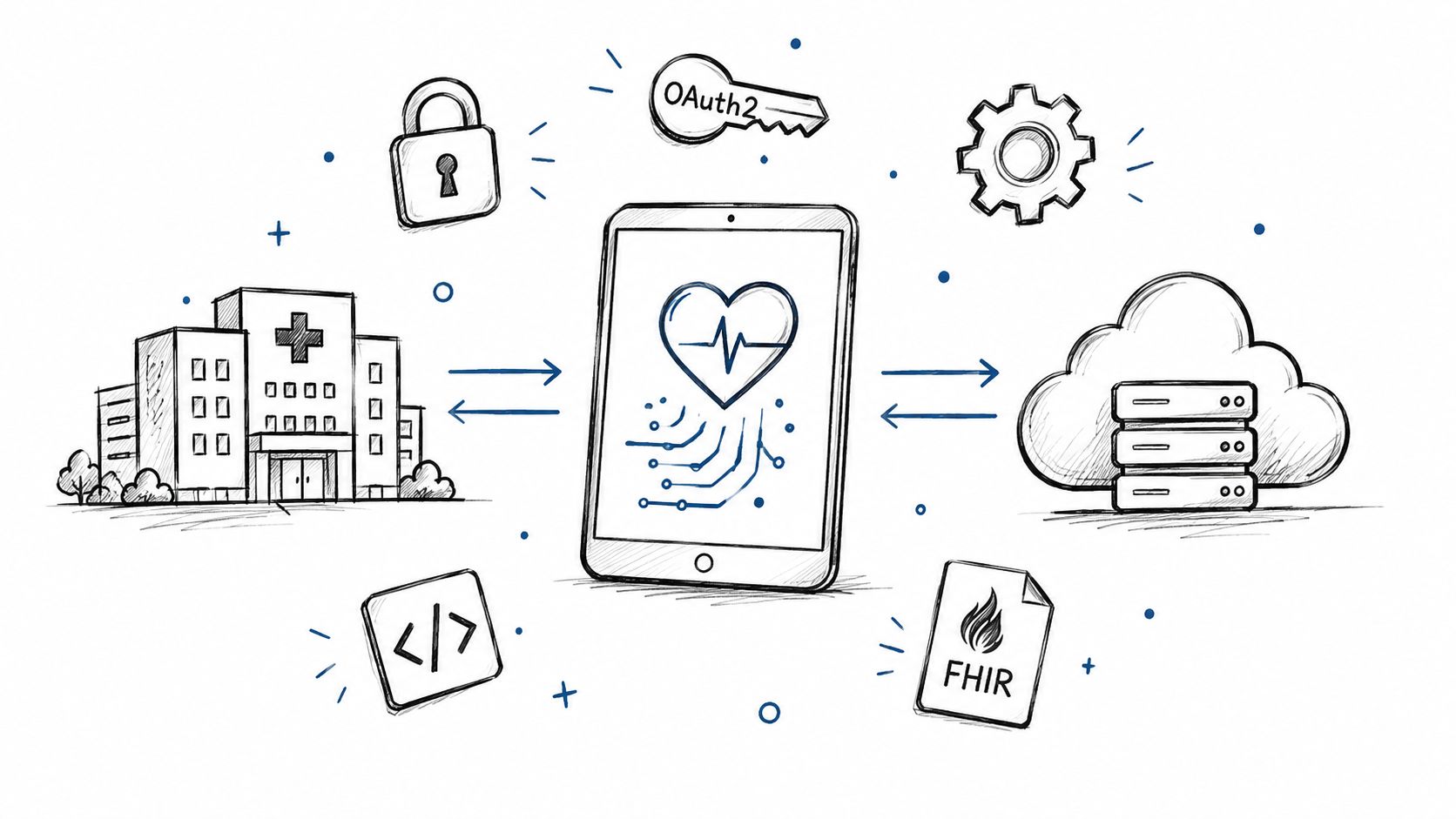
Smart on FHIR guide for healthtech engineers. Learn the OAuth 2.0 launch model, scope syntax, backend services, and US regulatory requirements.
Connect with our team to explore how AI expertise can transform your business.