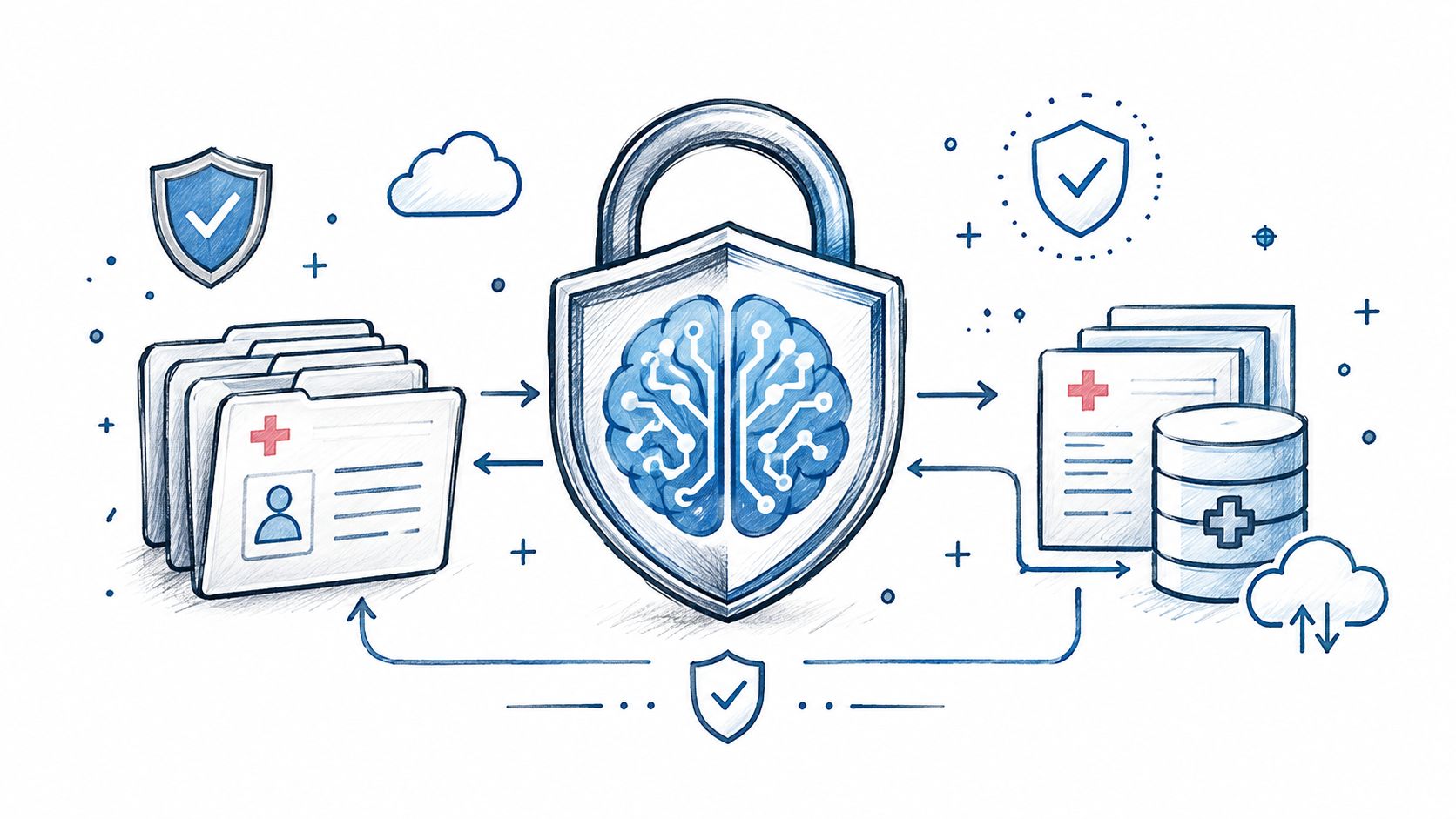
AI in Healthcare
HIPAA-Compliant AI: How to Use LLMs With PHI Safely
How to build HIPAA-compliant AI: when LLM providers need a BAA, data minimization, de-identification, audit controls and a reference architecture.
October 16, 2026Read more
AI is transforming clinical documentation workflows by automating data entry, reducing errors, and improving efficiency. It enables healthcare professionals to focus more on patient care and less on administrative tasks.
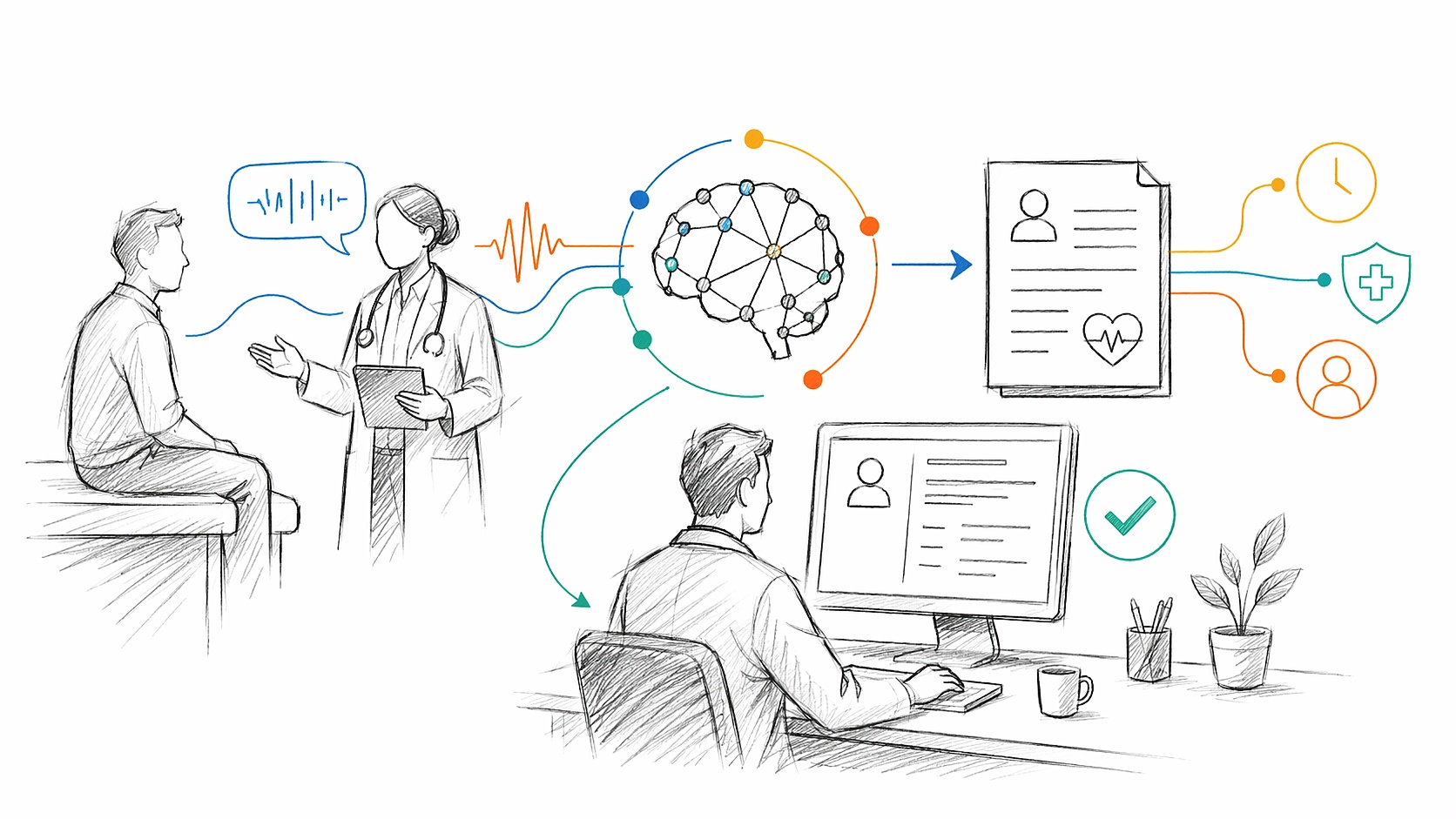
Clinical documentation captures every detail of patient care, from diagnosis to treatment plans. This work takes time, focus, and precision. Many doctors spend long hours typing notes after patient visits, which adds strain to an already tough role. Manual data entry, constant record updates, and repeated fixes often lead to fatigue, delays, and occasional mistakes. AI clinical documentation offers a fresh method for managing this workload with speed and clarity.
AI clinical documentation refers to intelligent systems that help record and organise medical information while doctors care for patients. These systems capture conversations, turn speech into organised text, and prepare clinical notes with little manual effort. The goal is to reduce the time doctors spend on paperwork and raise the quality of records. A skilled healthtech engineering partner plays a key role in designing these systems to fit real clinical settings and daily workflows.
These tools use speech recognition and natural language processing to follow medical conversations. They extract key details such as symptoms, diagnoses, and treatment plans, then organise them into a clear format. This approach maintains accuracy and consistency in documentation without placing additional work on healthcare professionals.
In a traditional setup, the process starts with a patient consultation. Doctors listen, ask questions, and then write down details by hand. After the consultation, they enter notes into electronic health records, which often takes extra time. The final step involves reviewing and fixing entries to keep them accurate. Many healthcare organisations later turn to healthcare AI services to solve these inefficiencies and improve how documentation works.
This process eats up time and repeats for every patient visit. Doctors often handle multiple systems, which raises the chance of missing details or making errors. The workload accumulates throughout the day, which causes delays in documentation and reduces attention to patient care.

AI systems now work alongside doctors during patient visits. They capture conversations as they happen and turn them into structured clinical notes. Instead of relying on memory or writing notes after the visit, the system records key medical details in real time, such as symptoms, history, and treatment plans. This approach lowers the mental load on doctors and keeps documentation closely tied to the actual conversation. It also reduces missed details, since information gets captured at the moment of care. This improves both accuracy and completeness of records.
Clinical documentation often includes repetitive work like filling in templates, updating patient details, and organising records across systems. AI streamlines these tasks by automatically filling out forms and structuring data based on what was captured. This reduces the need for repeated manual entry and keeps documents consistent. Over time, this structured method simplifies workflows, lowers administrative burden, and creates a more organised documentation process across departments.
Natural language processing plays a big part in turning raw conversation data into useful clinical information. It reads unorganised speech or text and picks out relevant medical terms, conditions, and actions. The system then arranges this data into standard formats used in clinical records. This organised output improves clarity for other healthcare professionals who access the records later. It also strengthens data quality, which matters for reporting, analysis, and future clinical decisions. Many healthcare organisations begin this shift with a custom AI strategy report, which outlines how these technologies can fit with their existing workflows and data systems.
The role of doctors in documentation has moved from creating notes from scratch to reviewing and checking AI-generated content. This change reduces the time spent on typing and editing. Doctors can quickly verify the accuracy of notes, make small changes if needed, and finalise records with confidence. This review-based approach improves efficiency and reduces the fatigue that comes from long hours of documentation work. It allows doctors to stay focused on patient care throughout the day.
Natural language processing plays a central part in understanding clinical conversations. It interprets spoken or written language and picks out important medical details such as symptoms, diagnoses, medications, and treatment plans. In a clinical setting, conversations often lack structure and vary from one patient to another. This technology brings order to that complexity by turning free-flowing language into organised medical information. It also understands context, which matters when similar terms carry different meanings depending on the situation. As a result, documentation becomes more accurate, clear, and easy to review.
Machine learning strengthens how documentation systems perform over time. It studies large amounts of medical data and learns patterns tied to clinical language, documentation styles, and patient records. As doctors review and correct AI-generated notes, the system learns from those corrections and sharpens its output. This ongoing learning process improves accuracy, consistency, and relevance in documentation. Over time, the system adapts to specific clinical environments and aligns with the preferences of healthcare professionals.
Speech recognition technology captures spoken conversations during patient visits and turns them into text as they happen. This reduces the need for manual typing and lets doctors focus fully on patient interaction. In clinical settings, speech can include complex medical terms, accents, and different tones. Advanced speech recognition systems are trained to handle this complexity and produce dependable transcripts. This real-time conversion creates a smooth flow between consultation and documentation, which improves efficiency and reduces delays.
Integration with electronic health records connects AI-generated documentation directly with existing clinical systems. This connection keeps patient data organised and reachable across different departments. Doctors and healthcare staff can review, update, and retrieve information without switching between multiple platforms. A well-integrated system also keeps data formats consistent and improves coordination among healthcare teams. This leads to a more streamlined workflow and a single, unified view of patient records.
Clinical documentation often stretches beyond regular working hours. This affects both productivity and the well-being of doctors. AI reduces screen time and paperwork by capturing and organising information during patient visits. Doctors spend more time talking with patients and less time on administrative tasks. This change creates a more balanced daily routine and lifts overall job satisfaction. In many healthcare settings, SaMD solutions play a key part in delivering these abilities within regulated clinical environments.
Accuracy remains a major concern in medical documentation. AI-generated notes depend on data quality and how well the system has been trained. Doctors still review and approve the final records, which keeps reliability in place. Over time, AI systems learn from corrections and get better at their job. This steady improvement builds trust in the documentation process.
Faster Documentation: AI reduces the time needed to create and update patient records.
Improved Accuracy: Organised data and less manual entry lead to better precision.
Better Patient Care: Doctors focus more on patient interaction during consultations.
Efficient Workflows: Automation makes daily tasks run more smoothly and cuts down delays.
Cost and Time Savings: Less administrative effort results in better use of resources.
The adoption of medical documentation automation brings consistency and clarity across healthcare systems. It standardises processes and raises the overall quality of records.
Healthcare organisations face several hurdles during adoption. Data privacy and security remain major worries because patient information is highly sensitive. Connecting AI with existing systems takes careful planning. Training staff to use new tools also requires time and effort. Upfront costs can influence decisions, especially for smaller organisations.
Clinical documentation is heading toward smarter and more connected systems. As technology improves, workflows are becoming better organised and more efficient. AI systems are expected to move beyond basic note creation and offer context-aware insights during patient visits. They can flag missing details, organise information as it comes in, and lift the overall quality of records. This reduces the need for repeated fixes and gives healthcare teams a clearer view of patient data, which improves coordination and decision-making.
The growing use of clinical note automation is creating more consistent and streamlined documentation across healthcare settings. At the same time, tools like AI scribes in healthcare are becoming part of everyday clinical work. They capture conversations and prepare accurate notes during patient visits. These systems work beside doctors without interrupting the flow of care, leading to faster documentation, better accuracy, and more time spent on patient interaction.
Clinical documentation remains a vital part of healthcare delivery. AI brings a structured and efficient method that lowers manual work and raises accuracy. Doctors gain more time to interact with patients, and organisations benefit from smoother workflows through AI clinical documentation.
This approach does not replace doctors. It enhances how they work and brings clarity to everyday tasks. Contact us to learn how this shift can improve clinical workflows. It is not only about saving time. It is about putting the focus back on patient care.
AI clinical documentation uses intelligent systems to capture, organise, and structure patient data during consultations, reducing manual work and improving record quality.
A healthtech engineering partner designs and implements solutions that align AI tools with real clinical workflows and system requirements.
Healthcare AI services guide organisations in deploying AI tools, improving workflows, and managing clinical data more efficiently.
A custom AI strategy report outlines the right approach, identifies gaps, and defines how AI can be applied effectively in clinical documentation.
Technologies like SaMD solutions, medical documentation automation, clinical note automation, and AI scribes healthcare improve accuracy, speed, and consistency in clinical records.
How to build HIPAA-compliant AI: when LLM providers need a BAA, data minimization, de-identification, audit controls and a reference architecture.
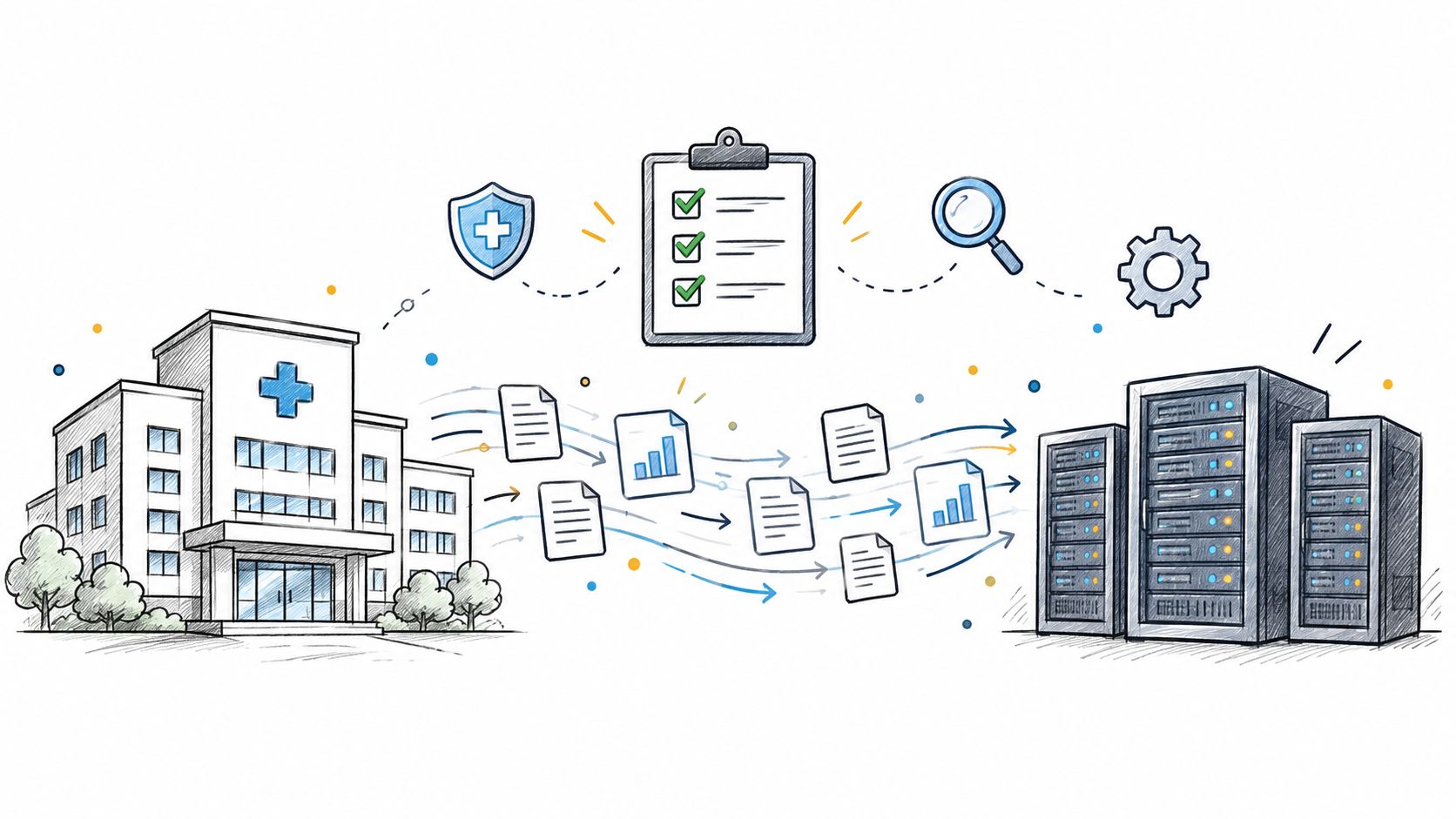
Practical data migration planning guide for healthcare teams. Scope, mapping, compliance, validation, cutover and rollback decisions explained end to end.
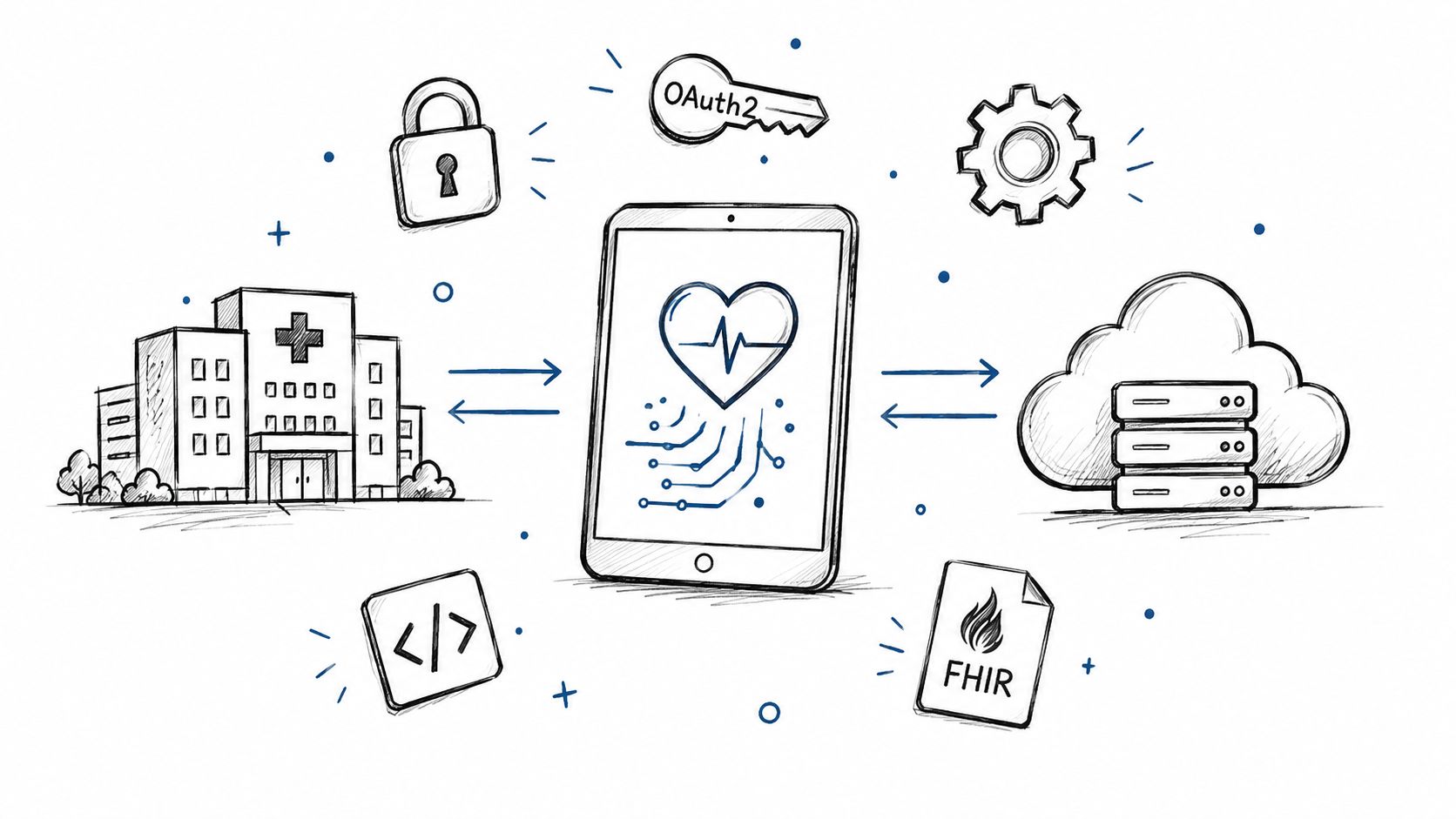
Smart on FHIR guide for healthtech engineers. Learn the OAuth 2.0 launch model, scope syntax, backend services, and US regulatory requirements.
Connect with our team to explore how AI expertise can transform your business.