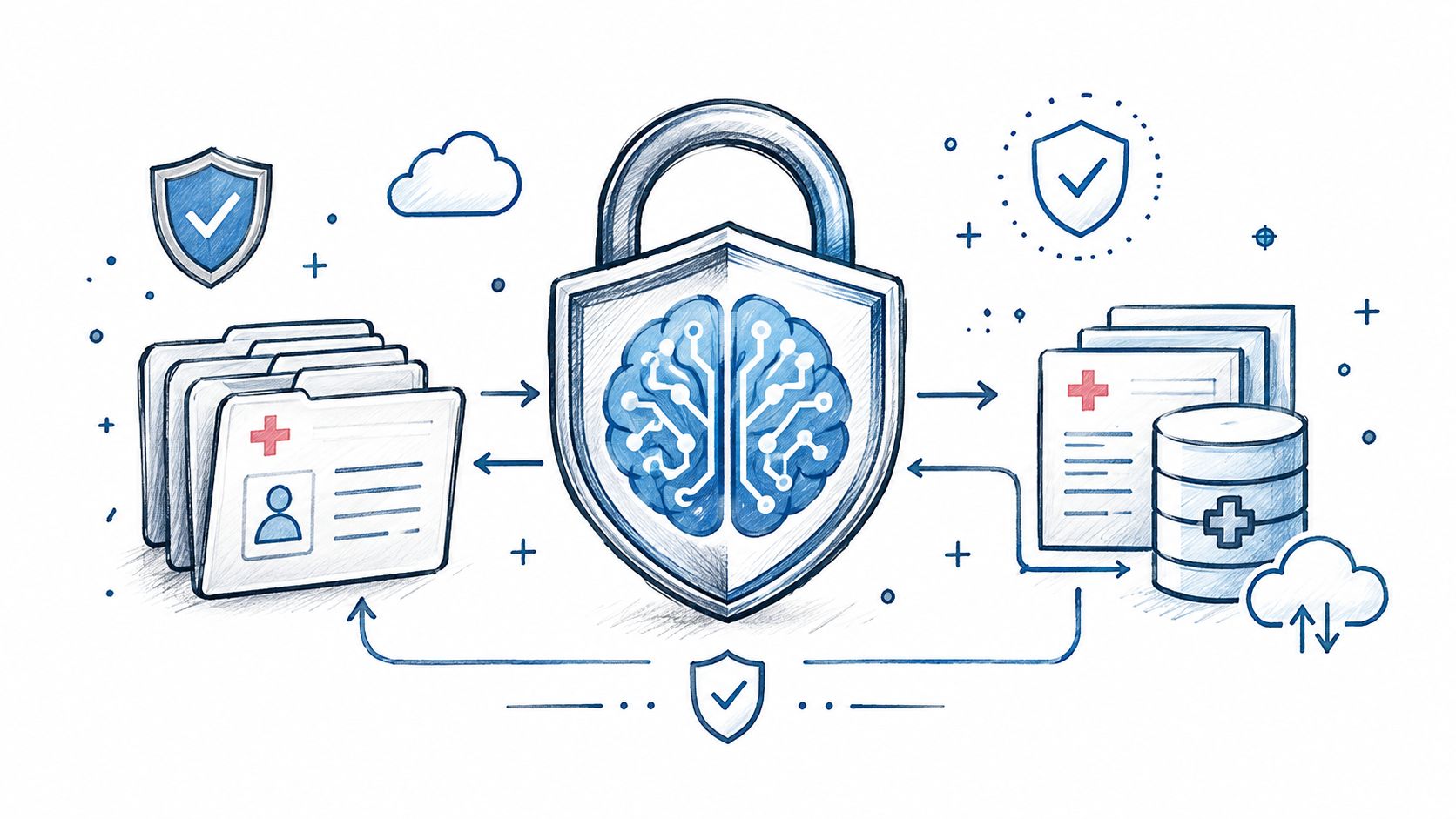
AI in Healthcare
HIPAA-Compliant AI: How to Use LLMs With PHI Safely
How to build HIPAA-compliant AI: when LLM providers need a BAA, data minimization, de-identification, audit controls and a reference architecture.
October 16, 2026Read more
Discover how integrating AI into hospital management systems can transform patient care and operations. Learn practical strategies for success.

Integrating AI into a hospital management system means bringing in smart software to handle the administrative grind, smooth out patient flow, and give clinicians the data-backed support they need. The goal is simple: boost efficiency and raise the quality of care. This isn't just a tech upgrade; it's a strategic answer to ballooning operational costs and the growing demand for a more personalized patient journey.
Let's be honest, the pressure on hospitals to do more with less has never been higher. Budgets are tight, staff shortages are a real problem, and patient expectations are through the roof. In this kind of environment, old-school management systems just can't keep up. Bringing AI into the mix isn't some far-off idea anymore—it's a practical solution to the very real challenges healthcare faces today.
The biggest hurdle for any hospital is juggling immense amounts of data while keeping a complex operation running smoothly. Think about everything from patient scheduling and bed management to supply chain and billing. The administrative load is massive. This is exactly where practical AI solutions can make a real difference. For example, predictive analytics can forecast patient admission spikes, letting a hospital adjust staffing and resources before a crisis hits, not during.
For years, hospital management has been a reactive game. A sudden rush in the ER or an unexpected staff shortage meant scrambling to put out fires. AI completely flips that script, moving the entire model from reactive to proactive.
What’s driving this change? A few key things:
By weaving AI into their operations, hospitals can fundamentally change how they work. They can move beyond simply reacting to daily crises and start intelligently anticipating what's coming next. This is the foundation of a truly resilient and efficient healthcare system.
The benefits ripple out across the entire hospital. As we explore the specific applications of AI in the healthcare industry, it becomes obvious this is about more than just technology. It’s about building a smarter, more connected hospital where data-driven decisions create better outcomes for everyone—patients, clinicians, and administrators alike.
It’s easy to get caught up in the hype around AI, but jumping in without a solid plan is a fast track to wasted time and money. The most successful AI projects I’ve seen didn't start with a flashy new tool; they started with a deep dive into the hospital's biggest strategic goals.
The whole point is to connect the technology directly to a real-world problem. Are you trying to cut down ER wait times? Free up your nursing staff from endless paperwork? Or maybe improve the accuracy of a specific diagnostic process? Your AI initiatives need a clear "why" behind them, which means a thorough AI requirements analysis is non-negotiable. Without it, you're just investing in tech for tech's sake.
Every hospital is different. I’ve worked with facilities where patient no-shows were wrecking schedules and wasting specialists' time. In others, the manual grind of medical coding was causing serious revenue cycle delays. The first step is always to find your specific pain points.
Get out there and talk to people. Ask pointed questions across different departments:
The answers you get are gold. They point you directly to the most valuable AI opportunities. A hospital struggling with scheduling gaps could use a predictive model to forecast no-shows and intelligently overbook. That finance department drowning in paperwork? They're a perfect candidate for Natural Language Processing (NLP) tools that can automate a huge chunk of their medical coding. This is how you move from a vague idea about "using AI" to a concrete project with real, measurable impact.
This visual shows the fundamental value of AI in healthcare: turning high operational costs into better outcomes for patients.
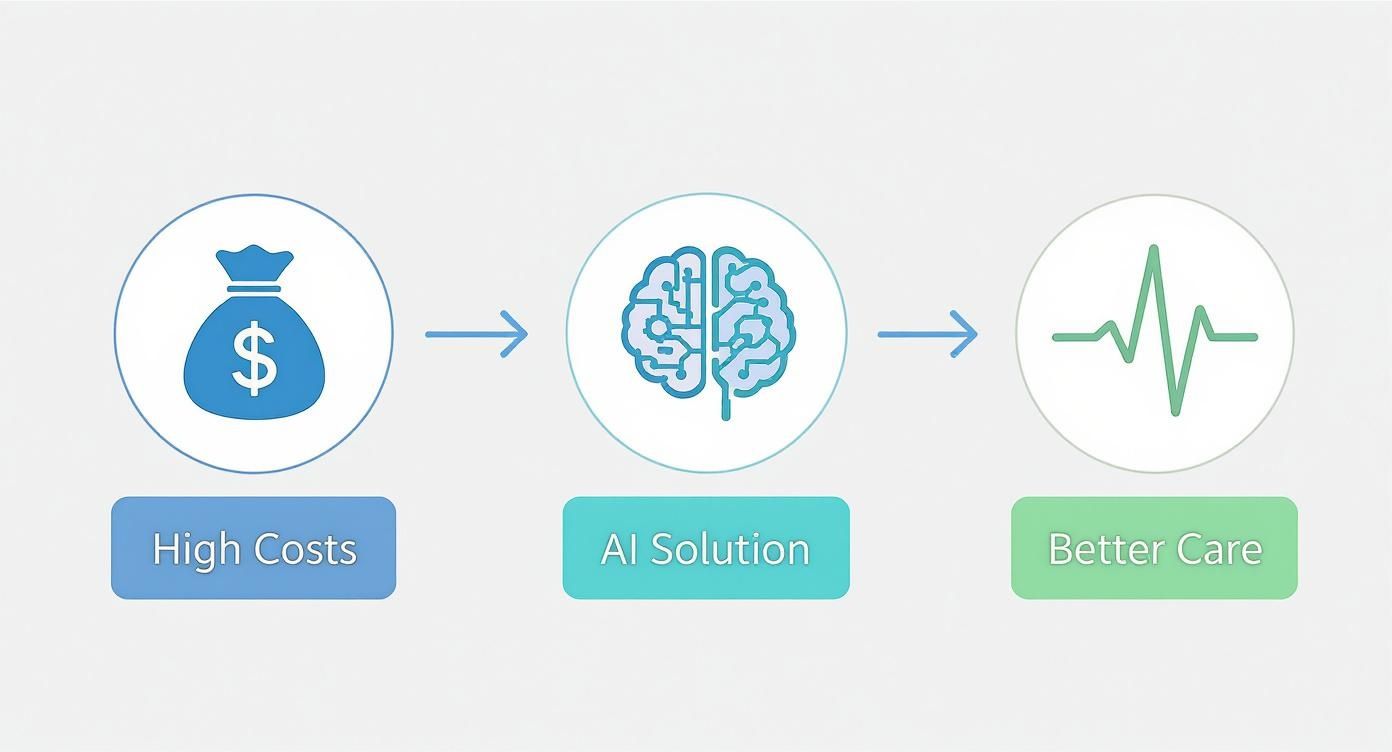
This flow isn't just a diagram; it's the core of your business case. It shows how a smart investment in technology directly eases financial pressures while improving the quality of care.
Once you have a list of potential projects, you need to decide where to start. Not all AI applications are created equal; some offer a massive return for relatively little effort, while others are complex, long-term undertakings. A prioritization matrix is a great tool for thinking this through logically.
Here's a look at how you might score common AI use cases based on their complexity and potential impact on your hospital.
| AI Use Case | Primary Goal | Implementation Complexity (1-5) | Potential ROI (Low, Med, High) | Key Department |
|---|---|---|---|---|
| Predictive Staffing | Optimize nurse-to-patient ratios | 3 | High | Nursing/HR |
| Automated Medical Coding | Reduce billing errors, speed up revenue cycle | 2 | High | Finance/Billing |
| Clinical Trial Matching | Accelerate patient recruitment for research | 4 | Med | Research/Oncology |
| AI-Powered Triage (ER) | Prioritize patient care based on urgency | 4 | High | Emergency Dept. |
| No-Show Predictions | Minimize empty appointment slots | 2 | Med | Outpatient Clinics |
| Sepsis Early Warning System | Improve patient outcomes, reduce mortality | 5 | High | ICU/Inpatient |
This kind of analysis helps you separate the quick wins from the major strategic bets, ensuring you tackle projects in an order that builds momentum and demonstrates value early on.
After you've identified and prioritized your top use cases, you've got to get buy-in. This means building a business case that speaks the language of your CFO and clinical leadership, not just your IT team. You need to clearly show the expected return on investment (ROI).
A winning business case doesn’t just talk about technology. It tells a story of how things will be better. It shows exactly how investing in a specific AI tool will lead to real, quantifiable improvements in efficiency, cost savings, and patient care.
Focus on the numbers. If you're proposing an AI tool to automate prior authorizations, calculate the number of staff hours it will save each week and put a dollar figure on it. If you're looking at a predictive model to cut down on hospital-acquired infections, use industry data to estimate the savings from avoided treatments and penalties.
This is often where our AI strategy consulting engagements begin—helping leaders connect the dots between a technology investment and its direct impact on the bottom line. A data-driven approach is the only way to get the green light from the people who hold the purse strings.
An AI system is only as good as the data you feed it. Before you can even think about predictive models or automated workflows, you have to get your technical house in order. This is all about preparing your data, making sure your infrastructure can handle the load, and creating clear rules for how information moves through your hospital.
The single biggest hurdle? Breaking down data silos. For years, vital patient information has been locked away in legacy Electronic Health Record (EHR) systems, radiology archives, and separate billing platforms. These systems often don't speak the same language, which makes getting a complete picture of a patient's journey feel impossible. This is precisely why modern data standards are no longer optional.

Think of HL7 (Health Level Seven) as the old, reliable workhorse of healthcare data exchange. It’s been around forever and it gets the job done, but it can be rigid. FHIR (Fast Healthcare Interoperability Resources), on the other hand, is the newer, more agile standard. It uses modern web-based protocols that make it far easier for different systems to share information quickly and securely.
Adopting FHIR is a true game-changer for AI integration. It creates a universal language that allows new AI tools to pull data from your core EHR and push insights back in, all without needing clunky, custom-built interfaces. This kind of interoperability is the absolute backbone of a modern, connected healthcare system.
The real goal isn't just to hoard data; it's to make it flow. By embracing standards like FHIR, you’re essentially building digital highways for patient information to travel instantly and securely between every system that needs it—from the admissions desk to an AI-powered diagnostic tool.
For hospitals still running on older systems, this won't happen overnight. It requires a deliberate strategy, which might involve using a data intermediary or investing in custom healthcare software development to build a bridge between your legacy platforms and the new world of AI applications.
Getting your data prepared for AI is more than just flipping a switch. It’s a hands-on effort to clean, structure, and govern your most valuable asset.
Here's where to focus:
You can't overstate how important this foundational work is. When you're building the technical runway for AI, ensuring system reliability through rigorous quality assurance is non-negotiable. It's why practices like Test Automation in Healthcare are becoming so critical.
The idea of plugging predictive AI directly into EHR systems isn't some far-off concept; it's already happening. In fact, recent data shows that 71% of non-federal acute-care hospitals in the U.S. have already integrated these kinds of applications. The trend is especially clear in larger hospitals, which shows you the scale at which this shift is taking place.
If your organization is just starting out, don't try to boil the ocean. A phased approach is almost always the smarter path. Instead of attempting a massive, hospital-wide overhaul, pick a single, high-impact use case and start there.
This allows you to wrestle with data challenges on a manageable scale, show real value quickly, and build the momentum you'll need for wider adoption. Your first project becomes a pilot for your entire data strategy, letting you iron out the kinks in your data cleansing and governance before you roll it out everywhere. This is the kind of practical roadmap that ensures your technical foundation is built to last, supporting not just your first AI initiative, but all the ones that follow.
After all the strategic planning and technical groundwork, you'll hit a major fork in the road: do you build your own custom AI solution, or do you buy a ready-made product? This isn't just a technical question; it's a strategic one that will shape your budget, timeline, and competitive edge for years to come.
There’s no one-size-fits-all answer here. The right path truly depends on your hospital’s specific needs, the resources you have on hand, and what you’re ultimately trying to achieve.
Building your own AI tools puts you in the driver's seat. You get total control, allowing you to craft a solution that fits your hospital's unique clinical workflows and patient demographics like a glove. For example, you could develop a predictive model trained specifically on your region's health data to forecast disease outbreaks.
This path can create a powerful competitive advantage. A proprietary tool that dramatically improves patient outcomes or slashes operational costs is something your competitors can't just go out and buy. But it's a serious commitment.
This route demands a significant upfront investment in both talent and time. You’ll need a dedicated team of data scientists, AI engineers, and project managers who speak both tech and healthcare fluently. Without that expertise, even the best ideas can fizzle out. Long-term maintenance and model updates also land squarely on your shoulders.
For many common hospital challenges, buying an existing solution is simply the smarter, more efficient move. Why spend a year and a fortune reinventing the wheel for a problem that a specialized vendor has already perfected?
Think about tasks like automating prior authorizations or managing patient appointment reminders. These are high-volume, repetitive jobs where an off-the-shelf tool can deliver value almost immediately, without the headache of building and maintaining your own models. These platforms are often battle-tested across dozens of health systems, making them incredibly robust and reliable from day one.
The data backs this up. A recent industry study found that 22% of healthcare organizations have already implemented domain-specific AI tools for business, with larger health systems leading the charge at a 27% adoption rate. This trend shows a clear recognition that buying specialized solutions offers the fastest path to seeing real results.
To navigate this choice, you need to weigh the specifics of your situation honestly. The best path often becomes obvious when you break it down.
Ask yourself these four key questions:
The "build vs. buy" decision isn't just about technology—it’s about strategy. You're deciding whether to invest in creating a unique competitive advantage or to quickly adopt a best-in-class solution for a common operational challenge.
For many hospitals, the answer isn't a simple "either/or" but a hybrid approach. You might buy proven tools to streamline administrative functions while focusing your internal team on building custom internal tooling for a niche specialty.
For example, you could implement a tool like our Clinic AI Assistant to automate patient communication and scheduling—a common challenge solved brilliantly by a ready-made solution. This frees up your internal experts to tackle the complex, high-impact projects that truly set you apart. This balanced strategy lets you lock in immediate efficiencies while still innovating where it matters most.
Let's be honest: even the most brilliant AI tool is worthless if your clinical teams don't trust it or won't use it. Successfully weaving AI into the fabric of a hospital is far more about people than it is about code. This is where the rubber meets the road, and it requires a delicate touch that balances clear communication, proven benefits, and a rock-solid governance plan.
The human element is truly the final, most important piece of the puzzle. This is exactly why a thoughtful, phased deployment is your best friend. Forget the "big bang" hospital-wide rollout; that's a recipe for chaos. Instead, start small with a targeted pilot program. Pick one department or a single workflow where AI can deliver an obvious, quick win. This approach builds momentum, creates internal champions for your cause, and gives you tangible proof of value to win over the skeptics.
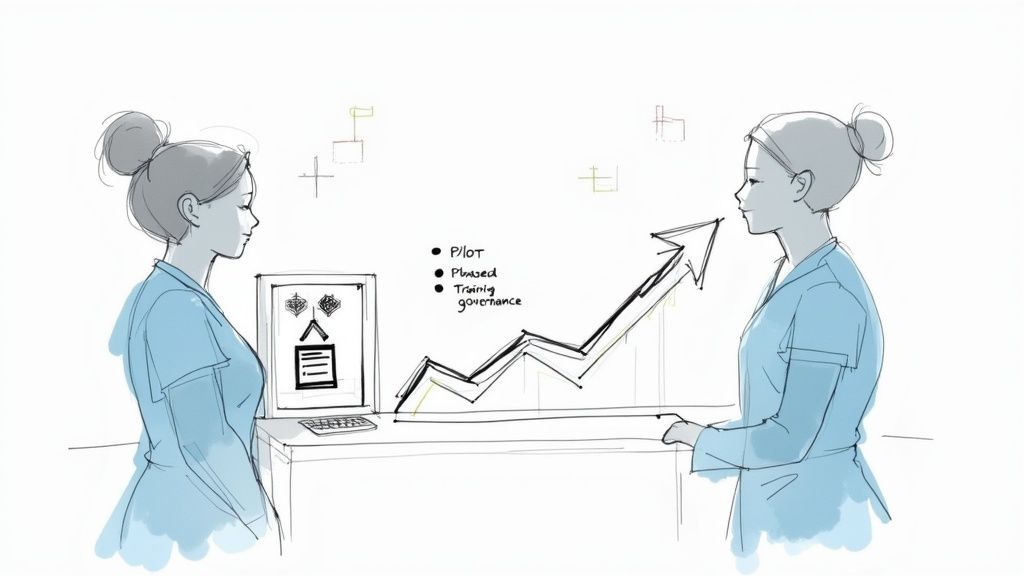
In a high-stakes environment like healthcare, resistance to new technology is completely natural—and frankly, it's expected. Clinicians are fiercely protective of their workflows and patient safety, as they should be. The key to overcoming this hesitation is a strategy built on transparency and genuine collaboration.
You have to involve clinical staff from day one. They need to be active partners in the selection and design process, not just people the new tech is happening to. Their on-the-ground insights are pure gold for making sure the AI tool actually solves real-world problems instead of creating new headaches.
Here are a few change management tactics that actually work:
Once your AI systems are up and running, governance becomes absolutely critical for long-term success and patient safety. Think of an AI governance framework as the official rulebook—a set of policies and procedures ensuring your AI tools are used ethically, effectively, and in full compliance with regulations like HIPAA.
Governance isn't about stifling innovation; it's about enabling it safely. A strong framework gives your teams the confidence to use new AI tools by providing clear guardrails for performance, ethics, and security.
A key part of this is establishing robust information security policies that protect patient data and keep you compliant. The framework must also demand continuous monitoring of the AI model's performance. You have to watch for any "model drift" or degradation in accuracy over time.
This kind of proactive oversight ensures the system remains reliable and fair. The need for this is growing fast; AI adoption in healthcare organizations jumped from 72% to 85%, with 82% of them reporting a moderate to high return on their investment.
While the finance department will care about ROI, the truest measure of success for AI in a hospital is counted in human terms. You need to look beyond pure cost savings and track the metrics that reflect real improvements in care quality and staff well-being.
Your key performance indicators (KPIs) should absolutely include:
A people-first approach is what turns a technology project into a genuine cultural shift, making AI an indispensable ally in your hospital's mission.
Have questions? You're not alone. Here are some of the most common things hospital leaders ask when they're thinking about bringing AI into their operations.
The best starting point is always strategic alignment. Before looking at any technology, gather your leadership team to define the core problem you're trying to solve. Is it reducing ER wait times, easing administrative burnout, or something else? Pinpoint your most critical operational pain points first. This will allow you to map potential AI solutions directly to your hospital's most important goals, a process we cover in detail in our AI adoption guide.
Pro Tip: A great way to get moving is by creating a Custom AI Strategy report. This forces you to prioritize use cases based on real-world impact and potential ROI, not just the "cool factor" of a new technology.
This is non-negotiable and requires a multi-layered approach. You cannot simply plug in an AI and hope for the best. First, any data used for training AI models must be anonymized or de-identified whenever possible. Second, establish iron-clad data governance protocols that dictate who can access data and how it is used. Finally, ensure any vendor you partner with is fully HIPAA compliant and will sign a Business Associate Agreement (BAA). Thoroughly vet their security architecture and data handling policies before committing.
A phased approach is almost always the most budget-friendly and effective strategy. Instead of a massive, hospital-wide overhaul, select one well-defined problem and launch a targeted pilot project. This allows you to prove the technology's value on a smaller scale, building a solid business case for future investment. Also, consider models like AI Automation as a Service, which can lower upfront costs. Exploring real-world use cases can show you what’s already delivering value for other hospitals.
Interestingly, the toughest challenges are rarely technical; they are almost always about people and processes. Common roadblocks include:
Overcoming these obstacles requires dedicated leadership and a robust change management plan. It often helps to bring in an expert team that understands both the technology and the human side of implementing such a significant change.
Ready to map out your hospital's AI journey? At Ekipa AI, we specialize in turning complex healthcare challenges into actionable, high-impact AI strategies. Our expert consultants can help you identify the right use cases, build a compelling business case, and navigate the technical and cultural hurdles of implementation. Meet our expert team to learn more.
How to build HIPAA-compliant AI: when LLM providers need a BAA, data minimization, de-identification, audit controls and a reference architecture.
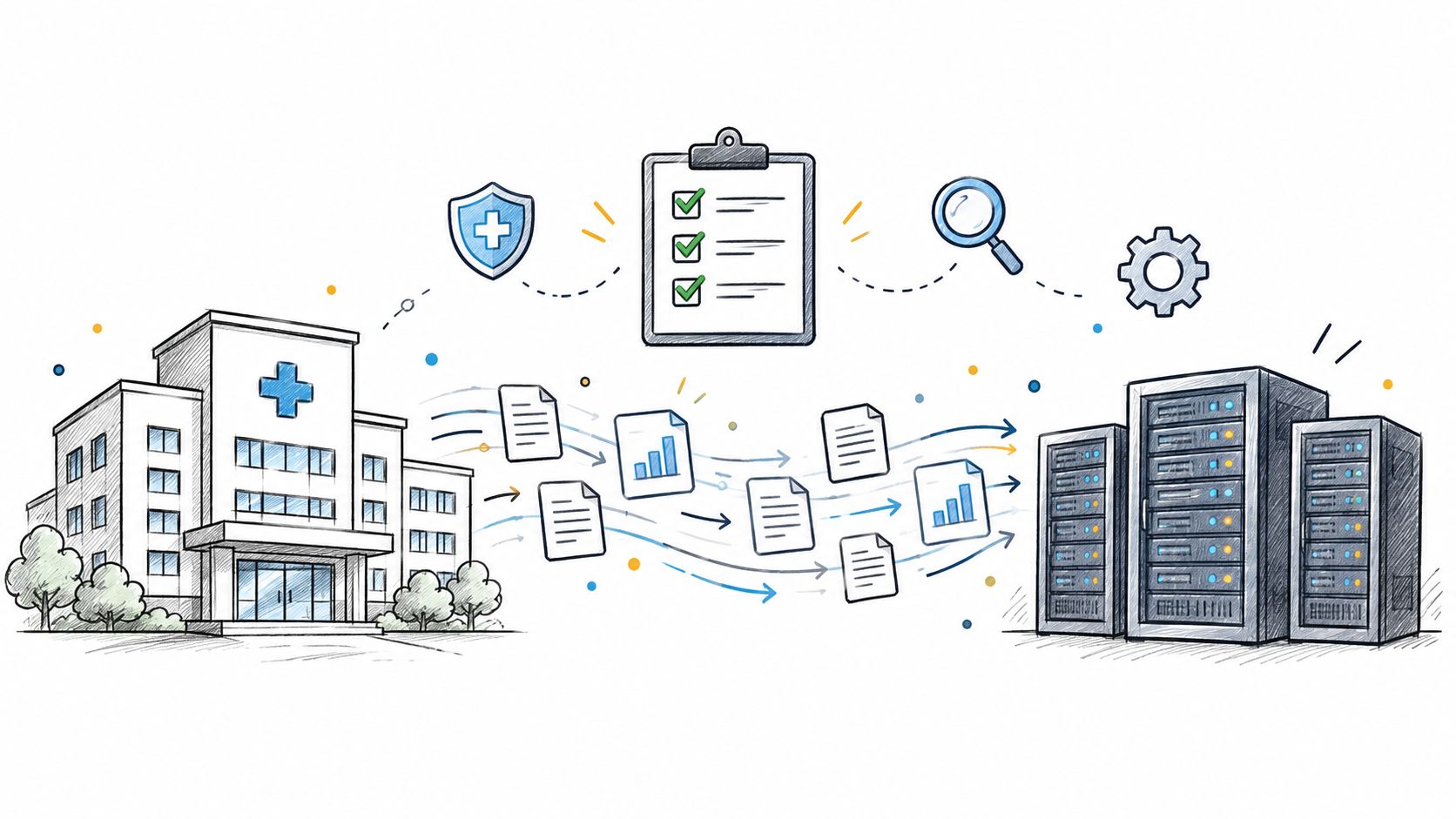
Practical data migration planning guide for healthcare teams. Scope, mapping, compliance, validation, cutover and rollback decisions explained end to end.
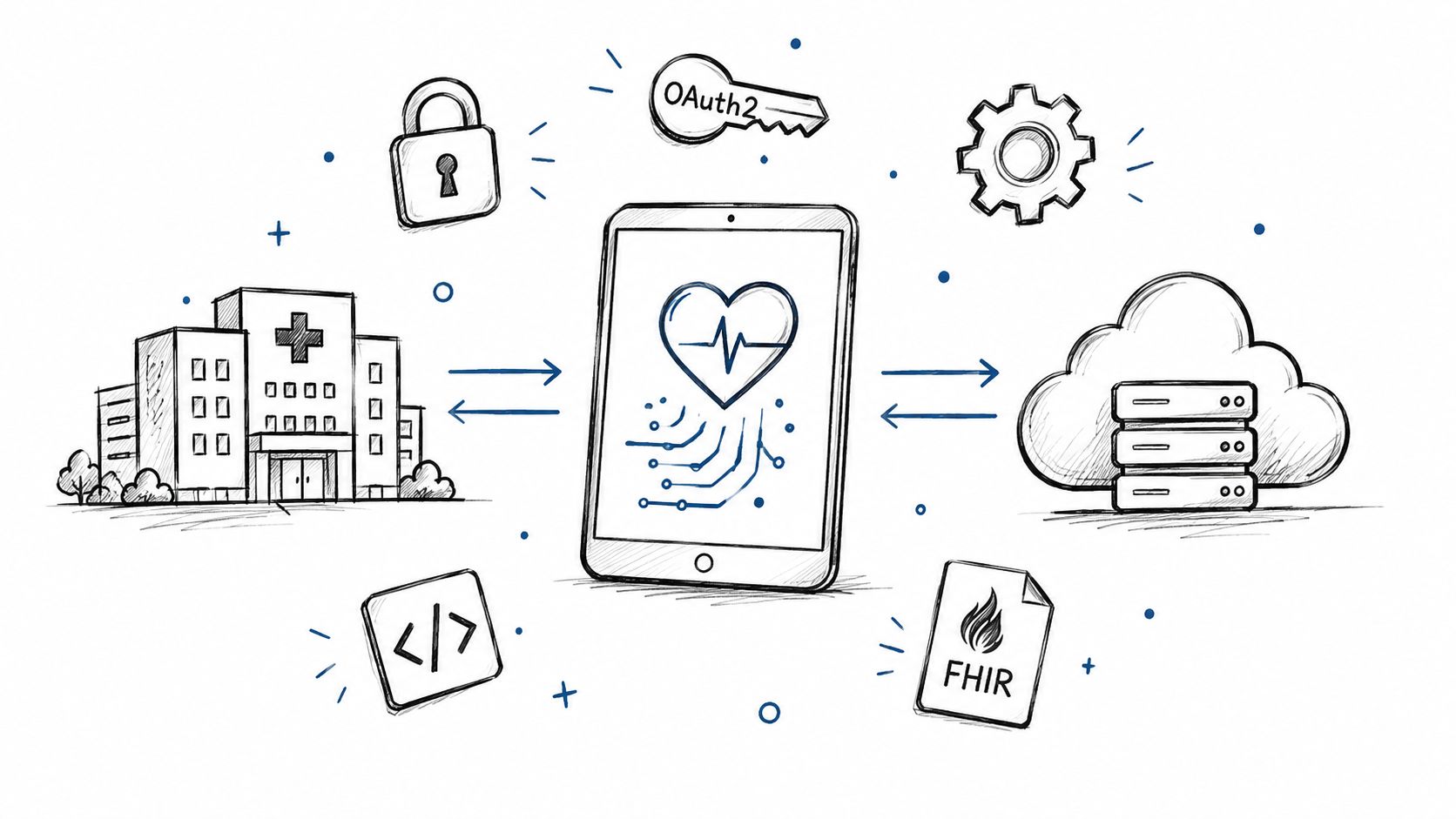
Smart on FHIR guide for healthtech engineers. Learn the OAuth 2.0 launch model, scope syntax, backend services, and US regulatory requirements.
Connect with our team to explore how AI expertise can transform your business.