
AI Adoption
AI Strategy and Implementation: A Complete Guide
The full journey from AI strategy to scaled implementation in four stages: align and assess, choose and plan, prove and build, govern and scale.
November 10, 2026Read more
How HealthTech companies meet security and compliance expectations: HIPAA safeguards, business associate agreements, safe data handling, and SOC 2 or HITRUST.
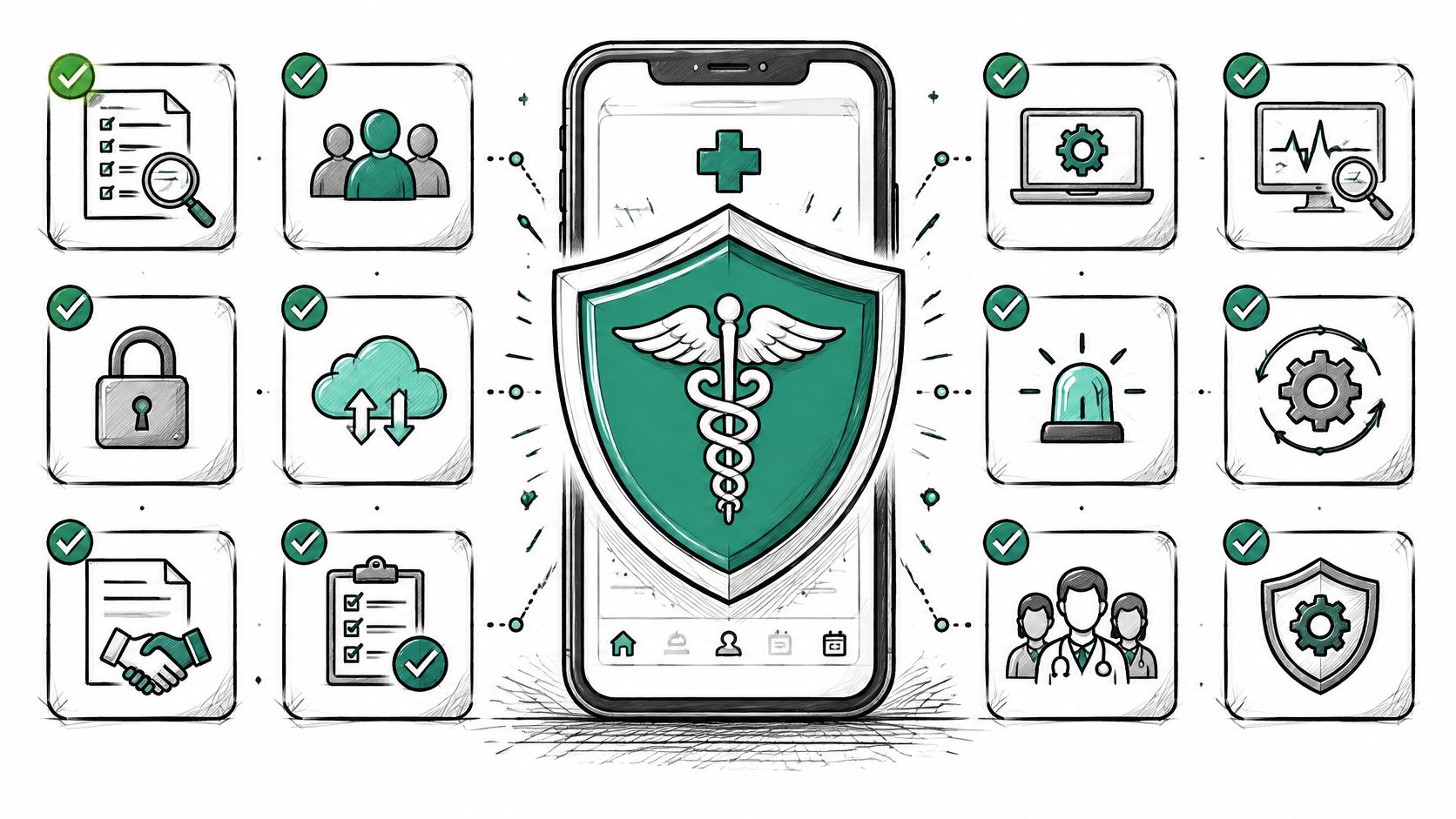
For HealthTech companies, security and compliance decide who will buy from you. Hospitals and health plans will not share patient data with a vendor that cannot show HIPAA safeguards, sign a business associate agreement, and back its claims with an independent report such as SOC 2 or HITRUST. This guide brings the topic together: which rules apply to your product, what HIPAA requires of software teams, how business associate agreements work, how to handle and share health data safely, how SOC 2 and HITRUST compare, and a practical roadmap. Each section links to a detailed guide.
| Rule or framework | Type | When it applies |
|---|---|---|
| HIPAA Privacy, Security, and Breach Notification Rules | US federal law | You are a covered entity, or a business associate that creates, receives, maintains, or transmits protected health information (PHI) on a covered entity's behalf |
| FTC Health Breach Notification Rule | US federal rule | Health apps and similar technologies that hold consumer health data and are not covered by HIPAA |
| State health privacy laws | State law | Consumer health data in states with their own rules, such as Washington's My Health My Data Act |
| SOC 2 | Independent attestation report | Customers ask for evidence that your security controls are designed and operating effectively |
| HITRUST | Certifiable control framework | Customers, often large health systems and payers, require a HITRUST assessment |
HIPAA, the FTC rule, and state laws are legal obligations. SOC 2 and HITRUST are voluntary frameworks, but in practice many healthcare buyers require one of them.
Most HealthTech vendors handle PHI as business associates of providers and health plans. The HIPAA Security Rule then requires administrative, physical, and technical safeguards for electronic PHI, starting with a documented risk analysis. The Breach Notification Rule requires notifying affected individuals without unreasonable delay and within 60 days of discovery, notifying HHS, and notifying the media when a breach affects more than 500 residents of a state.
HHS published a proposed update to the Security Rule on January 6, 2025, including stronger requirements for encryption and multi-factor authentication. It has not been finalized, so the current rule still applies, but many teams are already designing toward it. HHS also does not recognize any official "HIPAA certification"; compliance is shown through your own safeguards, documentation, and audits.
HIPAA requires a written business associate agreement (BAA) before a vendor handles PHI for a covered entity, and business associates need BAAs with their own subcontractors that touch PHI. The BAA sets permitted uses, safeguards, breach reporting, and what happens to data at the end of the contract. HHS guidance on cloud computing makes clear that a cloud provider storing electronic PHI is a business associate even if the data is encrypted and the provider does not hold the key. See our guide to the business associate agreement for software vendors.
| SOC 2 | HITRUST | |
|---|---|---|
| What it is | An attestation report by an independent CPA firm under the AICPA's Trust Services Criteria | A certifiable framework (the HITRUST CSF) with assessments validated by HITRUST |
| Scope | Security, plus optional availability, processing integrity, confidentiality, and privacy criteria | Prescriptive controls mapped to HIPAA, NIST, ISO, and other sources |
| Options | Type 1 assesses control design at a point in time; Type 2 assesses operating effectiveness over a period | e1, i1, and r2 assessments, increasing in depth |
| Typical buyer | Common across healthcare and other industries | Often required by large health systems and payers |
Our guides to SOC 2 for HealthTech startups and HITRUST vs SOC 2 explain how to choose and prepare.
If your software is also a medical device, see our Medical Device Software Regulation guide.
HealthTech security and compliance come down to four things: knowing which rules apply, building HIPAA safeguards into the product, putting business associate agreements in place, and proving your controls with SOC 2 or HITRUST. Handle data carefully when you de-identify it, move it to the cloud, or send it to AI services, and keep watching the proposed Security Rule update. Treated as part of engineering rather than a last-minute audit, compliance becomes a reason customers choose you. To build secure, compliant healthcare software, explore Ekipa's HealthTech engineering services or book a consultation.
It applies if you are a covered entity or if you create, receive, maintain, or transmit PHI on behalf of one as a business associate. Consumer health apps that people choose on their own are usually outside HIPAA but may be covered by the FTC Health Breach Notification Rule and state laws.
No. HHS does not recognize any HIPAA certification. You show compliance through a risk analysis, safeguards, policies, documentation, and audits, often supported by an independent SOC 2 or HITRUST report.
Yes, if the provider stores or processes electronic PHI for you. HHS guidance says this applies even when the data is encrypted and the provider does not have the decryption key.
Let your target customers decide. SOC 2 is widely accepted and often the faster first step, while some large health systems and payers require HITRUST. Many companies start with SOC 2 and add HITRUST when enterprise deals demand it.
HHS proposed significant changes on January 6, 2025, including stronger encryption and multi-factor authentication requirements. The proposal has not been finalized, so the existing Security Rule still applies.
The full journey from AI strategy to scaled implementation in four stages: align and assess, choose and plan, prove and build, govern and scale.
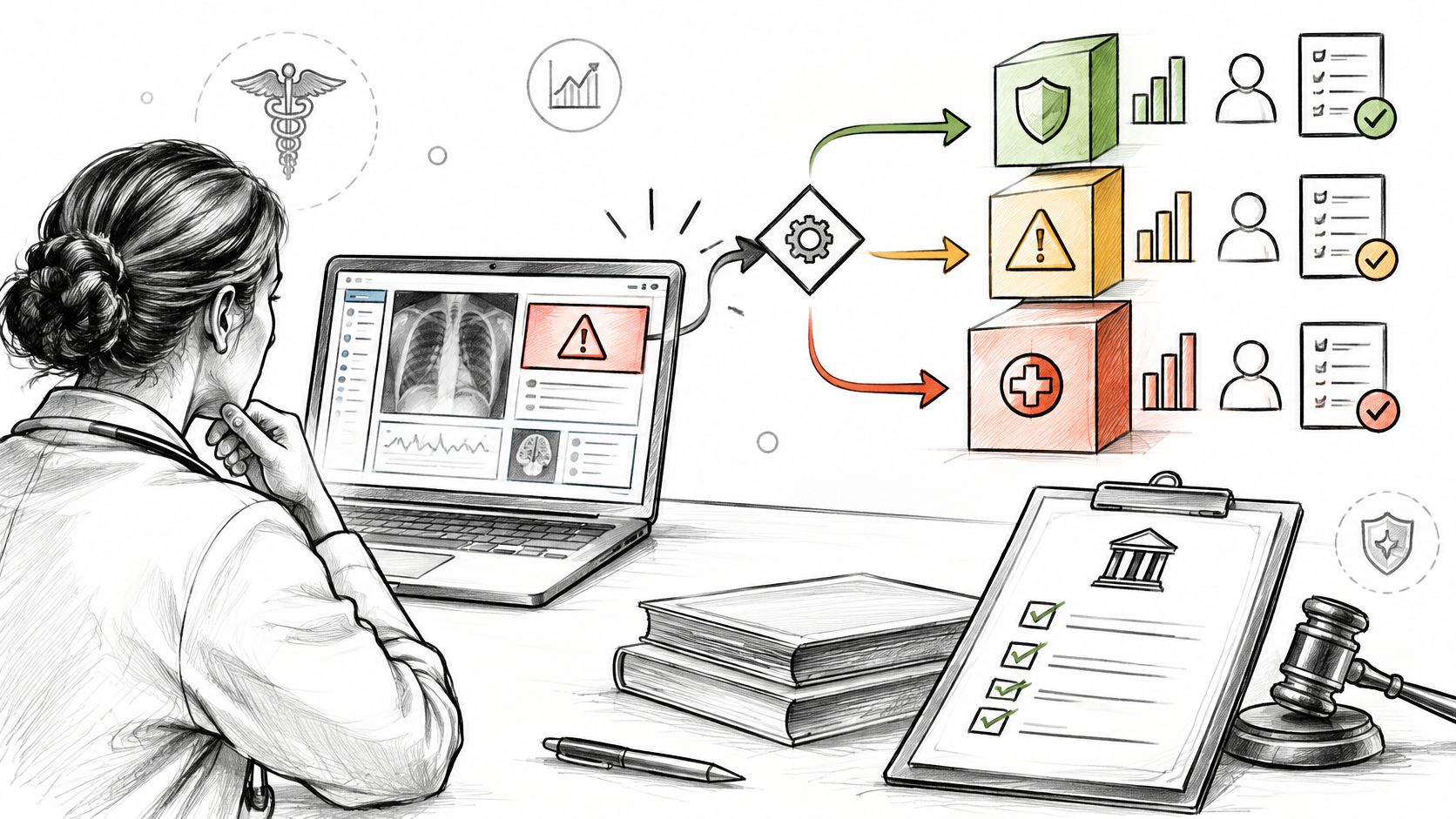
How medical device software is regulated in the US and EU: device status, classification, routes to market, the engineering standards and what changes for AI.
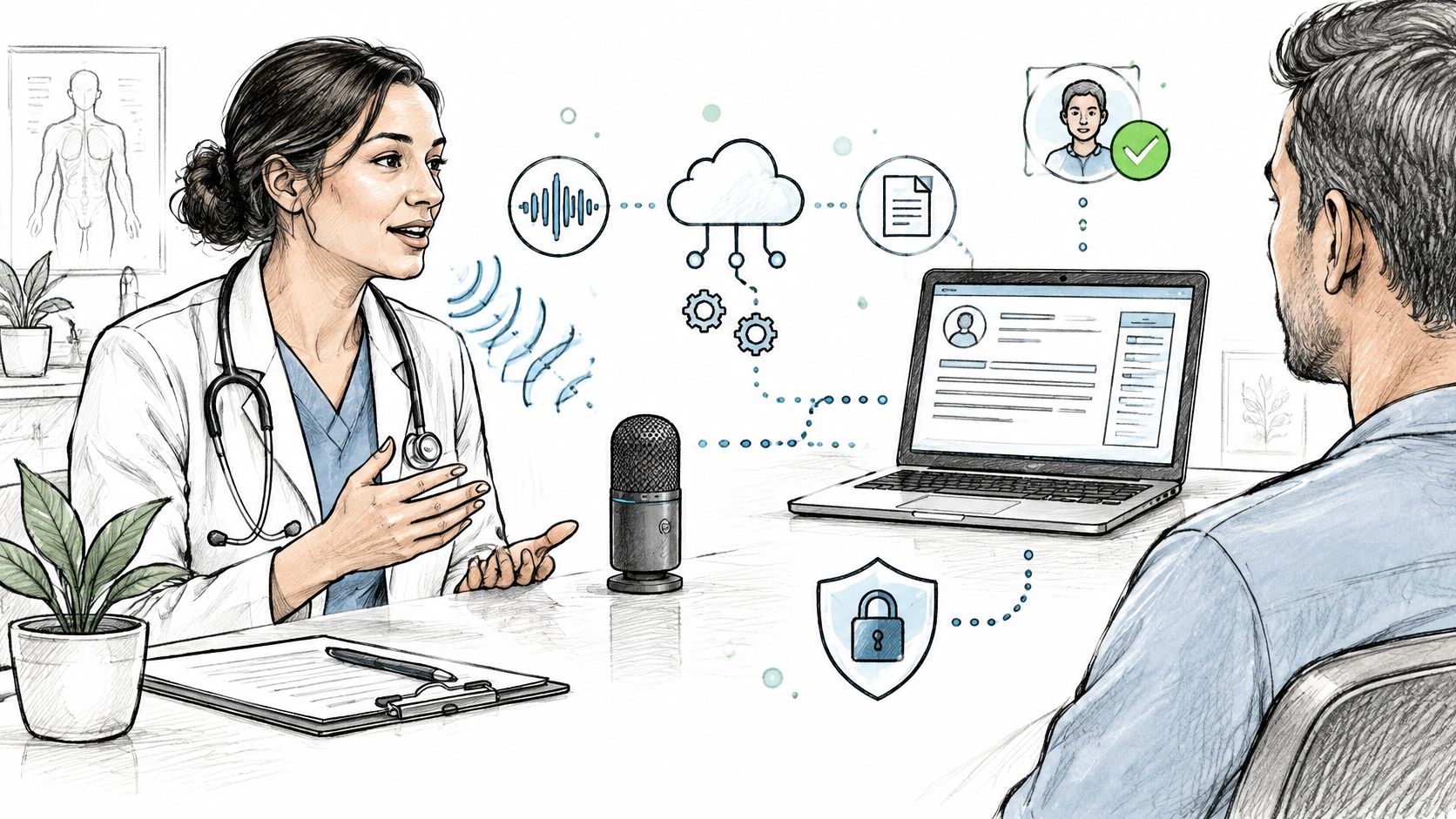
Ambient Clinical Documentation EHR Integration: write-back options, SMART scopes, consent rules and quality checks for teams building AI scribes.
Connect with our team to explore how AI expertise can transform your business.